
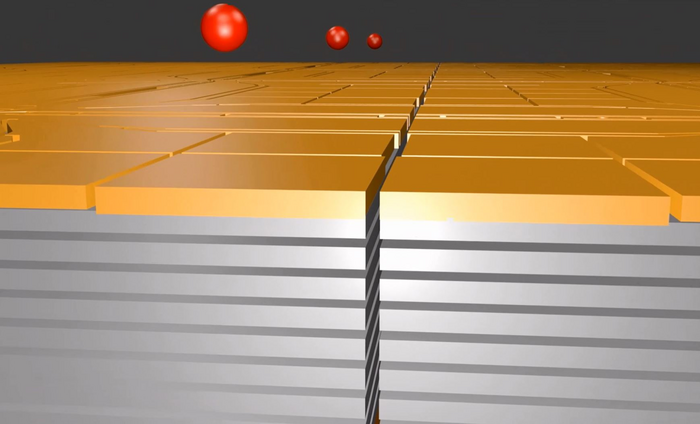
Researchers have demonstrated for the first time that quantum bits (qubits) can directly transfer between quantum computer microchips and demonstrated this with record-breaking speed and accuracy. This breakthrough resolves a significant challenge in building large and powerful quantum computers to tackle complex problems of critical importance to society.
We need quantum computing, and we need it now!
Today, quantum computers operate on the 100-qubit scale. Experts anticipate millions of qubits are required to solve important problems that are out of reach of today’s most powerful supercomputers. There is a global quantum race to develop quantum computers that can help in many critical societal challenges, from drug discovery to making fertilizer production more energy efficient and solving important problems in nearly every industry, ranging from aeronautics to the financial sector.
In the research paper published today in Nature Communications, scientists from the University of Sussex demonstrate how they have used a new and powerful technique, which they dub ‘UQ Connect,’ to use electric field links to enable qubits to move from one quantum computing microchip module to another with unprecedented speed and precision. This allows chips to slot together like a jigsaw puzzle to make a more powerful quantum computer.
World record speed and accuracy
The team were successful in transporting the qubits with a 99.999993% success rate and a connection rate of 2424/s. Both numbers are world records and orders of magnitude better than previous solutions.
Professor Winfried Hensinger, Professor of Quantum Technologies at the University of Sussex and Chief Scientist and Co-founder at Universal Quantum said:
“As quantum computers grow, we will eventually be constrained by the size of the microchip, which limits the number of quantum bits such a chip can accommodate. As such, we knew a modular approach was key to make quantum computers powerful enough to solve step-changing industry problems. In demonstrating that we can connect two quantum computing chips – a bit like a jigsaw puzzle – and, crucially, that it works so well, we unlock the potential to scale-up by connecting hundreds or even thousands of quantum computing microchips.”
Plus verification of the “strange” quantum nature of the quibit
While linking the modules at world-record speed, the scientists also verified that the ‘strange’ quantum nature of the qubit remains untouched during transport, for example, that the qubit can be both 0 and 1 at the same time.
Dr Mariam Akhtar led the research during her time as Research Fellow at the University of Sussex and Quantum Advisor at Universal Quantum. She said:
“The team has demonstrated fast and coherent ion transfer using quantum matter links. This experiment validates the unique architecture that Universal Quantum has been developing – providing an exciting route towards truly large-scale quantum computing.”
Image Credits
In-Article Image Credits
Quantum computer modules being aligned so atoms can transfer between quantum computer microchips via University of Sussex with usage type - Commercial license. For use in relation to this University of Sussex and Universal Quantum quantum computing breakthrough.Featured Image Credit
Quantum computer modules being aligned so atoms can transfer between quantum computer microchips via University of Sussex with usage type - Commercial license. For use in relation to this University of Sussex and Universal Quantum quantum computing breakthrough.


