
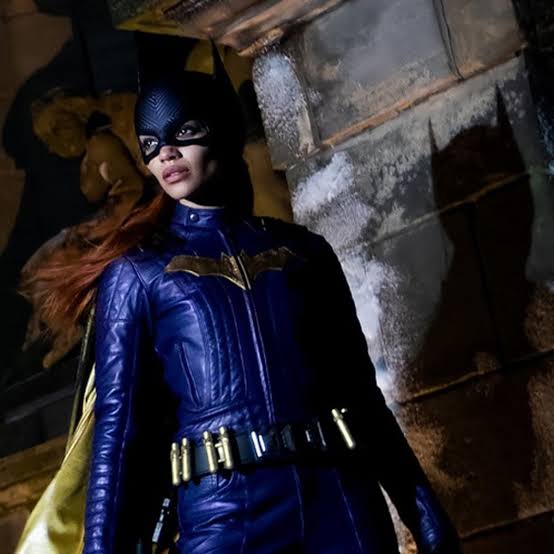
Four years after Batgirl was abruptly shelved by Warner Bros. Discovery, J.K. Simmons is finally talking about the movie that vanished into studio limbo. In a new appearance on Josh Horowitz’s Happy Sad Confused podcast, the Oscar-winning actor reflected on returning as Commissioner James Gordon, the baffling decision to bury a finished film as a tax write-off, and the strange feeling of knowing a superhero story he helped make may never be seen by audiences.
As first highlighted by ComicBook.com, Simmons confirmed to Horowitz that he never got to watch Batgirl, despite having shot his role and seeing the movie move into post-production. He noted that “apparently, one test audience saw it” and stressed that the film’s fate came down to “whatever business decision,” not catastrophic test scores or creative implosion. Instead, he remembered the project as “an exciting prospect” and “a fun superhero movie” anchored in Batgirl’s origin and her relationship with Gordon. For Simmons, who had only a small part in 2017’s troubled Justice League before revisiting the character in Zack Snyder’s Justice League, Batgirl represented the chance to finally dig into Gordon as a father to Barbara and a key emotional pillar in Gotham.
Originally conceived as a streaming-focused feature for HBO Max, Batgirl was directed by Adil El Arbi and Bilall Fallah, the duo behind Bad Boys for Life and episodes of Marvel’s Ms. Marvel. Screenwriter Christina Hodson, who scripted Birds of Prey and later The Flash, penned the story centered on the Barbara Gordon iteration of the heroine. Leslie Grace, fresh off her breakout in In the Heights, starred as Barbara/Batgirl, with Simmons returning as Commissioner Gordon and Michael Keaton reprising his version of Batman from Tim Burton’s films and the then-upcoming The Flash. Brendan Fraser signed on as the pyromaniac villain Firefly, and the production shot on location in Glasgow, Scotland, doubling once again for Gotham City.
For Simmons, the project wasn’t just a cameo-level return. In earlier interviews while the film was in production, he described his role in Batgirl as significantly expanded compared to Justice League, emphasizing that the movie would explore Gordon as a father and partner to Barbara rather than just the guy who flips the Bat-Signal. He talked about being “completely surprised and very happy” to be asked back to play Gordon again and teased “a different aspect of the character” as the film dug into the Gordon family dynamic. That sense of renewed purpose as Gotham’s top cop is part of what makes the eventual cancellation sting—this was the movie where Simmons finally got to make Gordon a central figure, and now that work exists only in a vault and in memory.
The shockwave hit in August 2022, when reports broke that Warner Bros. Discovery had decided not to release Batgirl at all—neither theatrically nor on streaming—despite the reported $90 million budget and the film being deep into post-production. The studio ultimately treated the movie as a tax write-off, part of a broader slate of cost-cutting and strategic pivots under new CEO David Zaslav, who was intent on prioritizing what he publicly called “event films” for theatrical release and a more tightly curated DC brand. Directors El Arbi and Fallah later revealed they discovered the cancellation while at a wedding; they said they tried to access the film on studio servers afterward and found their footage gone, describing it as “like we were deleted.” The decision ignited intense backlash from fans, industry watchers, and even other filmmakers, with many viewing it as a worrying precedent for studios erasing completed work for purely financial and strategic reasons.
In the months that followed, Warner Bros. Discovery offered its own justification for the move. Then-DC Studios co-CEO Peter Safran later claimed Batgirl was “not releasable” and argued that shelving it was meant to protect the DC brand, insisting the film would have hurt both DC and those involved if released in an unfinished or compromised state. That framing has never sat comfortably with the creatives who worked on the movie or with fans who were eager to see Grace’s Batgirl and Keaton’s Batman share the screen. Grace herself told outlets she’d seen cuts of the film and described it as full of “beautiful, beautiful scenes” and “strong women” that she believed audiences would connect with, underscoring the gulf between internal corporate calculus and the passion of those who made the movie.
From a DC continuity standpoint, Batgirl was also a casualty of a franchise in transition. The film was developed during the waning days of the DCEU era, where Keaton’s Batman was being reintroduced via multiverse shenanigans in The Flash, and Simmons’ Gordon represented a thread back to Zack Snyder’s Justice League. As plans shifted, projects like Batgirl and the completed-but-unreleased Coyote vs. Acme became collateral damage in an evolving roadmap that eventually led to James Gunn and Peter Safran’s “Chapter 1: Gods and Monsters” slate. Simmons, meanwhile, has had to watch his commissioner get recast in other continuities—Jeffrey Wright plays Gordon in Matt Reeves’ ongoing The Batman universe—while his own version remains, for now, locked behind closed doors.
Listening to Simmons on Happy Sad Confused, what comes across most isn’t anger so much as bemusement and a lingering sense of what might have been. He jokes with Horowitz about the movie existing “in a vacuum” and acknowledges that “maybe we’ll never know” how the worldwide audience would have responded. Yet he’s clear that the experience of making Batgirl was positive, that the set felt like the birth of a “fun superhero movie,” and that the creative team poured genuine enthusiasm into telling Barbara Gordon’s story. For DC fans, that makes Batgirl one of the great unseen curiosities of the modern comic-book era—a $90 million Gotham tale featuring Grace, Keaton, Fraser, and Simmons that, barring a radical change of heart from the studio, will remain a ghost in the machine.


