
Assassin’s Creed Black Flag Resynced is doing more than giving Edward Kenway a fresh coat of paint; it is rewiring how players jack into the Animus, replacing the old modern-day segments with a fully reworked Animus Hub that now drives progression, events, and a cascade of new rewards. The remaster has also been woven into the wider franchise’s meta-story via the Animus Hub used in Assassin’s Creed Shadows, where a once-“undiscovered data entry” was revealed to be the Black Flag Resynced project, complete with a July 9, 2026 launch date and Blackbeard’s Crimson Pack as a pre-order bonus.
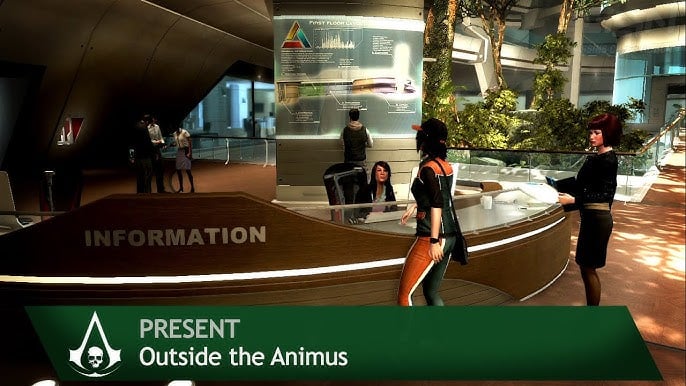
In the original Assassin’s Creed IV: Black Flag, players periodically left the Caribbean to explore Abstergo Entertainment’s offices in a series of first-person modern-day interludes, hacking computers and eavesdropping on Templar employees. Community discussion around Resynced and early coverage of the remake indicate that those playable modern-day sections have been removed entirely, with the overarching framing now handled by the Animus Hub itself rather than an in-world contemporary narrative. That shift aligns Black Flag with Ubisoft’s current approach of treating the Animus as a cross-game interface, allowing different “projects” like Shadows and Resynced to coexist under a single meta-layer while keeping players focused on the historical fantasy they came for.
The new Animus Hub is more than a static menu; it has been rebuilt as a progression tracker and content launcher, anchored by a fresh Synchronization feature that lets you monitor how deep you’ve gone into specific activities across the Caribbean. According to breakdowns of the hub, Synchronization surfaces your completion of collectibles, contracts, side missions, and other optional objectives so you can chase 100% without digging through nested menus. The hub also hosts discrete “Projects” tied to individual experiences, and Resynced appears there as its own project slot—another step toward turning the Animus Hub into the franchise’s long-term home rather than something bespoke for a single game.
Out in the world, the most tangible tie between exploration and the Animus Hub comes via new Animus Keys, a collectible currency scattered across the Caribbean and especially on the small “playas” (tiny islands) that were already present in the original release. Ubisoft’s deep dive on Resynced notes that these islands now contain more chests and unique rewards than before, including items like the Guardian Beast Trinket found on Dry Tortuga, alongside Animus Keys tucked into their nooks and crannies. Those keys feed directly back into the Animus Hub, where they can be spent to unlock additional cosmetics for Edward, new weapons, and fresh ship vanities for the Jackdaw, effectively turning exploration into a pipeline for meta-progression.
The hub’s changes are complemented by new “animus enhancement” systems that subtly layer events and reactions over the existing story rather than bolting on big, intrusive live-service hooks. Ubisoft describes added letters, incidental events in the world, and contextual voice lines or animations that let Edward and nearby NPCs comment on what has happened, occasionally slipping in hints that lead to small rewards or bits of lore tucked off the beaten path. Taken together with the Synchronization view and Animus Keys, these enhancements create a loop in which the hub highlights what you have yet to discover, the world delivers those discoveries through small events and secrets, and the hub pays out cosmetics and gear—structure that mirrors live-service-style engagement without requiring an always-online grind.
For longtime fans, the trade-off is clear: the quirky, sometimes divisive Abstergo office segments are gone, replaced by a cleaner, franchise-wide Animus framing packed with optional progression for completionists and lore hunters. Some players have already voiced concerns that certain mechanical tweaks in Resynced—such as visible health bars for standard enemies or ammunition systems that rely more on cooldowns than scarcity—erode immersion and push Black Flag toward service-game sensibilities. Others, however, are embracing the chance to sail the Caribbean again, with richer side content, more reasons to scour every playa, and a hub that makes it easier to see what remains unfinished. With Shadows, Resynced, and future projects all funneled through the same Animus Hub, Black Flag’s remaster is not just revisiting a fan-favorite adventure—it is quietly locking the golden age of piracy into Assassin’s Creed’s evolving, interconnected future.


