
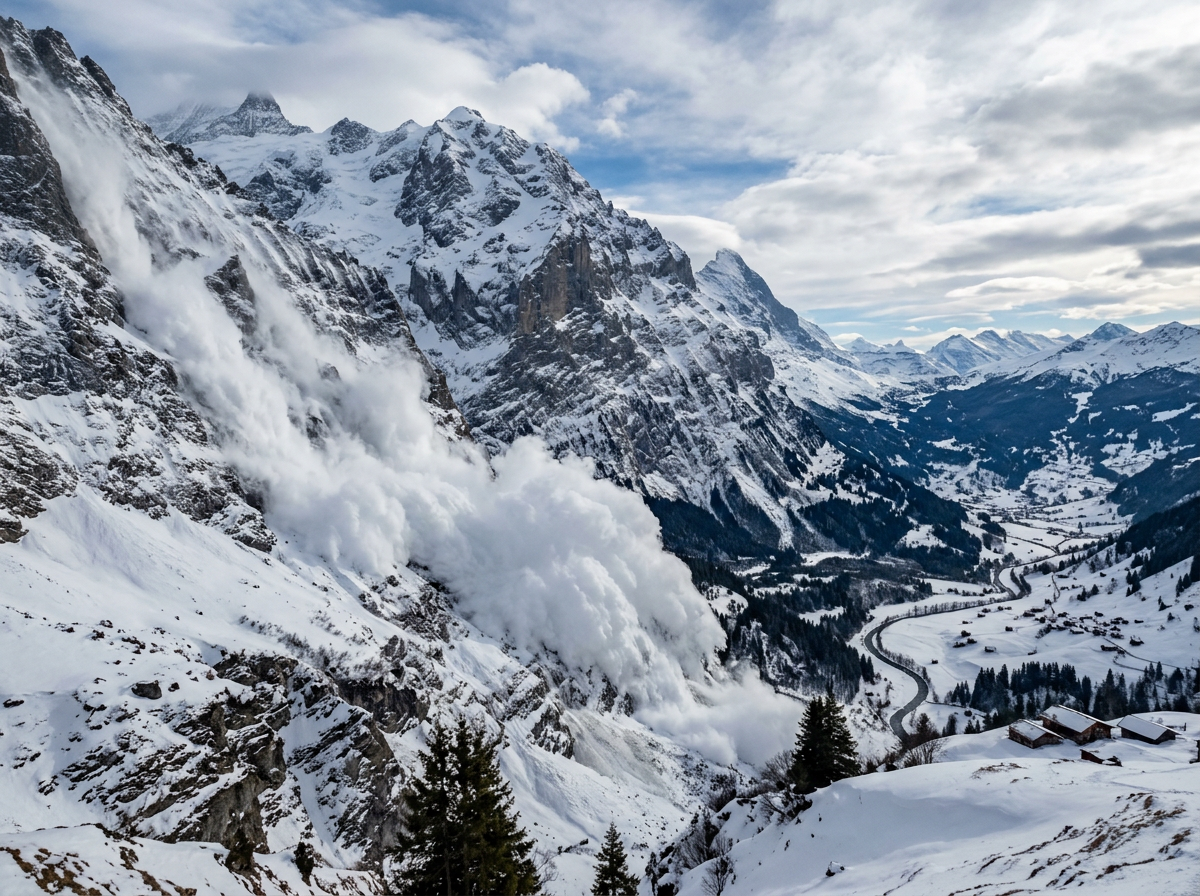
What is it like to be buried in an avalanche?
Photographer and climber Jimmy Chin described feeling the entire slope “spider‑web” and drop out from beneath him, as if the mountain itself had suddenly collapsed. He recalled making just a couple of ski turns before the snow cracked all around him and he was pulled under, instantly realizing he would not be able to ski out and was now at the mercy of the moving slab. Professional skier Elyse Saugstad described seeing only “white muffled darkness,” unable to tell which way was up or down, and unable to breathe properly because the forces were so strong and the snow was compressing her body.
Another survivor, Abby Cooper, wrote that when the debris stopped, her chest felt like “a million tonnes” of snow, forcing her to take only shallow breaths and leaving her unable to stretch or move. Survivors of the 2026 Tahoe/Perry’s Peak avalanche described seeing a “wall of white dotted with strange blurs of color” as skis and clothing flashed by in the moving snow, emphasizing how chaotic and visually confusing the slide was.
A self‑reflective account titled “Buried Alive!” described the victim realizing he would suffocate within about 15 minutes, feeling completely immobilized and crying uncontrollably as he confronted the likelihood of death under the snow.
Is an avalanche survivable?
Most believe that if they were buried in an avalanche, they could simply move their arms to loosen the snow and then dig themselves out, or at least carve out a space around their mouth to breathe. However, being buried in an avalanche is a unique and surprisingly deadly experience. When a human body is buried by an avalanche, it enters a critical physiological state often called Triple H Syndrome. This syndrome describes the complex and often fatal interaction among three conditions: Hypoxia, Hypercapnia, and Hypothermia.
The Triple H Syndrome
The “Triple H” interaction is unique to avalanche victims and differs from the effects of these conditions on the body when considered individually. The “H”s are:
Hypoxia (Low Oxygen): This is the most immediate threat. Approximately two-thirds of victims die of asphyxiation within the first 35 minutes. Without an air pocket, oxygen levels drop rapidly, leading to unconsciousness and cardiac arrest. The victim experiences severe headaches, confusion, dizziness, and an increased heart rate. Hypoxia impairs brain function and, in many cases, causes a false sense of well-being, euphoria, or confusion before leading to unconsciousness.
Hypercapnia (High Carbon Dioxide): Compounding the effects of hypoxia, hypercapnia occurs when a victim inhales their own exhaled CO2, raising blood carbon dioxide levels. In an avalanche, hypercapnia causes cardiovascular instability, further reducing oxygen delivery to the brain.
Hypothermia (Low Body Temperature): While cooling usually slows metabolism and provides neuroprotection, this effect is often lost in avalanche burials. Research suggests that if hypoxia occurs before hypothermia—meaning the body runs out of air before it has a chance to cool down—the cold provides little to no protective benefit.
Why not dig yourself out?
Snow sets like concrete. While the avalanche is moving, it behaves like a fluid, but when it stops, the debris rapidly compacts and bonds into a dense, hard mass. This hardened snow can be as hard as ice and resists pressure from hands and feet, so pushing or “swimming” no longer works. The person ends up encased in a solid shell rather than loose powder. Saugstad confirmed the snow around her was as hard as concrete, but she ended up on her back with her face up, which allowed her to keep breathing until rescuers saw her pink mittens and dug her out.
Most people do not realize how immobilized a buried person becomes. Snow presses in from all directions, filling the gaps around the body and locking the arms, legs, and torso in place. Most fully buried victims report being unable to move even their fingers or wrists, let alone make any digging motion. Without the ability to bend their elbows or shoulders, they cannot create space or leverage for tunneling.
So I’m dead, right?
You can survive an avalanche. The body’s progression through the Triple H states is heavily influenced by the burial environment:
The Air Pocket: If a victim manages to create an air pocket in front of their mouth, hypoxia is delayed. The larger the pocket, the longer the body can maintain oxygenation.
Snow Density: “Powder” snow is more porous, allowing oxygen to filter in and CO2 to escape. Conversely, wet or “cemented” snow prevents gas exchange, accelerating asphyxiation. How densely the snow compacts matters most, but even powdery snow can cause a problem. Some victims describe early breathing problems because they inhale snow into their airways. They noted that they had to stay calm while the snow slowly melted to reopen the airway.
The “Standby” Mode: In rare cases, when a victim can breathe through the snow and their body cools gradually, they may enter a state of deep hypothermia in which vital functions slow dramatically. This condition allowed one skier to survive for 23 hours under the snow in 2023.
But then there’s also physical trauma
Beyond the Triple H Syndrome, mechanical trauma from the force of moving snow accounts for up to 18% of fatalities. However, for those who survive the initial impact, the struggle for air remains the primary biological hurdle, and rescues within the first 10 minutes are the most critical factor for survival.
Wouldn’t an airbag help? Ha, ha, ha! Wait, what?
Yes, avalanche airbags do exist. An avalanche airbag is a specialized backpack with a built‑in inflatable balloon system that you pull to deploy if you’re caught in a sliding avalanche, increasing your body volume so you tend to stay closer to the surface of the moving snow. It makes you a “bigger particle” in the flowing snow, reducing the chance of being completely buried.
Saugstad said it “happened so quickly,” and as the avalanche grabbed her, she pulled the trigger on her airbag backpack and immediately began tumbling “head over heels and head over heels,” with no sense of up or down. She credited the inflatable avalanche airbag backpack with keeping her higher in the debris, on her back, and able to breathe. She believes others in her group might have lived if they had worn similar gear.


