
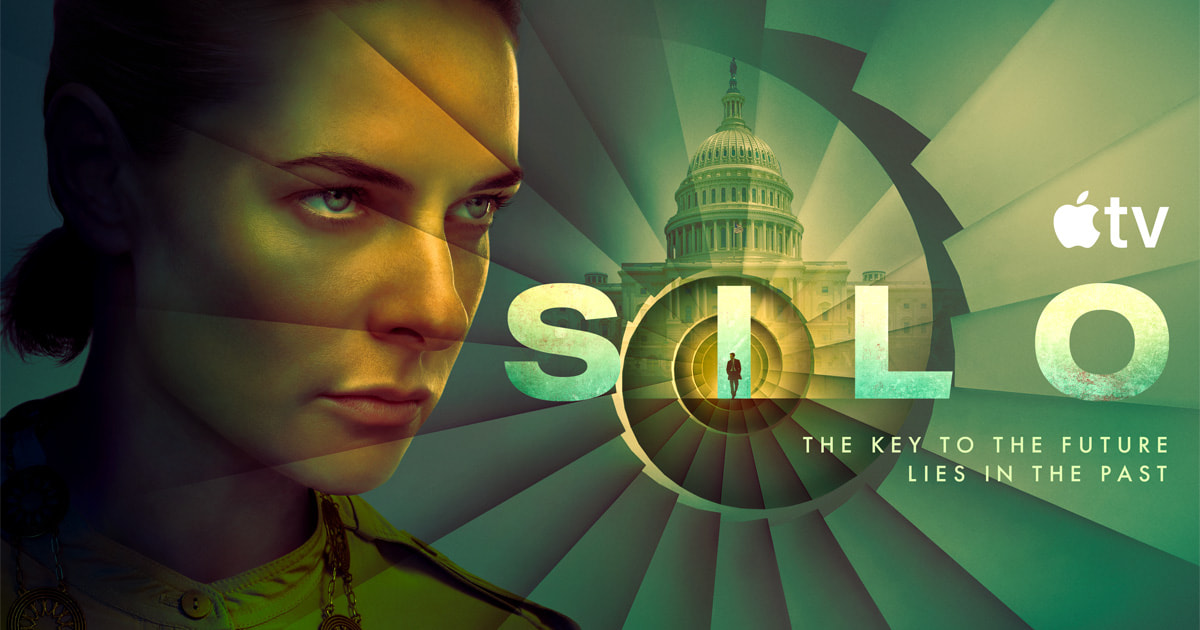
Apple TV+ has dropped the first trailer for Silo season 3, and it signals the biggest break yet from Hugh Howey’s original “Wool” novels. The new footage jumps between the underground dystopia fans know and a fractured “Before Times” where a war between the United States and Iran appears to have triggered the end of the world, all while Rebecca Ferguson’s Juliette Nichols grapples with what looks like a full-on memory wipe.
The series, developed by showrunner Graham Yost and produced by Apple Studios, AMC Studios, and Ferguson herself, has spent its first two seasons gradually peeling back the lies that keep humanity trapped in their underground habitats. Season 1 loosely adapted Howey’s “Wool,” while season 2 pushed into the territory of follow-up books “Shift” and “Dust,” ending with a time jump that finally opened a window into life before the silos. Season 3’s trailer doubles down on that structural experiment, cross-cutting between Juliette’s present-tense storyline in the silo system and a pre-collapse world hurtling toward catastrophe, including images of protests, escalating military tensions, and a geopolitical standoff that specifically name-checks Iran.
That’s a sharp departure from the source material. In the novels, the apocalypse backstory is revealed more obliquely and leans on corporate and governmental hubris rather than a clear, headline-ripped conflict between named nation-states. Reframing the end of the world around a US–Iran war makes the show’s apocalypse feel uncomfortably current and could shift the tone from abstract sci-fi parable to something much more politically charged. It also gives the writers license to craft new characters and events in the Before Times that never appeared on the page, which may explain why the trailer spends so much time outside the silos instead of treating those scenes as brief flashbacks.
The other big swing is what’s going on with Juliette. The trailer strongly implies that she doesn’t remember key revelations from season 2, including the truths she unearthed about the outside world and the wider network of silos. That narrative reset is not in Howey’s books, where the protagonist retains her knowledge and acts on it. On TV, though, wiping Juliette’s memory accomplishes a few things at once: it smooths over the real-world, two-year gap between seasons, it lets new viewers jump in with fewer barriers, and it lets the writers rebuild mysteries without contradicting what long-time fans already know. For a series so rooted in secrets and controlled information, making its lead character forget could become a thematic extension of the silos’ propaganda machine rather than just a convenient plot device.
Apple has already locked in a fourth and final season of Silo, meaning season 3 is effectively the beginning of the endgame rather than a mid-series experiment. With the show now openly diverging from the books—introducing a specific Iran war backstory, altering Juliette’s trajectory, and reshuffling when and how the outside world is revealed—book readers can no longer rely on their knowledge of the trilogy to predict where events are headed. That will likely split the fandom: some readers will bristle at big deviations from Howey’s meticulously structured narrative, while others may welcome a version that surprises them as much as it does first-time viewers.
There is, however, a solid creative logic behind such changes. Serialized television thrives on cliffhangers, parallel timelines, and slow-burn mysteries, and what works as a nested novel trilogy doesn’t always map cleanly to a four-season streaming drama. By leaning harder into the Before Times, the writers can explore how ordinary people and familiar institutions slid into authoritarian bunker logic, echoing contemporary anxieties in a way the books only hint at. By destabilizing Juliette’s memory, they can re-interrogate core questions—who benefits from the silo system, how information is weaponized, what “freedom” even looks like—without simply rehashing past seasons.
For now, Apple and the creative team are keeping the finer plot mechanics under wraps. The trailer is all suggestion: widescreen shots of pre-collapse skylines, glimpses of military hardware and protest marches, Juliette waking up disoriented in a world she no longer fully remembers, and the constant, looming presence of those concrete-packed stairwells that defined the show’s early claustrophobia. With season 3 arriving on July 3 and a final fourth season already guaranteed, Silo is clearly shifting gears from faithful adaptation to reinterpretation. That puts the series in risky territory with an invested book fandom—but it also means the next two seasons might deliver something rarer in prestige sci-fi TV: an ending that even the readers can’t see coming.


