
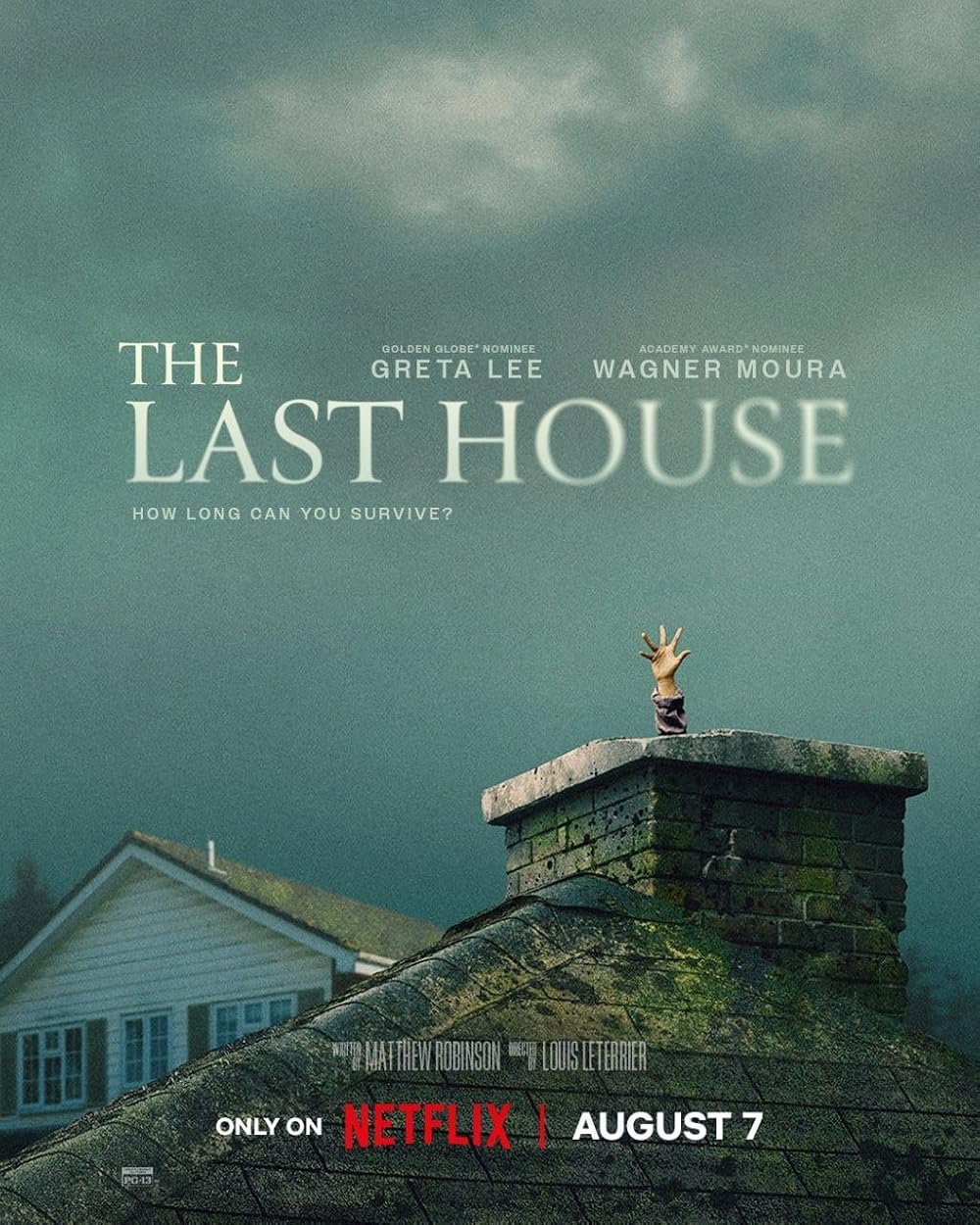
Netflix’s new sci-fi horror thriller The Last House traps the Delgado family inside their flooded suburban home for years, only to end on a sudden, mercy-driven escape that has sharply divided viewers. Wagner Moura, who plays exhausted dad Jason Delgado, is now weighing in on that controversial finale, arguing that the climactic act of compassion is the film’s emotional core and the key to understanding the Delgados’ future.
Across the movie, Jason, his wife Ann (Greta Lee), and their kids Ruth and Graham slowly discover that the relentless rain and rising water levels around their home aren’t just freak weather events but the work of intelligent sea creatures holding them hostage. Five years into their confinement, Jason and Graham rig a harpoon trap that finally pins one of the octopus-like entities, giving the desperate father leverage to demand the family’s freedom. Instead, Ruth realizes the creature is communicating rather than mindlessly attacking and begs her father to show mercy; Jason drops his weapon, sparing the creature’s life, and in return it opens the front door, calls off the others waiting outside, and the rain finally breaks. As their crumbling house sinks into the flooded neighborhood, the Delgados commandeer a dead neighbor’s small boat, rename it Cassidy in honor of their late dog, and sail out into a drowned Seattle in search of any remaining humans. The film jumps ahead to reveal Ruth as the story’s narrator in adulthood, and the final scene sees the family broadcasting into the void and receiving a single staticky “Hello,” a tantalizing hint that other survivors are out there and that this is only “Day 1” of their new life beyond the house.
That pivot from claustrophobic creature feature to almost mythic parable about mercy and survival is exactly what has made the ending so polarizing among sci-fi and horror fans. Some viewers have questioned whether the creatures’ sudden benevolence feels earned after years of terror, and whether the hopeful tone undercuts the nightmarish lockdown metaphor that drives the rest of the film. Others have embraced the finale as a deliberate swing toward optimism, reading the Delgados’ escape as a hard-won reminder that empathy and restraint can break cycles of violence even in apocalyptic circumstances. Critics and explainers have leaned into that ambiguity, noting that the radio reply could belong to another human settlement, a different faction of creatures, or something stranger still, depending on how dark—or hopeful—audiences want to imagine the world beyond the credits.
Moura has been clear that, for him, the ending only makes sense if viewers see Jason’s decision to listen to Ruth as the film’s turning point. In coverage of his remarks, he frames the moment not just as a tactical choice but as Jason finally setting aside his ego and decades of reflexive “fight or control” instincts to trust his daughter’s perception of the creatures. That shift, Moura suggests, is what allows the Delgados to be judged worthy of survival, echoing other interviews in which he describes the story as a parent’s journey toward humbling himself in front of his children. Brazilian outlets have also highlighted how the finale shows Jason realizing that neither the family nor the creature actually wants harm, underscoring Moura’s view that the movie’s horror premise hides a message about recognizing the shared fear on both sides of a conflict. Asked what he hopes happens after the credits, Moura has said he imagines the Delgados eventually finding other survivors and building a new community, leaning into the radio “Hello” as a seed of connection rather than another threat.
The focus on mercy, trust, and parental vulnerability tracks closely with how director Louis Leterrier has talked about The Last House in interviews, describing it as a lockdown-inspired sci-fi horror story that channels the psychological toll of being trapped with your family during crisis. Leterrier, known to genre fans for films like The Incredible Hulk and Clash of the Titans, has emphasized that the movie’s aquatic set pieces and cramped interiors were designed to make the audience feel the same physical and emotional exhaustion the characters endure. Moura has echoed that sentiment, noting the shoot’s intense water work and how living inside Jason’s fear and frustration changed his own perspective on parenting and control. Seen through that lens, the finale’s mercy isn’t a cheap twist but the natural endpoint of a story about a father who spends years trying to engineer his way out of catastrophe only to discover that the real escape hatch is relinquishing control to the next generation.
For now, explainers and fan theories agree that The Last House intentionally leaves plenty of narrative runway—between the “Day 1” title card, the mystery of the radio voice, and the vast drowned world beyond the Delgados’ street—but Netflix has not announced any official continuation. Articles breaking down the ending have repeatedly pointed out how neatly the movie sets up a potential sequel or series following the family as they explore what’s left of civilization or learn more about the creatures’ motives. Whether or not viewers ever see that story, Moura’s comments push audiences to revisit the finale with a different emphasis: less on the mechanics of how the creatures control the rain and more on the moral question of what kind of world the Delgados—and by extension, we—choose to build once the doors finally open.


