
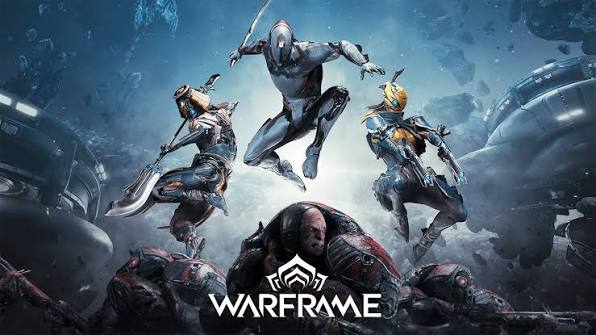
If you are craving a huge sci-fi RPG that feels like Mass Effect’s cinematic space opera mashed up with Destiny’s co-op grind, Warframe is already delivering that fantasy at massive scale—and it is still completely free to download and play. The long-running online action RPG from Canadian studio Digital Extremes launched in 2013, but a relentless update schedule has turned it into a behemoth that can easily soak up 700 hours or more for invested players. On top of that, it sits at a 9/10 user rating on major PC storefronts and runs on virtually every modern gaming device, including PC, PlayStation 4 and 5, Xbox One and Series X/S, Nintendo Switch and its successor, plus iOS and Android.
Warframe casts you as a Tenno—an awakened warrior piloting biomechanical exosuits called Warframes—fighting across a warped, far-future solar system ruled by techno-fascist empires and void-touched relics. The core loop fuses third-person shooting, acrobatic melee combat, and over-the-top abilities into a high-speed power fantasy that plays like a hybrid of character action game and MMO-lite looter. Over more than a decade, Digital Extremes has layered on traditional quests, open-world landscapes, starship combat missions, and reputation-driven syndicate systems, giving Warframe a breadth of activities more commonly associated with premium single-player RPGs than with free-to-play shooters.
A big reason outlets are now steering RPG fans toward Warframe is its growing library of cinematic story arcs, structured as a continuous saga rather than disposable seasonal content. Digital Extremes has spotlighted more than 30 hours of fully voiced, cutscene-heavy “Cinematic Quests” such as The Second Dream, The War Within, and The New War, and has since expanded that narrative with time-bending chapters like Warframe: 1999 and the upcoming Tau storyline, pushing the game even further into full space opera territory. Completion estimates on tracking site HowLongToBeat now peg thorough solo runs at well beyond 700 hours—with some categories topping 1,000 hours once side activities and gear chasing are factored in—lining up with ScreenRant’s framing of Warframe as a 700-hour epic hiding in plain sight.
All of that depth sits inside a free-to-play model that fans and commentators frequently highlight as one of the more generous in the live-service space. The base game, its headline expansions, and new Warframes are delivered as free updates, while the premium currency largely exists to accelerate crafting or purchase cosmetics and can be obtained indirectly through player trading rather than mandatory cash purchases. Warframe’s battle pass analogue, the recurring Nightwave system, has historically offered a single free reward track instead of a paid tier, and recent seasons like Nightwave Mix: Amir’s Shockwave have continued to shower players with at-no-cost cosmetics and useful equipment for simply completing daily and weekly challenges.
Despite crossing the decade mark, Warframe’s release cadence more closely resembles that of a newly launched live-service juggernaut than an aging relic. In 2025, the Isleweaver update added the 61st playable Warframe, Oraxia, extended the post–Warframe: 1999 storyline, overhauled elements of the early-game experience, and introduced a new clan operation, all rolled out across platforms as a free download. More recently, Digital Extremes has mixed in events such as Nightwave Mix: Amir’s Shockwave and multi-week anniversary promotions that hand out limited-time skins, weapons, and boosters, while Tennocon presentations have teased Warframe: Tau, a major narrative chapter that will open an entirely new star chart in the Tau system at no extra cost later this year.
For players staring down a packed release calendar and wondering where to sink serious time, Warframe’s pitch is blunt: Mass Effect–sized storytelling, Destiny-style co-op grinding, and MMO-grade buildcrafting, all without an entry fee. Jumping in now means inheriting more than a decade of accumulated systems and content, but it also means benefiting from refreshed onboarding tools, quality-of-life passes, and a roadmap that suggests Warframe is still ramping up rather than slowing down. If you have an appetite for a 700-hour sci-fi rabbit hole and the patience for some free-to-play grind, this long-running space-ninja saga may be the rare live-service game that actually earns its comparisons to the genre’s biggest single-player and shared-world heavyweights.


