
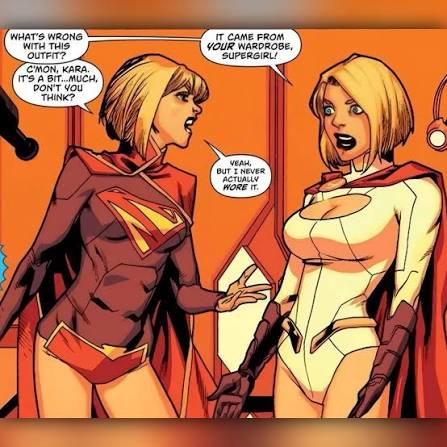
DC has never been shy about rewriting reality, but few characters embody that chaos like Supergirl and Power Girl. Polygon’s new explainer series Issue At Hand devotes its second episode to untangling how “two” Supergirls became entirely different heroines thanks to Crisis on Infinite Earths, editorial mandates, and a multiverse that can’t sit still, turning Kara Zor-El and Kara Zor-L into a living timeline of DC’s continuity patchwork.[Polygon]
To understand why fans still argue about who Supergirl “really” is, you have to start before the Crisis. The classic Supergirl, Kara Zor-El, debuted in 1959’s Action Comics #252 as Superman’s cousin from the surviving Kryptonian outpost Argo City, quickly becoming a staple of Silver Age whimsy and Teen of Steel melodrama.[Wikipedia] In 1976, DC added a twist: an Earth-Two counterpart, Kara Zor-L, introduced as Power Girl in All-Star Comics #58, created by Gerry Conway, Ric Estrada and Wally Wood as the tougher, older cousin of Golden Age Superman Kal-L.[Wikipedia][DC.com] On paper, it was simple multiverse math – two Kryptonian cousins, two Earths – but it set the stage for decades of headaches once DC decided to blow the multiverse up.
When Crisis on Infinite Earths collapsed the multiverse into a single “New Earth,” the editorial edict that Superman should be comics’ lone surviving Kryptonian caused an immediate problem: what do you do with a second Kara whose entire identity is “Superman’s cousin”?[DC.com] Supergirl herself was temporarily replaced by the shape-shifting “Matrix” Supergirl and later by human-angel fusion Linda Danvers, while their Earth-Two counterpart Power Girl was retconned away from Krypton entirely. For a stretch of post-Crisis stories, Kara Zor-L was reimagined as the descendant of Atlantean wizard Arion, a mystical origin that never really fit the character but satisfied the “no extra Kryptonians” rule.[The Mary Sue][Maid of Might]
That patch held until the mid-2000s, when Infinite Crisis cracked the multiverse back open and quietly admitted what fans already suspected: Power Girl was always meant to be Superman’s cousin from a lost Earth-Two.[DC.com] Her Atlantean lineage was discarded, her Kryptonian heritage restored, and her stories began leaning back into the “refugee from a dead universe” angle. At the same time, the modern Kara Zor-El Supergirl returned to prominence, leading to a DC Universe that now had two different Super-family heroines with overlapping names, powers, and tragic origin stories. As fans on forums and wikis have documented, explaining the difference between “the Supergirl who lived” and “the Supergirl who became Power Girl” became a rite of passage for anyone diving into back issues.[DC Database][DC Database]
Then came the New 52 in 2011, which made everything more confusing and, paradoxically, easier. In this rebooted line, the Power Girl of Earth-2 initially operated under the Supergirl mantle before adopting the Power Girl identity after being stranded on the main Earth, merging the long-running “Earth-Two cousin” idea with the familiar Supergirl branding.[DC.com] Subsequent relaunches, including Doomsday Clock and Dark Nights: Death Metal, folded the Justice Society and Power Girl back into the primary continuity while hand-waving away the contradictions by giving her a kind of meta-memory of every origin she’s ever had.[Reddit] Today’s Power Girl is effectively the same character readers met in the Bronze Age, but she carries the scars of every retcon like invisible continuity baggage.
That’s why Polygon’s Issue At Hand zeroes in on Supergirl and Power Girl as a way to explain DC’s “post-Crisis patch history” writ large. These two “cousins” have been kryptonian, Atlantean, angelic, multiversal refugees, and reboot survivors, depending on which longbox you’re digging through. By walking viewers through the jumps from Earth-One and Earth-Two to New Earth, New 52 Earth-2, and the current, post-Rebirth status quo, the episode turns a notoriously tangled set of character bibles into a case study in how corporate mandates, reader nostalgia, and creative reinvention collide on the comics page.[Polygon] For fans trying to sort out why one Kara wears a bright red skirt while the other rocks a white tunic with a windowed chest emblem, the weird history behind those costumes isn’t just trivia – it’s the story of how DC keeps rewriting its own universe and expecting its heroes to survive the fallout.


