
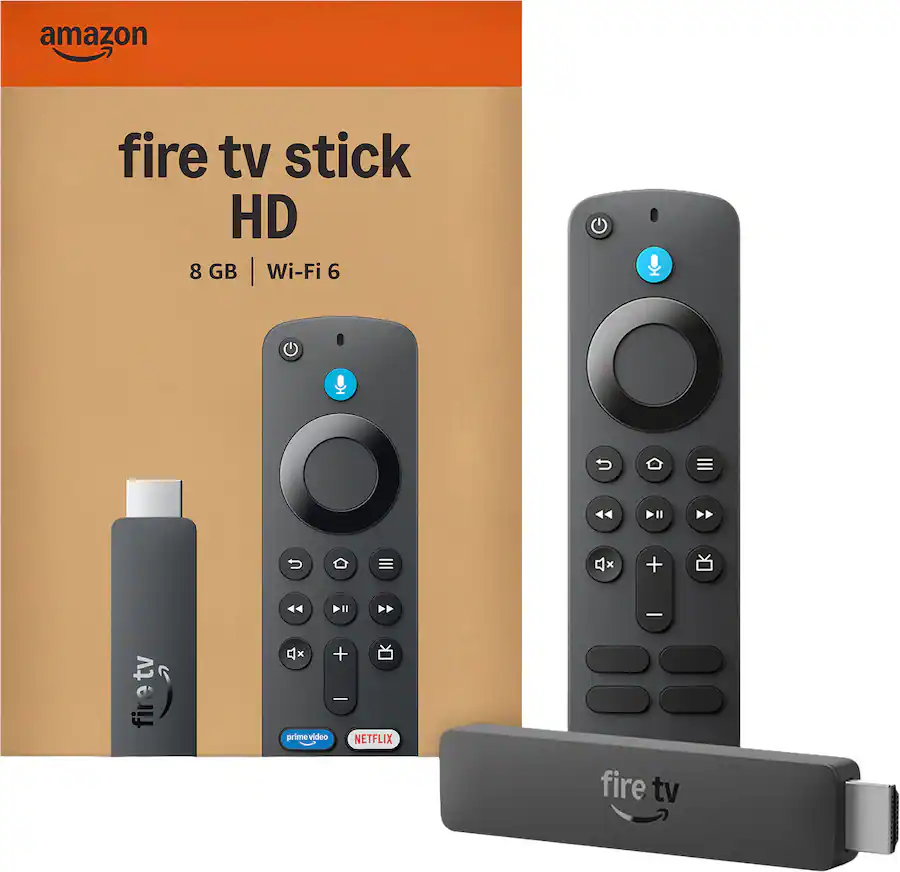
Amazon’s Fire TV Stick has quietly gone from impulse-streaming dongle to long-term living room fixture, which makes a simple question surprisingly tricky: how long is a new Fire TV Stick actually supposed to last? Recent documentation and coverage reveal that Amazon is now publishing explicit support end dates for most Fire TV devices, with current sticks guaranteed security updates into 2030, but the story of how long they remain usable is more nuanced than a single calendar deadline.
As first reported by Engadget, Amazon’s device support policy hinges on software security, not an official “lifespan” for the hardware itself. The company states that Fire TV devices will receive security updates for at least four years from the date they were purchased new from Amazon, or until the model’s listed support deadline, whichever is later. For nearly all recent Fire TV Sticks—including the Fire TV Stick 4K Select, Fire TV Stick 4K Plus, Fire TV Stick HD (1st and 2nd gen), Fire TV Stick Lite, Fire TV Stick (3rd gen), Fire TV Stick 4K Max (1st and 2nd gen), and the Fire TV Cube (3rd gen)—that deadline is December 31, 2030. The lone outlier is the original 2018 Fire TV Stick 4K, which drops off one year earlier on December 31, 2029. Guides from outlets like How-To Geek and Tom’s Guide note that Amazon effectively treats these dates as “expiration” markers for official support, and show where to find the listed end-of-support window on product pages.
Official support dates, however, don’t fully answer how long your stick will feel fast enough to use every night. Consumer tech sites and user anecdotes paint a picture of hardware that can technically keep booting for many years, but starts to struggle as apps and operating systems grow heavier. Pocket-lint’s breakdown suggests many Fire TV Sticks are practically ready for retirement after around three to five years, as newer streaming apps and 4K HDR demands push the limited RAM and aging system-on-chip to their limits. Several maintenance-focused guides estimate a typical real-world lifespan of two to four years under normal use, with careful upkeep—clearing cache, avoiding excessive heat, and keeping firmware current—stretching that to six or more. On forums, some owners report sticks lasting five to ten years, while others see noticeable slowdown and frequent crashes in as little as 18–24 months, depending on usage, sideloaded apps, and background tasks.
Software support from Amazon is only one half of the compatibility equation; app makers have their own timelines. Streaming heavyweights can decide to cut off older Fire TV hardware even if the underlying device still receives security patches, effectively shortening its practical lifespan for anyone who relies on those apps. Netflix, for example, is ending support for Amazon’s first-generation Fire TV devices in June 2025, meaning the app will simply stop working on that early hardware even before some broader Fire TV support windows close. That kind of third-party cutoff is a warning sign: as older sticks fall behind modern DRM requirements and video codec support, key services may choose to focus on newer models, nudging power users toward upgrades well ahead of Amazon’s official end-of-support dates.
For Fire TV owners trying to decide when to replace a stick, the support tables now serve as a useful baseline rather than a hard “death clock.” If your device is one of the current-gen sticks with a listed support date of December 31, 2030, you can expect security fixes for at least the next four years—and likely longer if you bought it recently—barring any sudden changes in Amazon’s policies. That said, a few practical checkpoints matter more day to day: if the interface feels sluggish, 4K streams constantly buffer while your internet speed checks out, or major apps begin dropping updates for your specific model, those are strong signs that the hardware is aging out of modern streaming workloads. Using the published support deadline alongside routine performance checks gives a clearer sense of whether your current stick is still in its prime or just limping across the finish line.
For geek-culture households that treat streaming boxes like modular console generations, the new transparency around Fire TV support dates makes upgrade planning much easier. A fresh stick bought today is effectively guaranteed security support deep into the second half of the decade, but its fun-factor—and viability for 4K Dolby Vision binges or cloud gaming experiments—will depend on how aggressively apps evolve. Retiring hardware doesn’t have to mean e-waste, either: older, unsupported sticks are increasingly repurposed by tinkerers as offline media players, lightweight retro game front-ends, or testbeds for sideloaded apps, as long as they’re kept away from sensitive accounts and networks. In short, a Fire TV Stick’s official support window tells you how long Amazon plans to keep it secure, while its true lifespan in a geek’s entertainment stack is determined by performance, app support, and just how much patience you have for spinning buffering wheels.


