
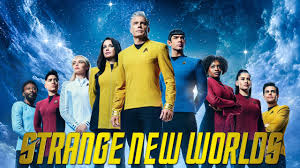
After nearly two decades of fan debate, Star Trek: Strange New Worlds has finally put a spotlight on why Leonard Nimoy’s Ambassador Spock went out of his way to make sure Chris Pine’s James T. Kirk commanded the Enterprise in J.J. Abrams’ 2009 reboot. By tracking Ethan Peck’s young Spock through a daring starship heist, the prequel series gives new texture to Spock’s long game across timelines and makes his Kelvin-era “Kirk must be captain” gambit feel less like a narrative shortcut and more like the culmination of a philosophy he’s held since his earliest days in Starfleet.
In the 2009 film, Nimoy’s Spock—identified as “Spock Prime”—emerges from a black hole created while trying and failing to save Romulus from a catastrophic supernova, only to find himself in a branched reality kicked off by Nero’s attack on the USS Kelvin decades earlier. That incursion creates the Kelvin timeline, a divergent universe where George Kirk dies at Nero’s hands, altering Jim’s upbringing and setting the stage for a more volatile young officer who nevertheless retains the potential to be the Enterprise’s defining captain. Spock Prime recognizes that the survival of the ship, and arguably the stability of this new timeline, hinges on reuniting Kirk and Spock in the configuration he knows from his own history—Kirk in the center seat, Spock at his side—and he quietly manipulates events so that Zachary Quinto’s younger Spock cedes command to Kirk after being deemed “emotionally compromised” by Vulcan’s destruction.
Strange New Worlds season 2’s premiere, “The Broken Circle,” circles back to an earlier chapter and shows that even as a lieutenant, Spock was already willing to bend Starfleet protocol to ensure the right person was in command when the stakes were high. With Captain Pike off the board and a conspiracy brewing on the Klingon front, Peck’s Spock announces his “obvious” plan—steal the Enterprise—to mount an unauthorized rescue mission and stop a plot that could reignite the Federation–Klingon war. The episode’s official recap describes Spock taking the ship with the tacit support of the bridge crew, a choice that frames him as someone who understands that the command chair is less about rigid hierarchy and more about aligning the ship’s unique talents with the crisis at hand. That willingness to treat command as a tool rather than a prize foreshadows the elder Spock’s later insistence that Kirk, not Spock, belongs in the captain’s seat of the Kelvin-timeline Enterprise.
StarTrek.com’s look at key “hinge” moments in the Kelvin films explicitly notes that Ambassador Spock believes the Enterprise’s survival depends on Kirk as captain with Spock’s logic as his guiding compass, underscoring that Spock’s interventions in the reboot are grounded in long-term strategic thinking, not favoritism. When Spock Prime advises young Kirk and then meets his alternate, he frames their relationship as essential to the universe itself, suggesting that across timelines certain relationships are fixed points that keep reality from spinning out. Later coverage has emphasized that Nimoy’s approach to the character in 2009 shifted to account for Spock’s role as a “Prime messenger,” someone whose mission is no longer just scientific exploration but safeguarding the integrity of Star Trek’s original timeline while honoring a new one. Seen through the lens of Strange New Worlds, his decision to engineer Kirk’s rise on the Kelvin Enterprise reads like the final, calculated move of someone who has believed since his youth that the ship works best when Kirk leads and Spock supports.
This isn’t the first time Strange New Worlds has retrofitted Spock’s history to bolster classic movies and series; the show has already explored why Klingons would later trust Spock enough to help broker peace in Star Trek VI: The Undiscovered Country, tying Ethan Peck’s diplomatic efforts to Leonard Nimoy’s eventual role as a key negotiator. Elsewhere, modern coverage has highlighted how current Trek canon has begun to nod toward Gene Roddenberry’s earliest, abandoned concepts for Spock, including the idea that he could have been half Martian rather than half Vulcan, underlining how fluid the character’s identity has always been behind the scenes. By layering these retroactive explanations, the franchise uses Spock as a bridge—between Prime and Kelvin timelines, between 1960s television and prestige streaming-era storytelling, and between the character Nimoy originated and the newer interpretations that followed.
For fans who spent years parsing the 2009 film’s time-travel logic and debating whether Spock Prime’s meddling in the Kelvin timeline was ethically sound, Strange New Worlds offers a welcome reframe: this is simply Spock being Spock, guided by an intricate blend of logic, loyalty, and an almost spiritual belief in the Kirk–Spock dynamic. Leonard Nimoy’s final arc as the character—ending with Spock’s off-screen death on New Vulcan in 2263, mirroring the actor’s passing in 2015—now feels even more purposeful when his last major act is securing a future where another Kirk and another Spock can find each other. Chris Pine’s hot-headed captain and Zachary Quinto’s conflicted Vulcan weren’t just beneficiaries of studio-era reboot mechanics; they were handpicked successors in a legacy that the original Spock spent a lifetime protecting, a legacy that Strange New Worlds continues to deepen every time it lets young Spock steal a starship or break a rule in the name of keeping the Enterprise on its destined course.


