
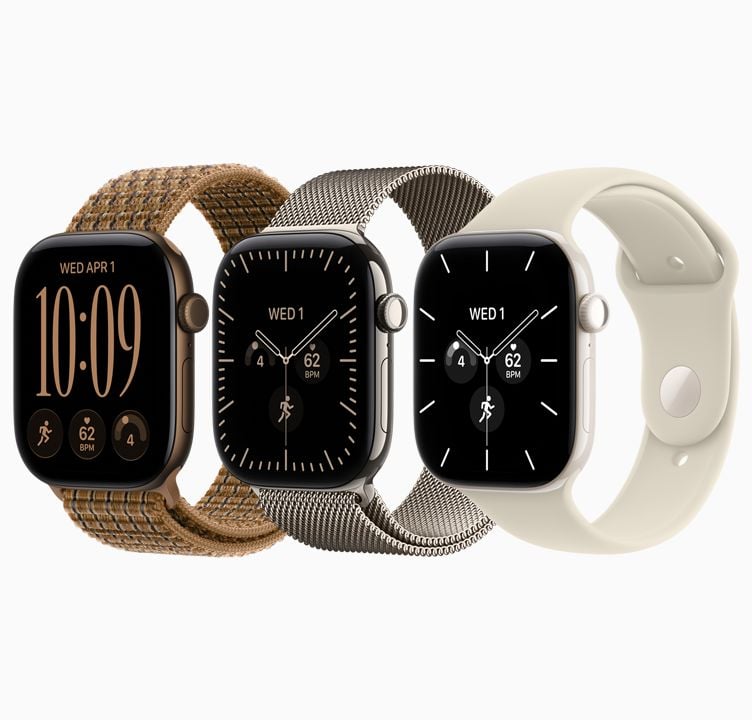
At a glance, Apple Watch Series 12 looks like another incremental refresh, but its new guts mark one of the biggest pivots in Apple’s wearable strategy since the original Watch launched. Under the familiar aluminum, stainless, and revived ceramic shells, Apple has rebuilt the sensor stack and added a heavy dose of on-device and cloud AI that turns the Series 12 into a proactive health copilot rather than a passive fitness tracker. The Verge’s review frames it as the start of a new wearable era, and the deeper technical changes back that up.
The headline upgrade is Apple’s new Health Sensing System, paired with the S11 chip, which allows the watch to capture heart data more often and with higher precision than any previous Apple Watch. Apple says Series 12 can take background heart rate readings every five seconds all day and measure heart rate variability (HRV) as often as every five minutes, a massive increase in sampling that powers new metrics and alerts. Those readings feed features like a Readiness score that estimates how prepared your body is for stress or training, plus a Health Age metric that tries to translate long-term trends into an easy-to-grasp number. Together with improved step tracking, sleep scoring, and cycle tracking in watchOS 27, the watch shifts from logging data to constantly interpreting it.
This continuous sensing is designed to elevate the Watch from a workout buddy into an all-day health system that can quietly flag emerging issues. More frequent HRV sampling can give a clearer view of recovery and stress, two metrics that rival platforms like Oura and Whoop have built their brands on, but which Apple only now matches with its own readiness insights. The redesigned Health experience, which rolls in vitals tracking and recovery information, uses AI to surface patterns across your entire day instead of forcing you to dig through charts. Apple and early reviewers stress that these features aren’t medical diagnoses, but for health-conscious geeks used to juggling multiple trackers, the consolidation is significant.
Series 12’s AI story extends well beyond heart stats, though, into what Apple calls Audio Intelligence—an umbrella for several new sound-driven features that make the Watch feel more like an ambient computer on your wrist. Sound Recognition can automatically notice key noises like sirens, alarms, or doorbells and alert you, a clear boon for deaf and hard-of-hearing users and for anyone who lives with constant background chaos. Live Rewind lets you jump back roughly 15 seconds in a recent conversation to transcribe what was said, while Siri Recap can generate summaries of your interactions for reference later, all powered by the S11 and Apple’s AI stack. Vice points out that these tools amount to a kind of polite eavesdropping, raising fresh questions about how much we want our wearables to listen—even when the pitch is productivity and accessibility.
On the surface, Series 12 stays conservative: same case sizes, same general industrial design, but with a new ceramic option that echoes some of Apple’s most collectible Watch models. Underneath, though, nearly every subsystem has been tuned for more data and longer uptime, with all-day battery rated at up to 24 hours of normal use and up to 38 hours in Low Power Mode, plus fast charging that can deliver around 12 hours of use from a 15-minute top-up. Step tracking is more accurate, there’s a new Steps complication for real-time counts on the watch face, and emergency and safety features like Crash Detection and Check In remain baked into the platform. Compared to Series 11, the big story isn’t a flashier screen or radical redesign—it’s a watch that squeezes more signal out of the same form factor.
Apple Watch Ultra 4 inherits much of this new sensing and audio intelligence package, but the Series 12 is the mainstream device that puts Apple’s AI health vision on millions of wrists. For tech fans and quantified-self nerds, the appeal is obvious: a single gadget that samples vitals almost continuously, interprets them into daily readiness and health age scores, and quietly records the sonic texture of your life for safety and recall. For privacy advocates, the Watch now sits at the intersection of intimate biometrics and ambient audio, an always-on node that demands trust in Apple’s promise of privacy-centric recording and on-device processing. However you feel about that trade-off, it’s clear the Series 12 isn’t just another spec bump—it’s the moment Apple fully embraced the idea of the smartwatch as an AI-assisted health monitor and life recorder, and that shift will define where wearables go next.


