
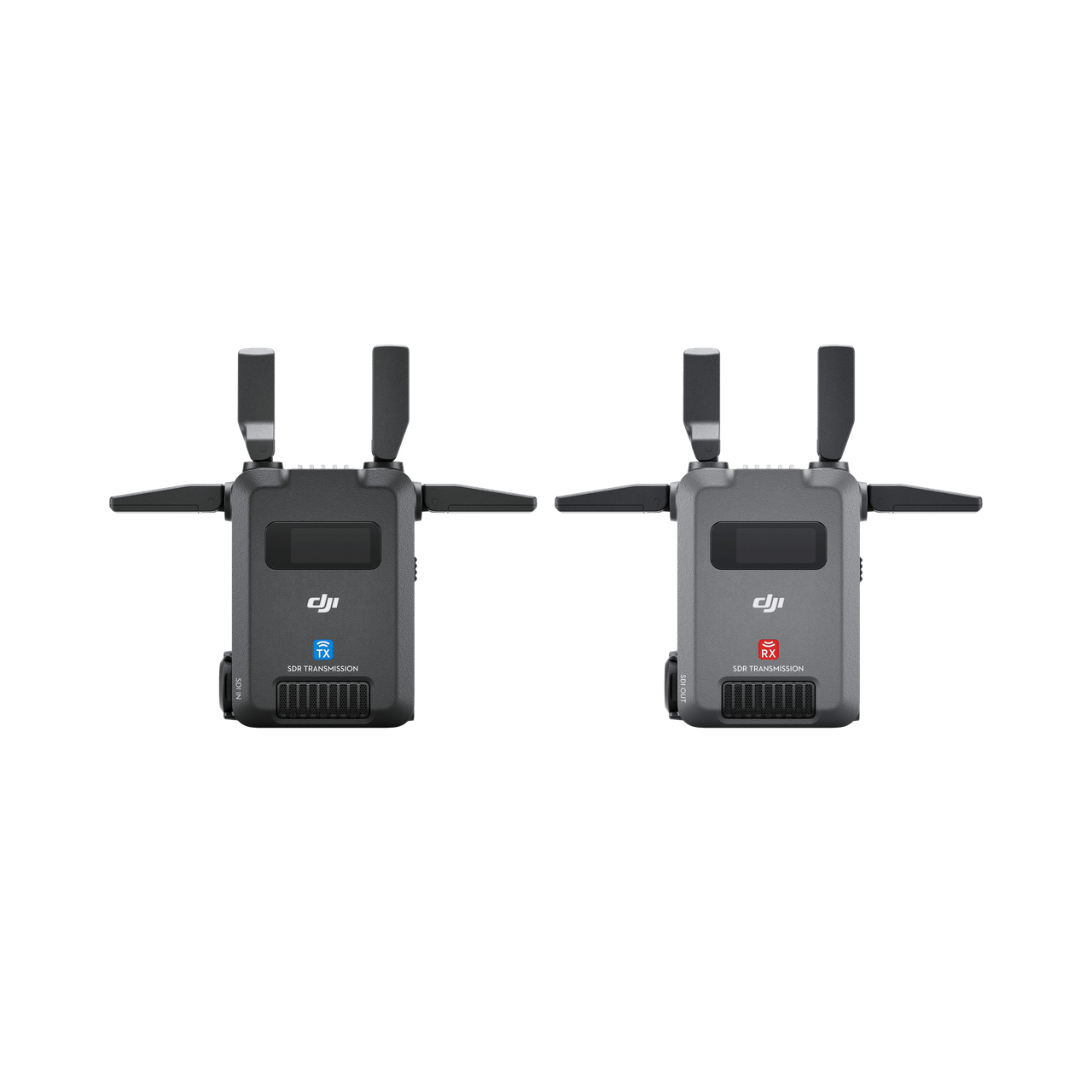
DJI is quietly turning its radio tech into one of its biggest competitive weapons, and the new SDR Transmission 2 shows exactly how far the company is willing to push pro-grade wireless video.
As highlighted in recent coverage, the compact transceiver beams DCI 4K/60 fps, 10-bit HDR video up to around 2.5 miles (4 km), targeting film sets, live productions and multi-camera rigs that need high-quality monitoring without cables.
The SDR Transmission 2 is a single box that can be switched between transmit (TX) and receive (RX) roles, replacing the separate transmitter and receiver DJI was selling in 2024 and simplifying how crews build out their video village.
On the spec sheet, it supports wireless delivery of DCI 4K/60 fps in 10-bit HDR using H.265 compression at up to a 50 Mbps bitrate, with latency rated as low as 35 ms across a line-of-sight range of roughly 4 km.
One transmitter can feed up to eight receivers simultaneously, and regional coverage suggests larger systems can chain dozens of units for complex multi-camera coordination on big sets.
DJI initially launched SDR Transmission 2 in China on September 1, pricing a single transceiver at 1,999 yuan (around $300) and a two-unit combo at 3,499 yuan (roughly $520), plus an expansion kit that adds SDI connectivity for another 999 yuan.
Japan followed with official distribution, listing the unit at 53,790 yen and the combo at 102,630 yen, while Hong Kong retailers have set starting prices at HK$2,399 for local buyers.
Specialist resellers in Japan also emphasize that up to eight units can be connected, that the TX/RX role can be switched on the fly, and that the system integrates cleanly with DJI’s Ronin gimbals to keep camera control and monitoring in one ecosystem.
Compared with the first-generation SDR Transmission system, which topped out at 1080p/60 video and a shorter effective range, the new hardware is a straight-line upgrade in resolution, color fidelity and reach.
Regional reviews point out that the added 10-bit HDR sampling preserves highlight and shadow detail that was lost on earlier gear, and that the improved radio design is built to punch through walls, structural clutter and RF-heavy urban environments more reliably than conventional links.
Low latency is critical not just for directors’ monitors but for wireless follow-focus units and remote gimbal pans, where even a small delay can throw off timing and focus pulls.
If the spec sheet reads like a dream for indie crews and drone operators, there’s one big catch: buyers in the United States are effectively locked out for now.
Industry breakdowns note that there is currently no new FCC equipment authorization on record for SDR Transmission 2, which means DJI cannot legally sell the system through official channels in the US, even as it demos the hardware at European trade shows like IBC in Amsterdam.
Commentators warn that importing units through grey channels could leave American productions exposed if interference complaints arise or regulators decide to scrutinize unapproved RF gear on set.
For the rest of the world, SDR Transmission 2 fits neatly into DJI’s long-running strategy to own the entire imaging stack, from drones and gimbals to lenses, monitors and now high-end wireless pipes.
Drone pilots get a clearer, more color-accurate view for complex aerial shots, while streaming crews, esports producers and virtual-production stages gain a relatively affordable way to push 4K HDR feeds around a venue without dragging fiber behind every camera.
If and when the regulatory knots are untangled, expect this little radio brick to show up everywhere from micro-budget genre shoots to big-studio sci-fi sets—because once you’ve watched a director call the shots off a clean 4K HDR wireless feed, going back to mushy 1080p feels like stepping out of the future.


