
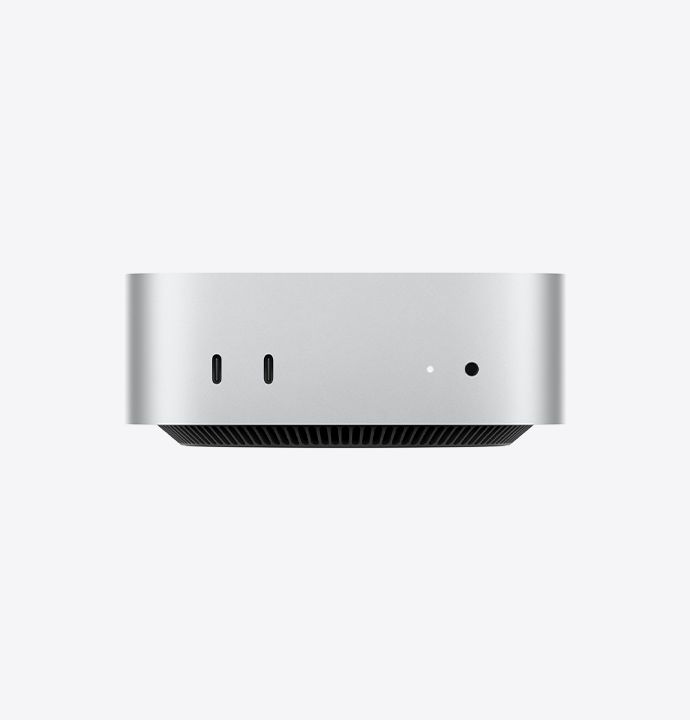
Apple’s new Mac mini powered by the M6 chip is the most muscular version of the pint-sized desktop yet, but its $899 starting price has taken a serious bite out of its value-for-money reputation. As Engadget notes in its review, the machine is still arguably the best compact desktop on the market, yet the higher sticker price means the “fun” of grabbing a cheap little Mac has largely evaporated. The tension between raw performance and affordability has turned this refresh into one of Apple’s most contentious Mac mini updates in years.
On paper, the M6 upgrade is a major leap over the previous M4 generation, especially for workloads that lean on AI and heavy multitasking. The M6 brings a 12‑core CPU and 12‑core GPU, up from the 10‑core designs in the M4 chips, along with up to 40% faster CPU performance, twice the graphics and storage speeds, and as much as 4× faster AI processing according to Apple’s own benchmarks. Under the hood, the chip is built on a cutting-edge 2‑nanometer process from TSMC, a move that aligns the Mac mini with Apple’s broader push toward efficient, on-device AI across its hardware lineup. For power users, that means the little silver box is now far more capable of running local language models, creative tools, and agentic AI workflows without offloading everything to the cloud.
Apple paired those silicon gains with a round of I/O and connectivity modernizations that make the new mini feel less like an entry-level machine and more like a serious workstation. All M6 configurations now support Wi‑Fi 7 and Bluetooth 6, replacing the Wi‑Fi 6E and Bluetooth 5.3 of the 2024 models, and the default Ethernet port has been bumped from 1 Gb to 2.5 Gb, with a 10 Gb option still available for those wiring into faster networks. The M6 versions provide Thunderbolt 4 ports while the higher-end M5 Pro configurations step up to Thunderbolt 5, and every model continues to drive up to three external displays, keeping the mini viable for multi-monitor creative and coding setups. Storage and memory ceilings also reflect that pro-leaning tilt: M6 configs top out at 32GB of unified memory and 2TB of SSD, while the M5 Pro variants can be pushed to 64GB and 8TB, with mid-range M6 builds like a 512GB model already climbing to around $1,099.
The controversy, and Engadget’s core criticism, comes from the way Apple has repositioned the base model’s price without sweetening the fundamental specs. The entry-level M6 Mac mini still ships with 16GB of unified memory and a 256GB SSD, the same capacities many users criticized as cramped in prior generations. Yet the price has marched upward over successive revisions: the previous mini’s launch configuration hit $599 before being raised to $799, and now the new M6 base lands at $899, with education buyers seeing $799 instead. That turns what was once the go-to recommendation for “cheap Mac for the family or a hobby server” into a purchase that sits uncomfortably close to more flexible PC mini‑desktops and even some full-size gaming rigs, especially once you factor in external peripherals and storage.
Apple’s strategy makes more sense when you zoom out and look at the company’s broader focus on AI-heavy workflows and higher-margin desktop hardware. The M6 Mac mini arrived alongside updated Mac Studio models as part of a push to “tap the AI boom,” with Apple emphasizing local AI performance as the headline feature. Coverage from outlets like TechCrunch, 9to5Mac, and regional tech press has consistently framed the new mini as a compact AI workstation first and a general-purpose home computer second, highlighting its ability to deliver four times the AI performance of the M4-based predecessor. For offices already running macOS or teams experimenting with on-device models, that repositioning makes the new mini an attractive box to slide under a monitor; for budget-conscious geeks who loved the old “cheap Mac brain” mythos, it feels like the product has been reclassified into a higher tax bracket.
For fans trying to decide whether to upgrade, the value calculus has become complicated enough that Mac-focused sites are publishing detailed buyer’s guides comparing the 2024 and 2026 minis. Those comparisons show clear wins for the M6 in synthetic benchmarks and AI tests, but they also underline how much Apple is now charging to access those gains versus picking up an older M4 mini on sale or refurbished. Engadget’s verdict—that the Mac mini M6 remains the best compact desktop while no longer being a great deal—captures that split reality: if you need a tiny machine with serious AI-friendly horsepower and modern connectivity, this is the strongest mini Apple has ever built; if you mainly wanted a playful little Mac to tinker with on the cheap, the new price of admission makes the fun a lot harder to justify.


