
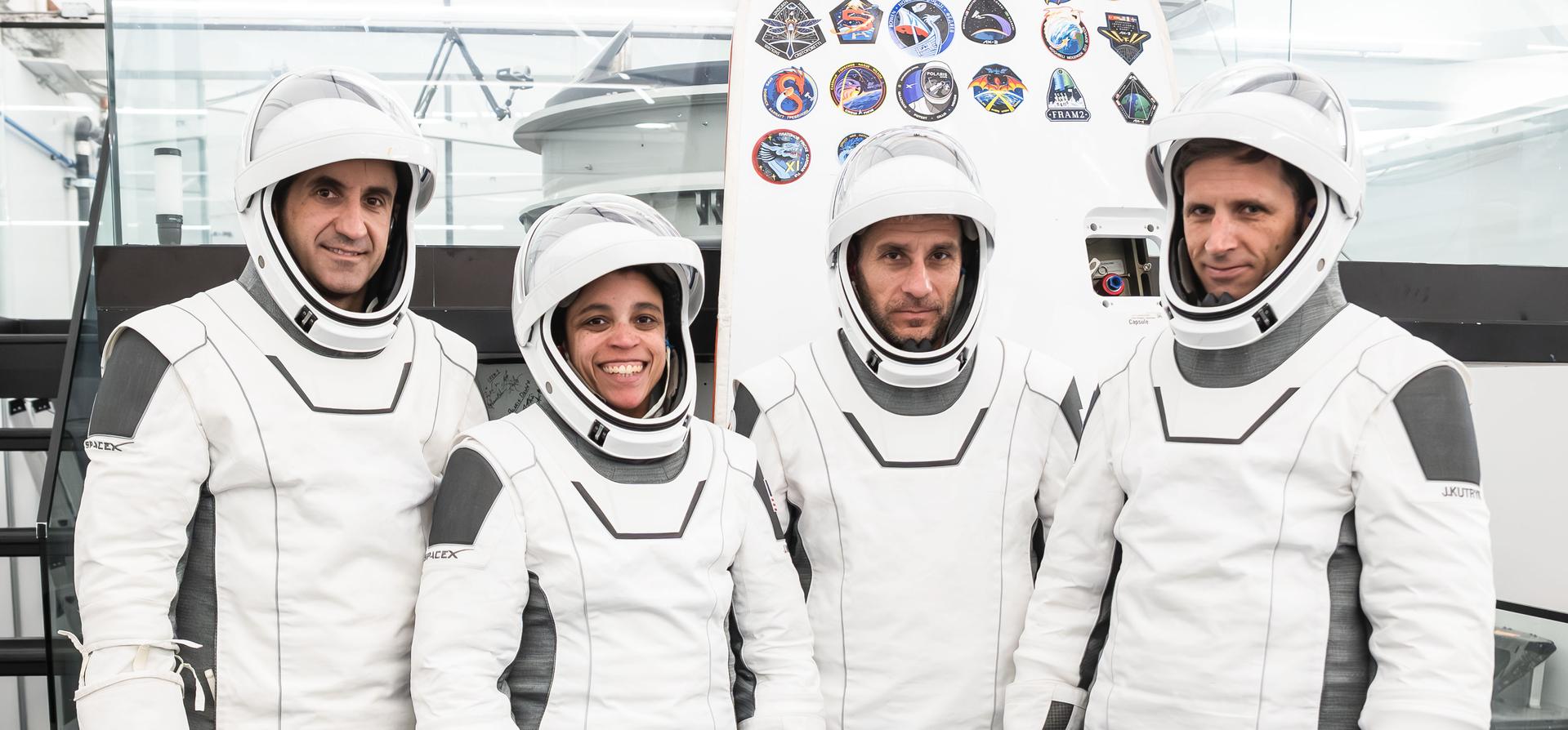
SpaceX’s latest Crew Dragon flight has kicked off a new long-duration science run on the International Space Station, as NASA’s SpaceX Crew-13 mission ferries four astronauts from three different space agencies into orbit for a roughly six-month stay.
Riding a Falcon 9 from Space Launch Complex 40 at Cape Canaveral Space Force Station, Crew-13 lifted off at 11:10 a.m. EDT on October 1, 2026, beginning an eight-hour chase to the ISS before an automated docking around 7 p.m. EDT. The Dragon capsule, nicknamed “Grace,” is targeting the forward port of the station’s Harmony module, continuing SpaceX’s role as NASA’s primary commercial crew transport. NASA scheduled live coverage of the rendezvous and docking window, with streaming across its broadcast platforms beginning in the late afternoon ahead of the planned 7 p.m. arrival.
The Crew-13 roster is a geek-culture dream team: NASA astronauts Jessica Watkins and Luke Delaney, Canadian Space Agency astronaut Joshua Kutryk, and Roscosmos cosmonaut Sergey Teteryatnikov. Under NASA’s crew assignments, Watkins serves as spacecraft commander and Delaney as pilot, while Kutryk and Teteryatnikov fly as mission specialists, all joining the ISS as part of Expedition 75 once docked. The mix of NASA, CSA, and Roscosmos personnel underscores how the station remains one of the rare spaces where U.S., Canadian, and Russian space programs still collaborate closely, even as geopolitics on the ground grow more complicated.
Once on orbit, Crew-13 is expected to dive into a packed slate of biomedical and human-performance research aimed at understanding how the body copes with life in microgravity. According to mission overviews, the crew will support hundreds of investigations, including ISS National Lab–sponsored experiments focused on blood circulation, clotting, and other health metrics that matter for future deep-space missions and for medical science back on Earth. That research agenda fits squarely into NASA’s larger strategy of using the ISS as a proving ground for Artemis-era exploration and for building a more robust low Earth orbit economy.
Crew-13 also marks another milestone for NASA’s Commercial Crew Program: it is the 13th operational crew-rotation mission on SpaceX hardware and the 14th flight with NASA astronauts when you include the original Demo-2 test flight. Watkins, a geologist-turned-astronaut, is making her second voyage to space and is noted as the first NASA astronaut to fly twice aboard a Crew Dragon, a sign of how quickly the capsule has become a workhorse in the post–space shuttle era. For spaceflight watchers who have followed Crew-1 through Crew-12, the mission feels like a new “season” in an ongoing sci-fi series, with Dragon launches now a familiar part of the orbital landscape.
There’s human drama baked into the mission too: coverage has highlighted that Kutryk will miss the birth of his third child while living off-world, a very real-life sacrifice that mirrors the family tensions often explored in space dramas and anime. The flight itself slipped from an initial mid-September target after teams detected an oxidizer leak in Dragon’s propulsion system during prelaunch checks, prompting valve work and a schedule adjustment to the October 1 window to ensure safety. Seeing the multinational crew strap in together after that delay reinforces just how much invisible engineering and coordination underpins every “routine” ISS launch.
For sci-fi and spaceflight fans, Crew-13 offers months of must-watch orbital content: ongoing experiment updates, station life vignettes, and the inevitable stunning Earth imagery shared down from the cupola. With launch now complete and docking targeted for the evening, viewers can follow NASA’s broadcast feeds as “Grace” closes in on the ISS, turning another line of mission patch art and crew portraits into living history on the world’s only continuously inhabited off-planet outpost.


