
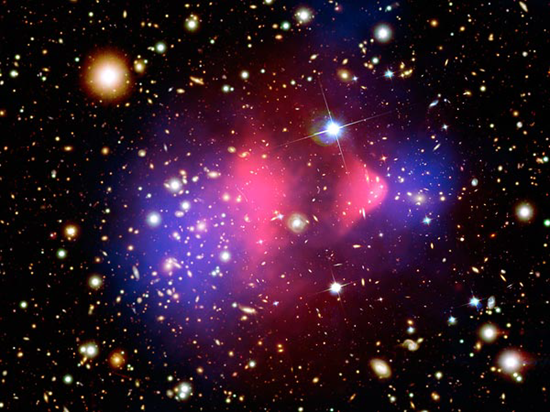
Astrophysicists have just run one of the geekiest experiments imaginable: they built a universe inside a supercomputer and asked where life would have the best shot at surviving—and the verdict is that our own Sun, parked in a relatively quiet suburb of the Milky Way, is already close to prime real estate. The new study, published in Monthly Notices of the Royal Astronomical Society, combed through vast cosmological simulations to identify where habitable planets are most likely to thrive without being repeatedly blasted, fried, or destabilized by cosmic catastrophes.
To do that, the team leaned on the EAGLE project—short for Evolution and Assembly of GaLaxies and their Environments—one of the most detailed sets of simulations of the universe ever run. EAGLE tracks how matter evolves from the early universe into galaxies, stars, gas clouds, and supermassive black holes across hundreds of millions of light-years, effectively generating a synthetic cosmos that can be inspected frame by frame. Within this digital universe, researchers mapped out not just where planets might form, but also where they would be safest from cosmic hazards such as supernova explosions, close stellar encounters, and energetic regions near galactic centers.
At the heart of the work is the concept of “habitable zones” scaled up from solar systems to entire galaxies. Most space fans know the classic circumstellar habitable zone—the Goldilocks band around a star where liquid water can exist on a rocky planet’s surface. But there is also a galactic habitable zone: regions of a galaxy that balance the need for heavy elements (to build planets) against the danger of intense radiation and frequent stellar fireworks. The simulations suggest that life-friendly real estate prefers the middling, relatively uncrowded outskirts of spiral galaxies like the Milky Way, where star formation isn’t too frantic and catastrophic events are less common than in dense inner regions or super-packed clusters.
What makes this work especially interesting is how it meshes with newer, more nuanced ideas about where advanced civilizations might flourish. Phys.org recently highlighted Caleb Scharf’s “Interplanetary Habitable Zone” framework, which goes beyond simple distance-from-star and folds in power availability, radiation risk, transport difficulty, and material resources to gauge how a technological species could spread through a system. In simulation runs of the TRAPPIST‑1 system—a sci‑fi favorite with seven Earth-sized planets—civilizations tended to crash out within decades unless radiation levels were artificially reduced, underscoring how hostile some seemingly promising systems may be. Taken together, the supercomputer universe study and the IHZ work point to a sobering rule of thumb: you want places that are resource-rich but not so energetic that your biosphere gets repeatedly reset.
Other recent simulation campaigns back up the idea that Earth and its galactic neighborhood are not weird cosmic flukes, but rather typical outcomes of the way disks around Sun-like stars evolve. A large set of planetary formation simulations presented at the Origins 2026 conference showed that Earth-like planets near one astronomical unit—the Earth–Sun distance—emerge naturally from protoplanetary disks with uneven distributions of solid material. Venus‑ and Mars‑type worlds pop out fairly often in these runs as well, suggesting that solar systems capable of producing multiple terrestrial planets in or near the classic habitable zone might be common. Combined with the new cosmological work, that paints a picture of a universe that generates many potentially habitable pockets, even if truly safe, long‑term neighborhoods are rarer.
For geek-culture fans who spend hours tweaking sliders in space sims, this is basically the real-life version of running “life-friendly universe” presets. The creators of Universe Sandbox, for instance, are actively working on tools that let players make planets habitable and populate them with evolving biospheres that respond to local conditions, from surface temperature to atmospheric chemistry. Studies like the EAGLE life-zone analysis and the IHZ framework provide the kind of data-rich backstory that can inform more realistic game mechanics and sci‑fi worldbuilding, from choosing where galactic empires plant their capitals to deciding which star systems are doomed deathtraps. As telescopes and simulations keep converging, expect future space games, novels, and TV shows to lean harder into this emerging consensus: if you want your fictional civilization to last, you probably don’t put it in a crowded, volatile galactic downtown—you give it a quiet, metal-rich suburb much like the one we’re already in.


