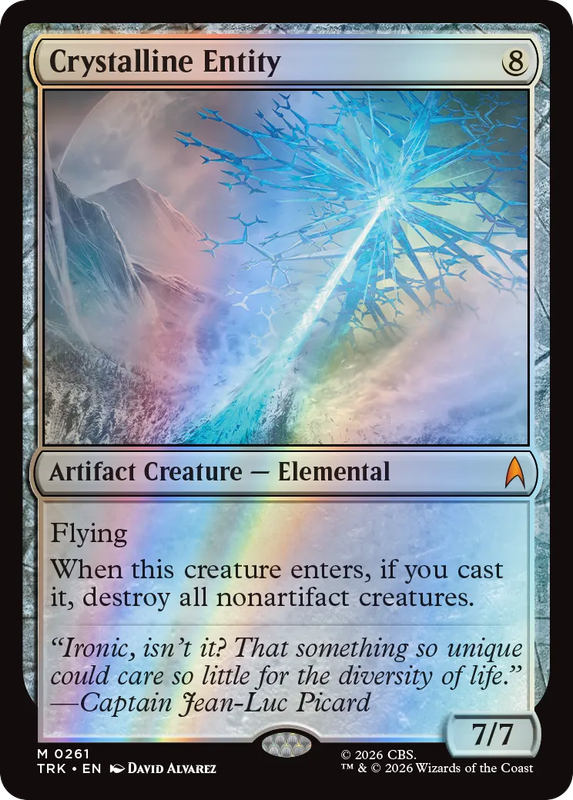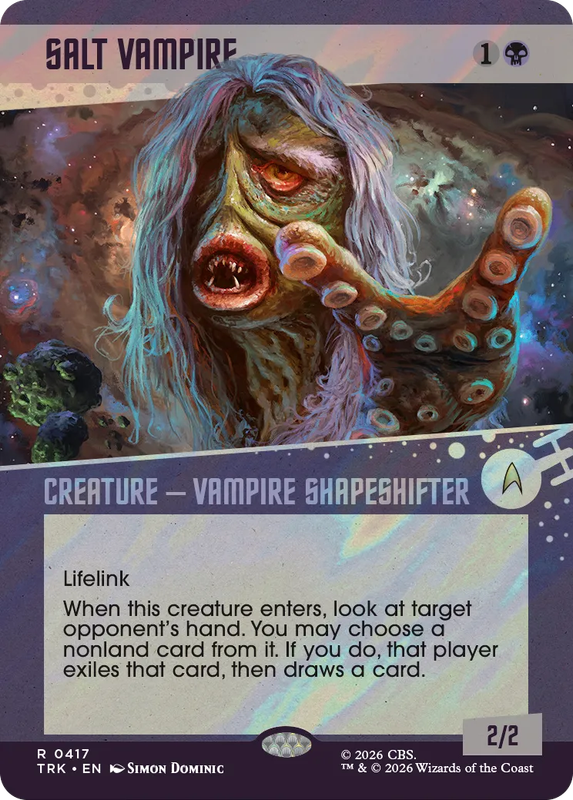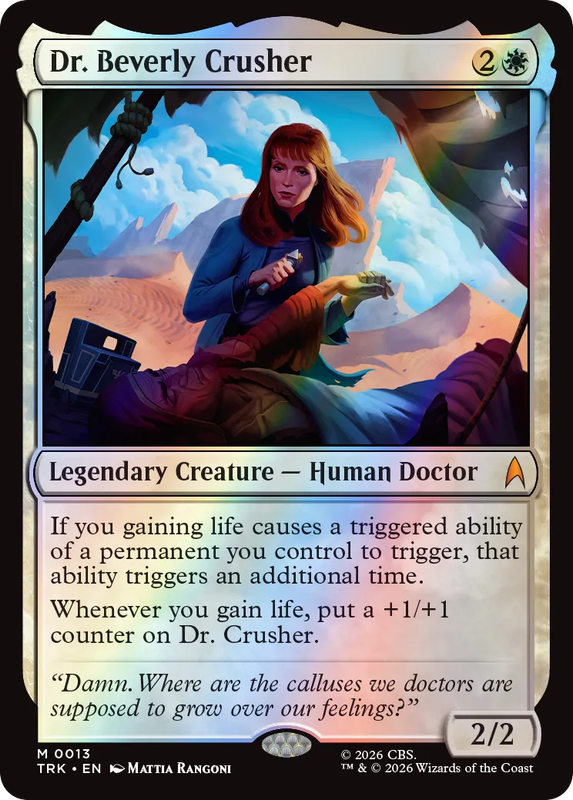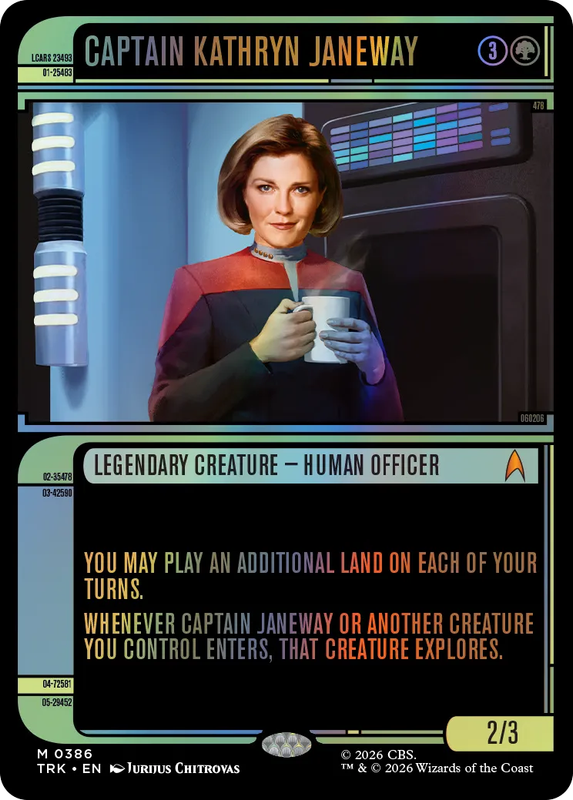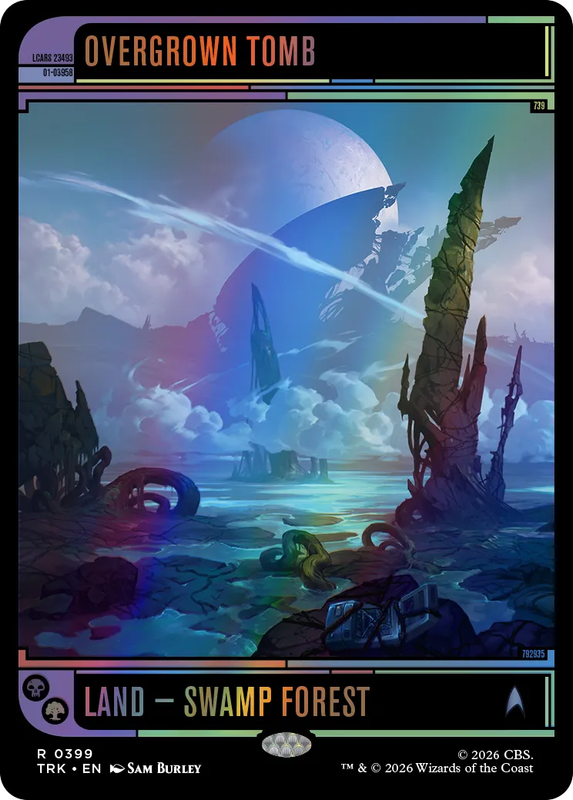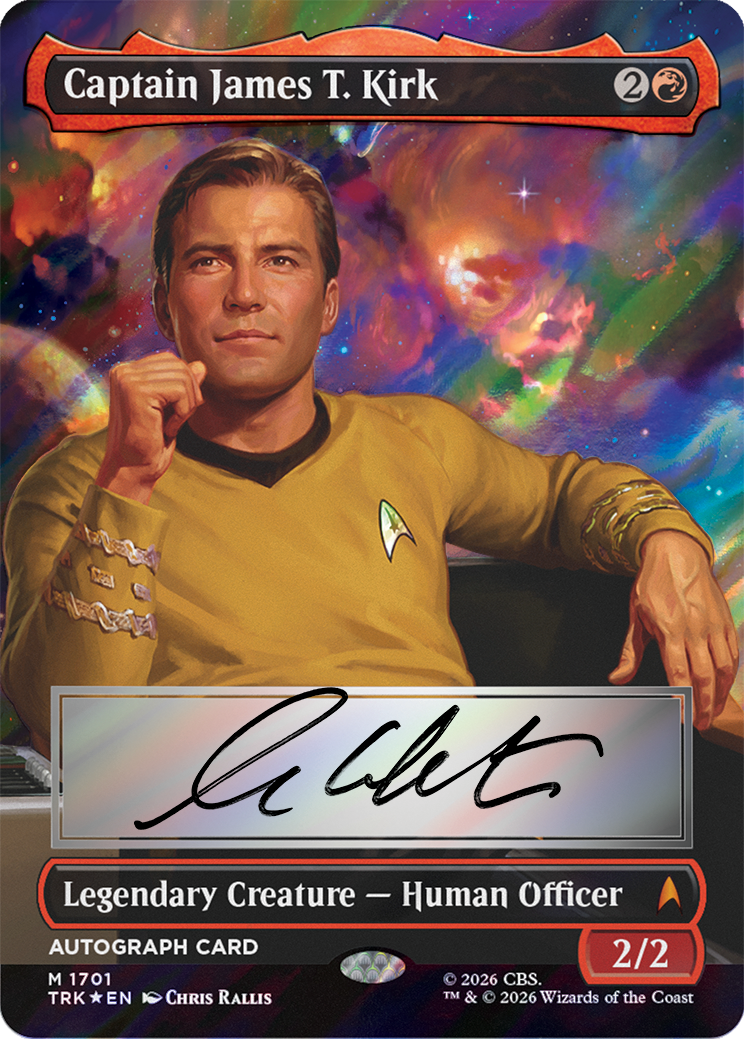
Magic: The Gathering is about to break new ground again, introducing ultra-rare signed “headliner” cards in its upcoming Star Trek Universes Beyond set, a first in the game’s 33-year history as a printed product. These new chase cards turn iconic Star Trek characters into textless foil collectibles personally signed by the actors who played them, blurring the line between trading card game and pop-culture memorabilia.
According to early coverage of the Star Trek Universes Beyond release, the set scheduled for November 2026 will include a special class of headliner cards featuring Captain Kirk, Spock, Picard, Janeway, Seven of Nine, Geordi, and Data. Each headliner is reportedly a limited, textless foil card with only about 250 copies printed per character, and each copy is signed by the corresponding Star Trek actor, making them far scarcer than standard serialized promos or box toppers. Rather than introducing a new rules-level card type, this move creates a new premium treatment that effectively functions as a distinct collectible tier inside booster packs.
Magic has spent the last several years turning Universes Beyond into a major pillar of the brand, folding in franchises like Warhammer 40,000 and The Lord of the Rings while steadily erasing the wall between core Magic lore and crossover sets. That strategy continues on the purely Magic side with the recent Reality Fracture set, which throws players into a war between the established Multiverse and the twisted “Echoverse,” complete with shattered mirror cards and alternate versions of familiar characters. Reality Fracture events and product pages emphasize Jace Beleren’s fractured vision of reality, showcasing experimental frames and mechanics that prime players for stranger crossovers like actor-signed Star Trek cards down the line.
Reality Fracture itself is already pushing boundaries in how cards behave, most notably through the Empower Jace mechanic previewed during a press event. Empower Jace allows even common cards to generate or grow a special Jace Planeswalker token, effectively letting low-rarity spells create a powerful Planeswalker for the first time in the game’s history. Wizards’ galleries and set breakdowns describe Reality Fracture as a curtain-raiser for the Echoverse, with card image galleries and product breakdowns highlighting “shattered mirror” treatments and a dedicated Headliner slot in the set’s card list, signaling that the headliner concept is becoming part of how modern Magic organizes its showcase cards.
Across Magic’s lifetime, truly new rules-level card types have been rare, with the core types—artifact, creature, enchantment, instant, land, planeswalker, sorcery, and more recently battle—added only occasionally over decades of design. The Star Trek headliner cards sit outside that rules matrix, but they represent a comparable milestone in terms of how players collect and value cards, echoing the impact of serialized promos and ultra-limited chase cards from recent sets. By tying the new treatment directly to live-action performers and capping print runs in the low hundreds, Wizards of the Coast is effectively creating a hybrid between a Magic card and a signed celebrity print, something the game has never formally packaged into boosters before.
For fans, that raises both excitement and anxiety. Collector-focused players get a new white whale to hunt, and Star Trek devotees gain some of the most premium franchise cards ever produced, while everyday players may worry that another ultra-rare tier will further separate casual tables from the high-end collector scene. At the same time, Reality Fracture and other mainline sets continue to deliver experimental mechanics and frames that lean into Magic’s own narrative Multiverse, ensuring that even as Universes Beyond digs deeper into pop culture crossovers, the core game is still evolving in parallel. With the Star Trek headliner cards on the horizon, Magic is signaling that its next era will treat booster packs not just as game components, but as collectible artifacts of broader genre fandom.