
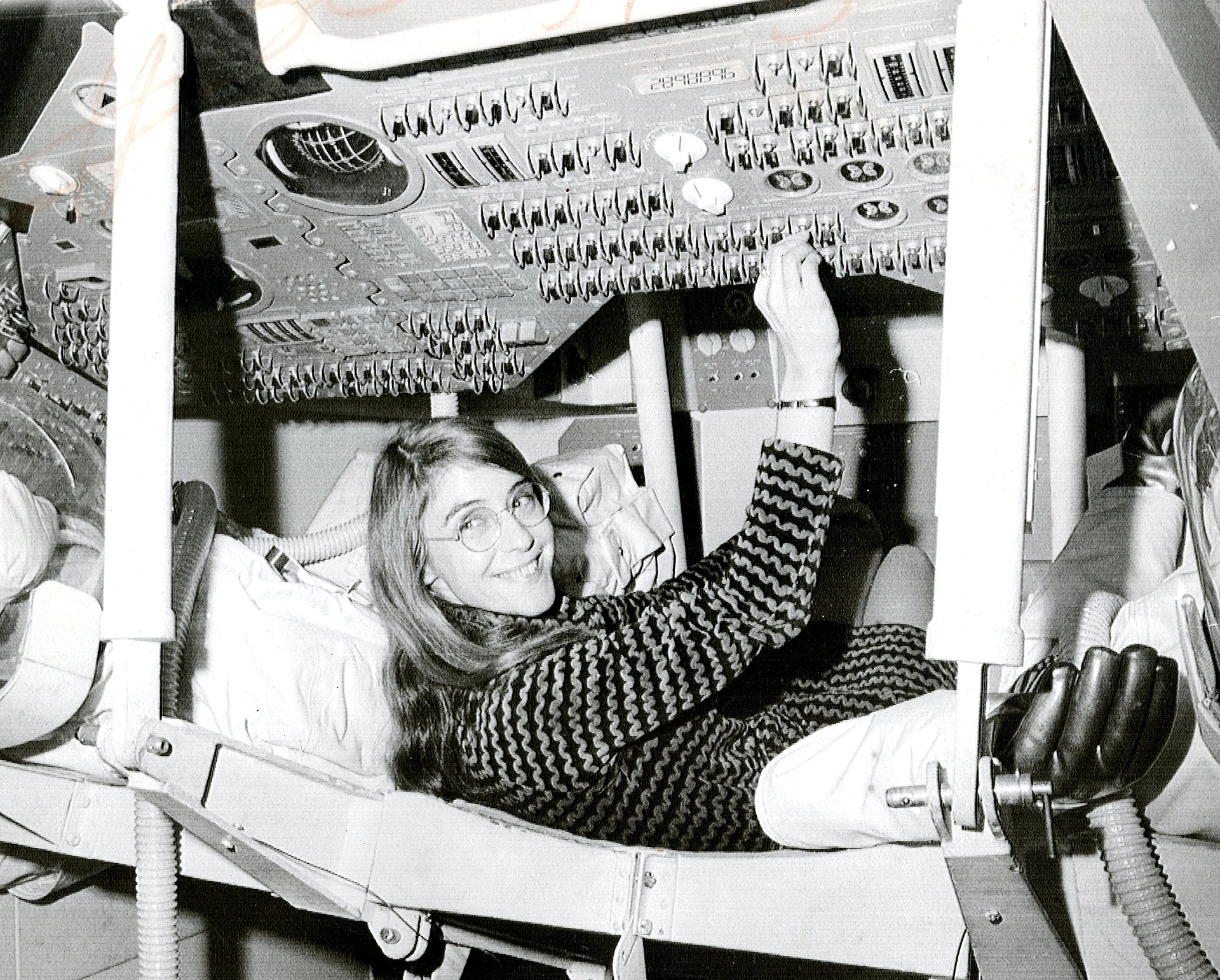
Margaret Hamilton, the computer scientist whose code helped carry Apollo 11 safely to the lunar surface and who popularized the very idea of “software engineering,” died on September 30, 2026, at the age of 90. Her work on the Apollo Guidance Computer turned what could have been a mission-ending glitch into a history-making moon landing, cementing her status as one of the most important—and most genuinely geeky—engineers of the space age.
Hamilton’s story started far from Mission Control. Born in Paoli, Indiana, in 1936, she studied mathematics at Earlham College and graduated in 1958, pairing her major with a philosophy minor that nodded to her poet father and headmaster grandfather. She initially planned to support her first husband through law school and then pursue a PhD in math, but her path veered into computing as she took programming work at MIT’s Lincoln Laboratory and later at the MIT Instrumentation Laboratory, just as NASA’s Apollo ambitions were ramping up.
At MIT’s Instrumentation Lab, Hamilton rose to direct the Software Engineering Division, leading a team that ultimately numbered around 100 engineers charged with building all the onboard flight software for Apollo’s command module and lunar module. She championed “defensive” and priority-driven programming—systems designed to anticipate and gracefully handle errors—which proved critical during Apollo 11 when the lunar module’s computer began throwing 1201 and 1202 alarms because of an overloaded guidance system. Thanks to the way Hamilton’s team had structured the software to shed non-essential tasks and prioritize landing operations, the computer recovered, the alarms were overridden, and Neil Armstrong and Buzz Aldrin continued their descent to the surface instead of aborting. It was the kind of fail-safe logic modern developers take for granted, but in 1969 it was cutting-edge engineering that literally kept the mission on track.
Hamilton didn’t just write code—she helped define a discipline. In an era when software work was often treated as clerical, she began calling it “software engineering” to reflect its complexity and importance, a term that stuck and helped elevate programmers to the same status as hardware designers and aerospace engineers. After Apollo, she founded and co-founded companies focused on ultra-reliable systems, including work on her Development Before the Fact methodology and the Universal Systems Language, both aimed at catching errors at the design stage rather than in production. Over the course of her career she authored more than 130 publications and contributed to six major programs, pushing forward the ways complex, mission-critical software is conceived and built.
Recognition eventually caught up with the magnitude of her contributions. In 2016, President Barack Obama awarded Hamilton the Presidential Medal of Freedom, praising how her work on asynchronous software, priority scheduling, and human-in-the-loop decision capability helped “launch an industry that would forever change human history.” The White House citation credited her Apollo software architecture with enabling “giant leaps for humankind,” formally enshrining the idea that the moon landing was as much a triumph of code as it was of rockets. The following year, she was immortalized in plastic as part of the “Women of NASA” LEGO Ideas set, which paired her minifig with a build that recreates the iconic photo of Hamilton standing beside a towering stack of printed Apollo Guidance Computer source code. For a generation raised on brick-built space shuttles and coding tutorials, seeing her rendered as a LEGO character made it clear: software engineers belong in the pantheon of pop-culture heroes too.
Hamilton’s influence has echoed across geek culture and the broader tech world. Her elevation of software engineering helped legitimize the field that underpins everything from AAA game engines to cloud infrastructure, and her insistence on robustness and error handling still resonates in practices like test-driven development and fault-tolerant system design. As MIT’s Olivier de Weck and other colleagues have noted, the Apollo program is a monument to collaborative engineering, and Hamilton’s role at its software core remains one of its defining contributions. With tributes pouring in from NASA, MIT, and media outlets worldwide, her passing marks the loss of a pioneer—but also a reminder that behind every legendary space mission is a stack of code and the people who care enough to make sure it works when it matters most.
Image Credits
In-Article Image Credits
Margaret Hamilton, lead Apollo flight software engineer, in the Apollo Command Module. via Wikimedia Commons by NASA with usage type - Public DomainFeatured Image Credit
Margaret Hamilton, lead Apollo flight software engineer, in the Apollo Command Module. via Wikimedia Commons by NASA with usage type - Public Domain


