
The Pentagon’s plan to publicly livestream the firing squad execution of Fort Hood shooter Nidal Malik Hasan is colliding head-on with the policies and ethics of the modern streaming economy, and the biggest U.S. platforms are pointedly refusing to say whether they’ll carry it.
Hasan, a former Army major and psychiatrist, was convicted of killing 13 people and injuring dozens more in a 2009 mass shooting at Fort Hood, Texas, a case he framed as an act of jihad. After years on military death row, officials this week set his execution for December 3 at Fort Hood and confirmed it will be carried out by firing squad, marking the first U.S. military execution in more than 65 years. A Pentagon official said the event “will be livestreamed” with details to follow, while Defense Secretary Pete Hegseth has vowed the public will be able to watch the execution, reportedly scheduled for 1 p.m. local time at the same base where Hasan carried out the attack.
Death-penalty experts told reporters that, if the plan goes ahead as described, it would be the first known broadcast or livestream of a lawful execution anywhere in the world. Traditionally, executions in the U.S. and abroad have been witnessed only by a small group of officials, journalists, and family members, with strict bans on cameras and recording devices inside the chamber, even in countries that otherwise broadcast a great deal of courtroom and criminal-justice footage. The Pentagon’s decision effectively turns a military punishment into a globally accessible media event, raising questions about whether that spectacle serves justice, deterrence, or something darker.
Into that vacuum step the tech giants that dominate live video. According to The Verge’s reporting, YouTube, Meta, Twitch, and X all declined to answer whether they would allow a government-streamed execution on their services or whether such a broadcast would violate their rules against graphic violence and snuff content. TikTok, by contrast, pointed back to existing policies that explicitly ban “shocking and graphic content,” including the moment of someone’s death, making a livestreamed firing squad an apparent non-starter under its guidelines. Kick, a streaming platform known for looser moderation and its appeal to creators who chafe at Twitch’s rules, also responded but has not publicly committed to either hosting or banning a Pentagon execution feed. While each company’s rulebook is written differently, an analysis by legal and tech experts notes that American platforms explicitly prohibit livestreaming executions in their community standards, lumping them together with beheadings, torture footage, and other forms of real-world lethal violence.
The backlash against the Pentagon’s plan has been swift and bipartisan, with lawmakers and civil-liberties advocates warning that turning an execution into live content risks glamorizing state violence and inspiring copycat attacks or terrorism. One Republican senator quoted in press coverage called the proposal “disgusting,” while critics argued that a broadcast firing squad would be consumed and remixed across social platforms much like any other viral clip—memed, reaction-strewn, and potentially turned into propaganda by extremist groups. Supporters of the plan, including Hegseth, have framed the livestream as a way to underscore “serious consequences” for mass murder and terrorism, but even they have offered few specifics about how the stream will be controlled once it hits the networked public.
For the geek-culture and streaming communities that live on YouTube, Twitch, and the rest, the situation is unprecedented: a real-world execution poised to sit alongside esports tournaments, tabletop actual-play series, anime reactions, and tech teardown streams. Platforms already have painful experience with live atrocity footage—from terror attacks like the Christchurch mosque shooting, which was briefly streamed and then frantically scrubbed, to the spread of ISIS execution videos—and have since tightened policies and deployed automated moderation tools to detect and remove graphic violence. A government-branded execution feed, however, tests a different vector: it’s lawful, it’s official, and it may arrive dressed in the visual language of a sanctioned “special broadcast” rather than a rogue stream, making it harder to treat purely as illicit content.
There’s also a practical, geeky layer to the dilemma. Even if the Pentagon chooses to host the primary stream on a government-controlled site rather than a commercial platform, nothing stops viewers from screen-capturing the feed and restreaming it to Twitch, YouTube, or X, where moderation teams would have to chase mirrored broadcasts, clipped highlight reels, and algorithmically generated reaction videos in real time. The companies’ reluctance to discuss Hasan’s execution publicly suggests they’re bracing for that whack-a-mole scenario, reviewing policies and enforcement tools behind the scenes without committing to a stance that could anger either free-speech advocates or advertisers wary of their brands appearing next to a firing squad. Until someone blinks—either the Pentagon by scaling back its public plans, or a major platform by explicitly saying “no”—the looming execution remains an uneasy test case for how far livestream culture can go when the state itself decides to turn death into content.
Image Credits
In-Article Image Credits
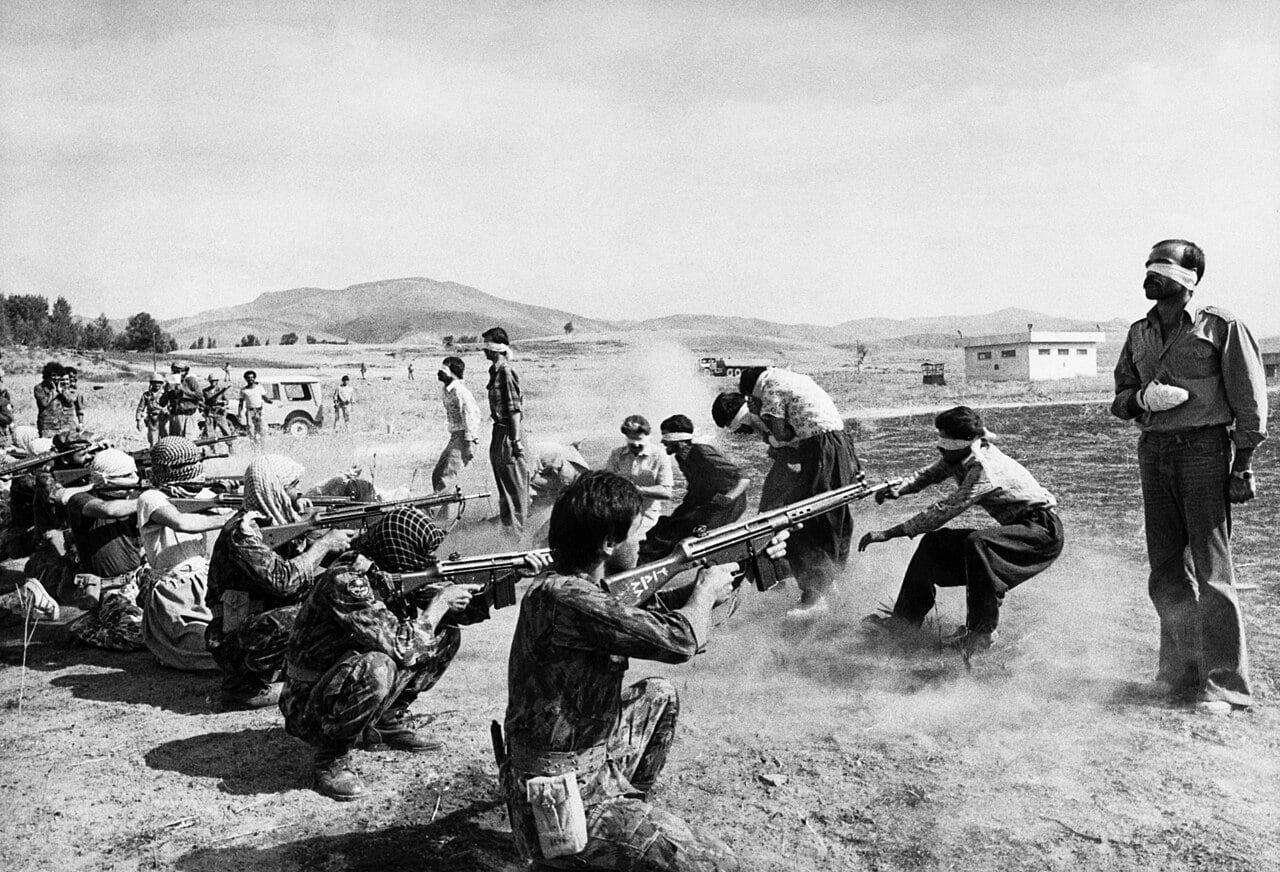
A revolutionary firing squad at the Sanandaj airport in Iran. In a 30-minute trial, 11 prisoners from the Kurdish rebellion were charged with crimes of firearm trafficking, murder, and inciting riots, and were sentenced to death. The men were blindfolded and led outside to the airfield, where they were lined up several meters from their executioners. Razmi was unhindered by security forces, allowing him to stand behind the rightmost executioner and photograph the killings. The weapons are Heckler & Koch G3 via Wikimedia Commons by Etelaat Newspaper - w:Jahangir Razmi with usage type - Public DomainFeatured Image Credit
A revolutionary firing squad at the Sanandaj airport in Iran. In a 30-minute trial, 11 prisoners from the Kurdish rebellion were charged with crimes of firearm trafficking, murder, and inciting riots, and were sentenced to death. The men were blindfolded and led outside to the airfield, where they were lined up several meters from their executioners. Razmi was unhindered by security forces, allowing him to stand behind the rightmost executioner and photograph the killings. The weapons are Heckler & Koch G3 via Wikimedia Commons by Etelaat Newspaper - w:Jahangir Razmi with usage type - Public Domain


