
November’s skywatching calendar is unusually packed, pairing several meteor-shower opportunities with a close planetary encounter, the year’s first supermoon in months, and a remarkable deep-space milestone. The month’s highlights include November’s major skywatching events, giving both casual observers and dedicated stargazers plenty of reasons to step outside.
The first fireworks come from the Taurids. The Southern Taurids reach their peak around November 5, with the Northern Taurids following around November 12. Neither shower is especially prolific—roughly five meteors per hour under ideal conditions—but the Taurids are known for occasional bright fireballs. Their apparent point of origin lies in Taurus, making the shower a good excuse to explore that constellation while waiting for a streak.
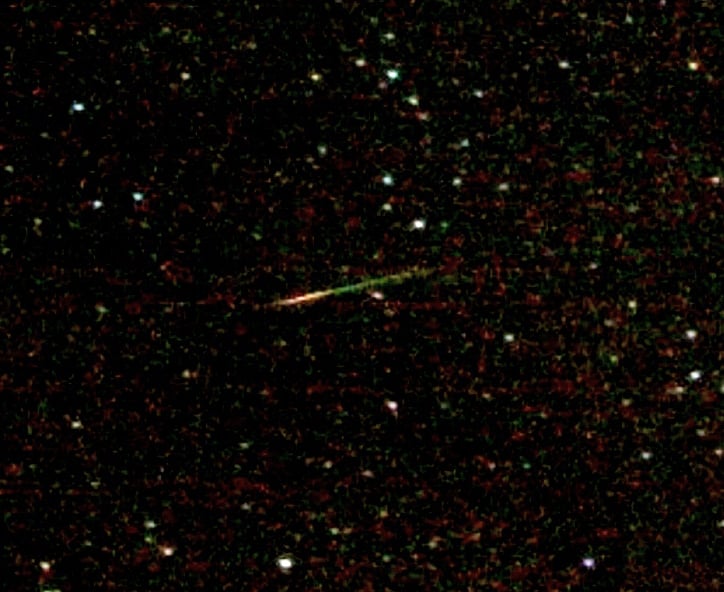
The Leonids offer a stronger opportunity later in the month. The best window falls before dawn on November 17 and 18, after the Moon has set, when dark skies should improve visibility. Ideal conditions could bring as many as 15 meteors per hour, although real-world observers will often see fewer. A reclining chair, a broad view of the sky, warm clothing, and at least 30 minutes for night vision to develop will help more than binoculars or a telescope.
Planet watchers should turn southeast before sunrise on November 15 and 16. Mars and Jupiter will appear just 1.2 degrees apart—roughly the width of two full Moons placed side by side. Jupiter will be the brighter object, while Mars should stand out with its distinctly reddish tint. The pair remains separated by an enormous distance in space; their closeness is an effect of perspective from Earth. Observers who check on multiple mornings can watch the planets approach, meet visually, and then separate again. Sky at Night’s November guide likewise places the closest approach in the middle of the month.
The month’s most extraordinary “skywatching” story is not something visible to the naked eye. Voyager 1 is scheduled to cross the one-light-day mark on November 18, 2026, reaching a distance of about 16.1 billion miles from Earth. A light-day is the distance light travels in 24 hours, so a radio signal will need roughly a full day to reach the spacecraft—and another day for a reply to return. The mission’s light-day explainer places the crossing at 5:16:07 a.m. Eastern time, nearly five decades after Voyager 1 began its journey.
There is also a public-facing way to mark the achievement: the “Shine Bright for Voyager’s Light-Day” activation on November 17. Voyager 1 cannot be seen in the constellation Ophiuchus with ordinary observing equipment, but pointing toward that region offers a poetic way to imagine the probe’s direction as it continues through interstellar space. On November 24, the focus returns to the Moon for a full supermoon—the first in a sequence of three consecutive supermoons extending through the following months. The effect is subtle to the unaided eye, but the brighter, larger-looking Moon should make for an especially striking evening rise.


