
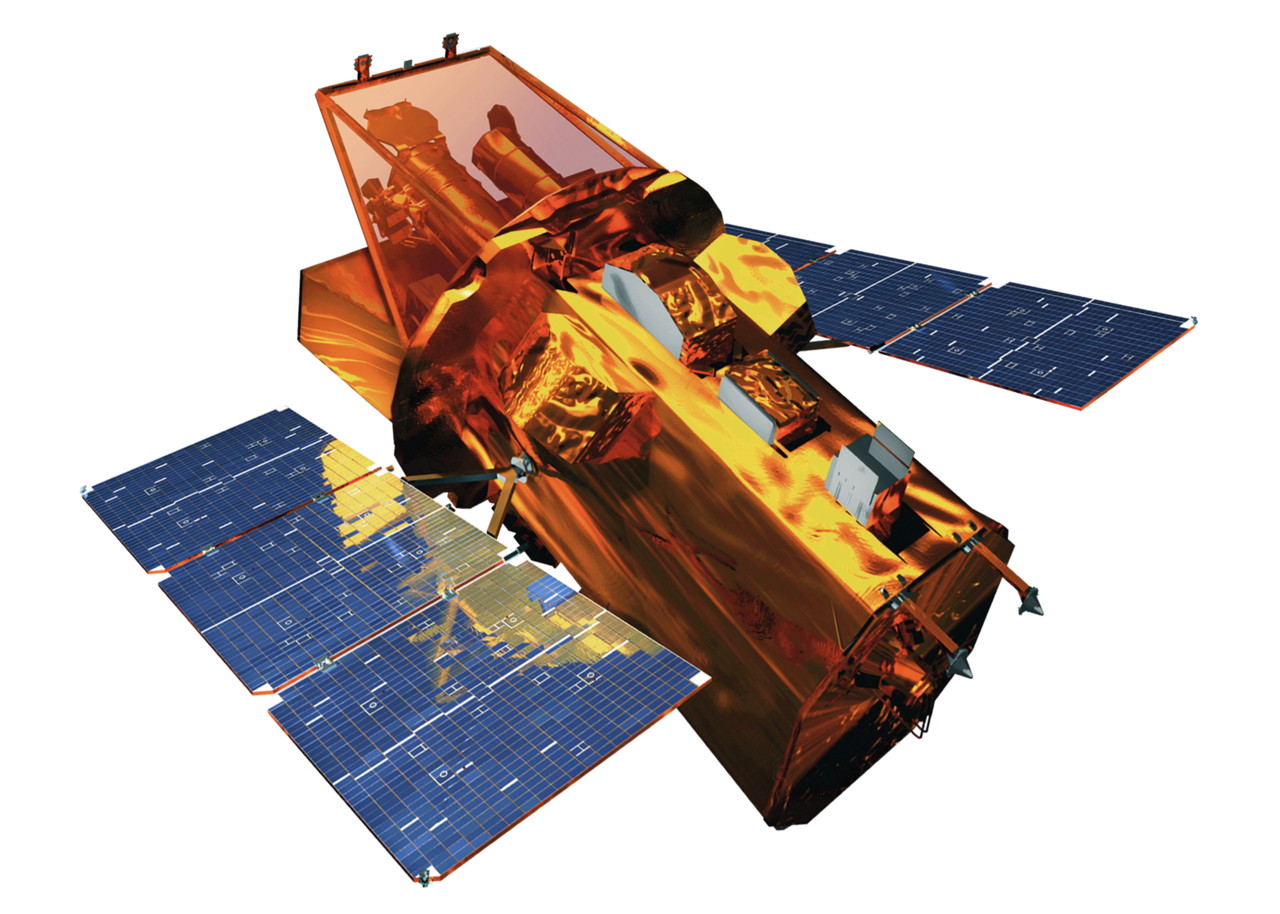
NASA’s Neil Gehrels Swift Observatory is gone, ending more than two decades of rapid-fire observations of the universe’s most violent explosions. The spacecraft reentered Earth’s atmosphere on Nov. 4 over Indonesia, largely burning up after its orbit deteriorated beyond the point where its instruments could remain steady. Swift’s final days in orbit came just weeks after a commercial spacecraft intended to save it failed to complete the job.
Swift made its last scientific observation on Oct. 20, when it was circling roughly 171 miles (275 kilometers) above Earth. At that altitude, atmospheric drag had become strong enough to interfere with the observatory’s pointing control. NASA formally ended science operations three days later and placed the spacecraft on a path toward reentry. The U.S. Space Force later confirmed that Swift came down at 7:39 a.m. EST over the North Sumatra region of Indonesia.
That conclusion was not part of the original plan. Launched on Nov. 20, 2004, as the Swift Gamma-ray Observatory, the mission was designed to locate gamma-ray bursts and rapidly redirect its X-ray, ultraviolet, and optical instruments toward them. These bursts are brief but extraordinarily powerful explosions, and Swift’s ability to identify them and swing into position in about a minute made it an important partner for observatories on Earth and in space. NASA renamed the mission in 2018 to honor Neil Gehrels, its first principal investigator.
The attempted rescue was also a technology demonstration. NASA awarded Arizona-based Katalyst Space Technologies a contract worth nearly $30 million to develop LINK, a robotic servicing spacecraft that would approach Swift, attach to it, and push the aging observatory into a higher orbit. The mission was intended to extend Swift’s scientific life while testing techniques that could eventually be used to refuel, repair, or relocate satellites.
LINK encountered serious trouble after launch. It lost two of its three reaction wheels, which help a spacecraft turn without burning propellant, and later struggled with its propulsion system. Engineers managed to stabilize the vehicle, but the recovery consumed too much fuel for the planned orbit-raising maneuver. LINK reportedly came within roughly 7.5 to 9 miles (12 to 15 kilometers) of Swift and deployed its robotic arms and electric thrusters, but it never reached the observatory. The rescue spacecraft itself reentered the atmosphere on Sept. 25.
Swift’s final chapter is therefore both a loss and a useful field test. The mission vastly outlived its original two-year prime mission, produced a large archive of high-energy observations, and helped scientists coordinate follow-up studies of transient cosmic events. NASA’s official mission summary describes the observatory’s scientific legacy, while the failed LINK effort offers an expensive but valuable lesson: servicing a satellite in low Earth orbit demands precise navigation, reliable attitude control, and enough propulsion margin to survive unexpected failures.


