
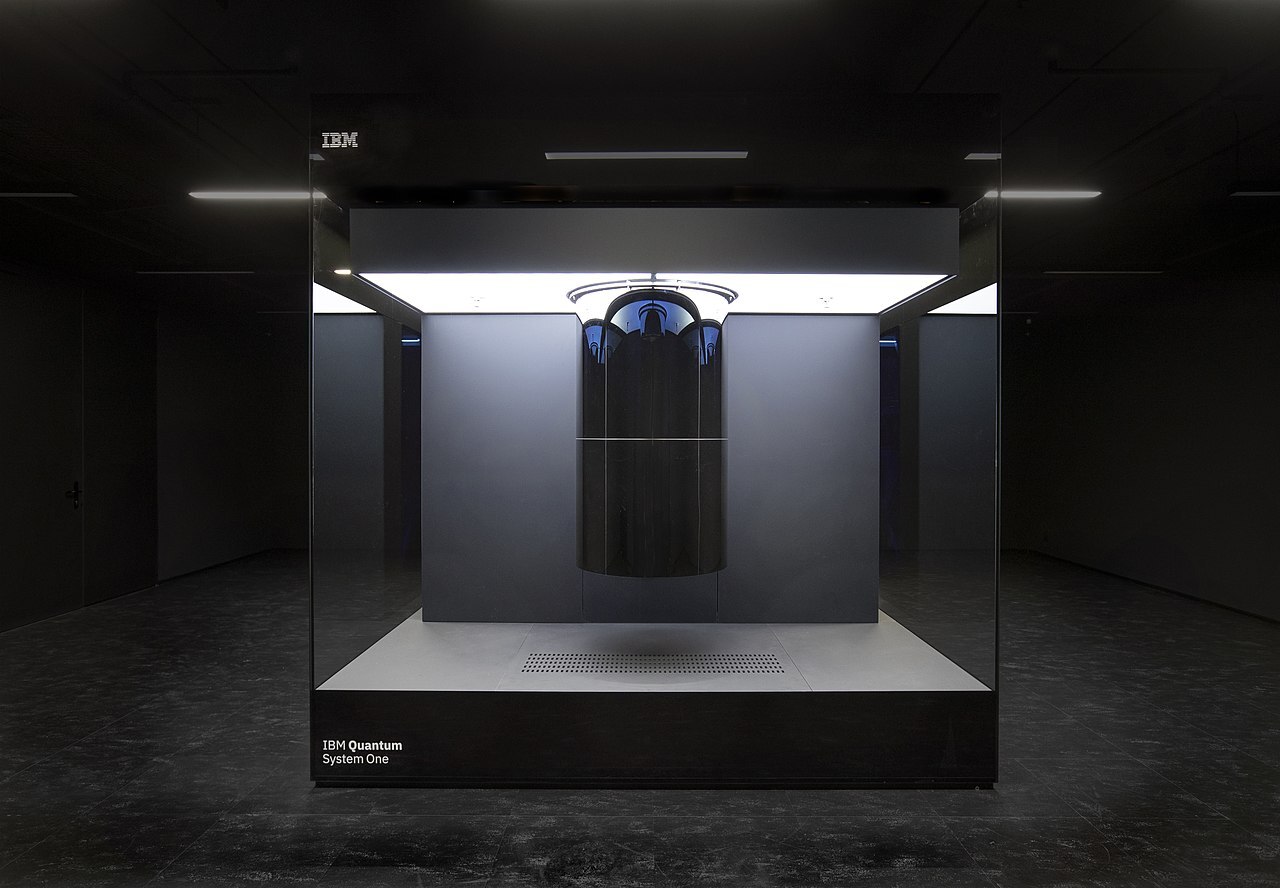
Quantinuum’s Helios has posted one of the strongest quantum error-correction results yet, achieving 99.9995% logical fidelity in a test of its quantum memory. In practical terms, the 98-qubit trapped-ion system produced roughly five uncorrectable errors per million error-checking rounds—a result that nudges quantum computing toward the long-discussed “megaquop” threshold of a million reliable operations. The Helios error-correction breakthrough was described in a study posted to arXiv in October.
The achievement is especially notable because it improves substantially on the previous benchmark associated with Google’s Willow processor. In comparable testing, Willow’s superconducting system recorded an estimated 772 uncorrectable errors per million rounds, or a 0.0772% failure rate. Quantinuum says Helios cuts that figure by roughly two orders of magnitude relative to the best published result from another hardware approach.
Helios takes a very different route from Willow. Its qubits are electrically charged barium ions held and manipulated with lasers and electromagnetic fields. Quantinuum’s trapped-ion architecture can move those ions around the processor, dynamically changing which qubits interact. That connectivity reduces the need to relay information through long chains of neighboring qubits, a process that can introduce additional opportunities for failure. The company introduced Helios as a 98-qubit machine with high-fidelity single- and two-qubit operations across its fully connected system.
The experiment also relies on a technique called leakage repumping. A qubit can sometimes escape the small set of quantum states used to store information, effectively becoming unavailable to the error-correction routine. Helios uses tightly timed laser pulses to push that leaked population back into the usable qubit space during computation. The research paper identifies this mid-circuit optical repumping method as a hardware-level part of the system’s error-management strategy.
For the test itself, the researchers used a color-code approach that spread one logical qubit’s information across many physical qubits. Adding physical qubits creates redundancy, allowing the system to detect and repair some individual faults, but it also creates more components that can fail. The important result is therefore not simply Helios’s qubit count; it is that increasing the code’s scale improved reliability rather than overwhelming the system with new errors. Independent coverage of the experiment describes the result as a key prerequisite for storing quantum information through longer and more complex calculations.
That distinction matters for anyone waiting for quantum computers to move beyond laboratory demonstrations. Today’s machines remain too error-prone for broad, sustained workloads, and a useful fault-tolerant computer would need many physical qubits supporting each dependable logical qubit. Robin Blume-Kohout, co-director of Sandia National Laboratories’ Quantum Performance Laboratory, called the result a significant milestone and said a scaled version could potentially reach practical reliability with fewer than a million physical qubits.
There is still an important asterisk: the findings are presented in an arXiv preprint and have not yet completed conventional peer review. Even so, Helios’s result gives researchers a more favorable starting point for scaling fault-tolerant systems—and strengthens the case that trapped-ion hardware may compete seriously with superconducting designs as the industry searches for a path to dependable quantum computation.


