It’s nerd paradise! Pop culture collectibles, geeky toys, cool gadgets, great GIFTS FOR NERDS, educational science kits, electronics and off-beat devices plus GEEKY NEWS, feature articles, unique esoteric stories, and much, much more. We’re a local comic book shop in your browser – for GEEKS and other SUPERHERO types!
Donkey Kong was released by Nintendo in 1981. In the game, Jumpman (renamed Mario soon later) must rescue a damsel in distress, Lady (now named Pauline) from a giant ape named Donkey Kong. The hero and ape later became two of Nintendo’s most popular characters.
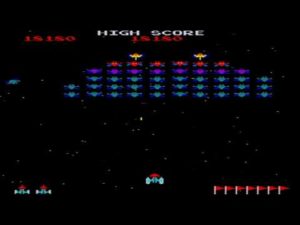
Galaxian was developed by Namco in 1979 and was released in the United States in 1980. It was designed to be an improved version of the popular Space Invaders game and went on to become one of the most popular games during the golden age of arcade video games.
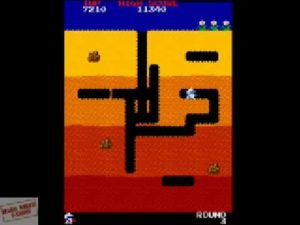
Dig Dug was a arcade video game produced by Namco in 1982. The objective of Dig Dug is to eliminate underground-dwelling monsters by inflating them until they pop, or by dropping rocks on them.
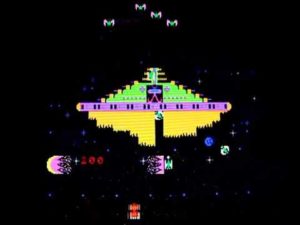
Phoenix was a arcade video game developed by Amstar Electronics in 1980. It featured the typical (for the day) top-down fixed shooter similar to Space Invaders. It, along with Galaxian, was one of the first color games and was noted as being the first video game to feature a “boss” character presented in a separate game challenge.…
Williams Defender came out in 1980 with over 60,000 game cabinets made When it came out people thought that it was no possible to pass 70k, later folks would be turning the game over and experiencing the “no die” mode.
A group of players discussing a detailed battle strategy for the next encounter while one of their party members, Leeroy, is away from his computer. When Leroy returns, their plans are ruined.
Using the Atacama Large Millimeter/submillimeter Array (ALMA) radio telescope in Chile, astronomers have found glycolaldehyde, which is a simple form of sugar not much different than table sugar we put in our coffee, near a young star called RAS 16293-2422.
Most manufacturers are choosing to roll out hybrid laptops, with touchscreen displays, that can function as tablets (either by detaching the keyboard or folding it next to the case). Here’s the latest.
Check out the latest cybersecurity and dark web news. From rapid, high-level cybersecurity analysis reports to in-depth penetration testing (pentesting) of your network and systems, SparTech Software offers a comprehensive suite of cybersecurity services designed to protect your organization from evolving digital threats.
Geeky mathematical minds make money with horse race handicapping! Visit pickpony.com for horse racing past performance sheets, race charts and heatmaps, data summaries, AI analysis, and more. Pick Pony - your best bet in horse racing!
Books from Geek Slop Publishing
Living Truth Bible Study Guides
Despite its beautiful prose, you can’t just read Revelation; it requires diligent study. However, ineffective study techniques can lead to misunderstandings. Rather than imposing strict interpretations on the described events, use the concepts we present as a framework for understanding its intricate code. The Book of Revelation indeed provides more than just a foretelling of the tumultuous end of days. It reassures Christians that divine justice will ultimately triumph over evil and promises Jesus' eventual return as the rightful king of the world.
Chronicles of Enigma
While science and reason often seek to illuminate the unknown, there remains a certain allure in the unexplained—a realm where imagination and reality blur, creating a tapestry rich with wonder and possibility. Stories from the Chronicles of Enigma series endure not just as relics of the past, but as gateways to exploring the depths of our curiosity and the infinite potential of our world. Let us be the light that guides you through the darkness.
https://www.amazon.com/dp/B0DMBRVY25
Become a Geek Slop Guild Member
Some content (sensitive information, insider-only articles, etc.) is available to subscribers only. You can become a Geek Slop subscriber and access all articles, article content, and forums. Plus, you get advance notice for breaking news and member-only access to exclusive products and special deals and, you guessed it, fewer advertisements!
Geek Slop understands geeks (because we are geeks) and their fondness for inventive gear and hard-to-find collectibles!
We take great care to ensure the product arrives to you in the same condition it came to us. At our online geek store, all items are carefully wrapped and padded to help prevent scratches and reduce the risk of damage. We use only the highest quality boxes and seal all corners and seams to reduce risk of water/liquid damage during transit.
We curate the pop culture market for you, evaluating and selecting only the best from hundreds of the most popular manufacturers.
We consider our customers to be part of an exclusive community and as such, we never stop providing service for them. We monitor the value of our customers’ collectibles even after we’ve sold them – and we let our customers know when the value of their collectible has increased or substantially changed. What other online geek store does this!?!
We listen. We listen to our customers. Are we missing something you want? Let us know! Is there something we could improve on? Tell us!
Sign up for the Geek Slop newsletter and receive the latest science, tech, and entertainment news, new geek gear and product notifications, exclusive features, and much more.