

A team of neurobiologists from Johannes Gutenberg University Mainz and theoretical biologists from Humboldt-Universität zu Berlin have discovered the nature of electrical activity in the nervous system of insects that controls their flight.
We delve deep into the subjects of science and history, providing insightful analysis and commentary that is both informative and thought-provoking. Our articles are designed to entertain and educate, catering to both casual readers and serious enthusiasts. In the realm of science, we cover the latest breakthroughs and discoveries in various fields such as medicine, biology, physics, and more. Whether you are a scientist or a science enthusiast, we have something for you (including, yes, crazy science experiments!).
In the realm of history, we offer explorations of ancient civilizations, historical events, and the people who shaped the world we live in today. Our articles provide a glimpse into the past, helping readers understand how the world has evolved over time. We also cover topics such as archaeology, US History, and historical preservation, allowing readers to learn about the different ways that history is studied and preserved.
A team of neurobiologists from Johannes Gutenberg University Mainz and theoretical biologists from Humboldt-Universität zu Berlin have discovered the nature of electrical activity in the nervous system of insects that controls their flight.

During sleep, the brain undergoes a set of processes to ensure we wake up feeling refreshed. Humans experience different phases of sleep, rapid eye movement (REM) and non-REM sleep, which cause distinct changes in physiology, brain activity, and cognition. During REM sleep, the brain is very active and we experience vivid, bizarre, and emotional dreams.…

An international team of astrophysicists has made a new discovery in the center of the Milky Way galaxy. In the 1980s, Farhad Yusef-Zadeh from Northwestern University discovered one-dimensional filaments near Sagittarius A*, the galaxy’s central supermassive black hole. Yusef-Zadeh and his collaborators have now discovered a new population of filaments.

It has been discovered by researchers at the University of Gothenburg that bioplastic, which is made from cane sugar, poses a threat to the environment. Their study revealed that perch exhibit altered behavior when exposed to this type of plastic.
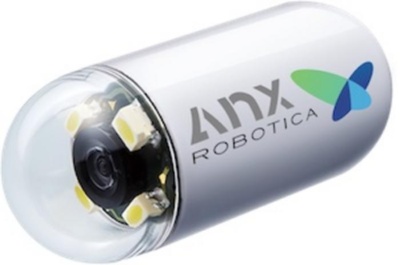
Although ingestible video capsule endoscopes have been around for some time, they had limitations – they could not be controlled by doctors and could only navigate the body passively. Fortunately, a new approach has been developed by a team at George Washington University.
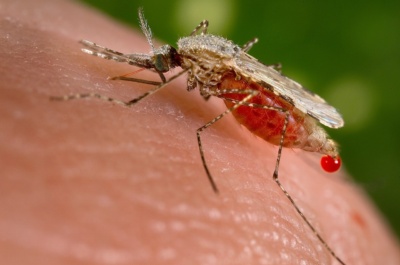
According to a recent study nearly three out of ten children in 13 Sub-Saharan African countries are infected with malaria.

A group of scientists from Ohio University, Argonne National Laboratory, and the University of Illinois-Chicago, among others, led by Ohio University Professor of Physics, and Argonne National Laboratory scientist, Saw Wai Hla, have achieved a groundbreaking feat – capturing the world’s first X-ray signature of a single atom.

Chess grandmasters are often seen as experts at thinking far ahead. But can others, with some practice, also become better at planning ahead?

Francis Crick Institute researchers have found three ancient cases of Yersinia pestis, the bacteria that causes the plague, in Britain. This is the oldest evidence of the plague in Britain.

According to a new study by Dartmouth, the Northeast is expected to experience a 52% increase in extreme precipitation events by the end of the century due to a warmer climate creating more humid conditions.
Bring more insight to game day with Pick Playbook. Explore sports predictions, matchup breakdowns, team ratings, and betting trends across the NFL, NBA, NHL, college football, and college basketball—all in one place. Skip the noise. Study the matchups. Find your next pick.
SparTech Software Cybersecurity
Check out the latest cybersecurity and dark web news. From rapid, high-level cybersecurity analysis reports to in-depth penetration testing (pentesting) of your network and systems, SparTech Software offers a comprehensive suite of cybersecurity services designed to protect your organization from evolving digital threats.

Geeky mathematical minds make money with horse race handicapping! Visit pickpony.com for horse racing past performance sheets, race charts and heatmaps, data summaries, AI analysis, and more. Pick Pony - your best bet in horse racing!
Books from Geek Slop Publishing
Living Truth Bible Study Guides
Despite its beautiful prose, you can’t just read Revelation; it requires diligent study. However, ineffective study techniques can lead to misunderstandings. Rather than imposing strict interpretations on the described events, use the concepts we present as a framework for understanding its intricate code. The Book of Revelation indeed provides more than just a foretelling of the tumultuous end of days. It reassures Christians that divine justice will ultimately triumph over evil and promises Jesus' eventual return as the rightful king of the world.
Chronicles of Enigma
While science and reason often seek to illuminate the unknown, there remains a certain allure in the unexplained—a realm where imagination and reality blur, creating a tapestry rich with wonder and possibility. Stories from the Chronicles of Enigma series endure not just as relics of the past, but as gateways to exploring the depths of our curiosity and the infinite potential of our world. Let us be the light that guides you through the darkness.
This Month’s Charity
Geek Slop believes everyone should be a good corporate citizen. Thus, each month, Geek Slop gives a portion of our online store profits to deserving charity. This month’s charity is:
Child Fund of America
Charity Watch Grade: A+
Program percentage: 92%
©Geek Slop – Many images, trademarks, logos, video, brands and images used on this website are registered trademarks of their respective companies and owners. They want us to remind you that “All Rights are Reserved”. Geek Slop never shares its data with third parties. However, 3rd party apps used on this site (we’re talking about you, Google!) may share your data in a non-identifying manner for reasons we do not know (probably to take over the world). Some content is sourced by fans, online websites, and or other fan community sources. Geek Slop is not responsible for reporting errors, inaccuracies, omissions, and or other liabilities related to news shared here. Entertainment is afast-movingg industry but we do our best to keep tabs on infringements. If some of your content was shared by accident, contact us about any infringements right away.


