Rhinoceros viper or river jackBitis nasicornis Description: Brightly colored with purplish to reddish-brown markings and black and light olive markings along the back. On its head it has a triangular marking that starts at the tip of the nose. It has a pair of long horns (scales) on the tip of its nose. Characteristics: Its…
Tag: poisonous snakes
From the venomous cobra to the deadly viper, we have information on identification, habitat, behavior, and treatment in case of a snake bite.
Puff adder snake – how to identify, avoid their habitat, and treatment for their bite.
Puff adderBitis arietans Description: Yellowish, light brown, or orange with chevron-shaped dark brown or black bars. Characteristics: The puff adder is the second largest of the dangerous vipers. It is one of the most common snakes in Africa. It is largely nocturnal, hunting at night and seeking shelter during the day’s heat. It is not…
Palestinian viper – how to identify, avoid their habitat, and treatment for their bite.
Palestinian viperVipera palaestinae Description: Olive to rusty brown with a dark V-shaped mark on the head and a brown, zigzag band along the back. Characteristics: The Palestinian viper is closely related to the Russell’s viper of Asia. Like its cousin, it is extremely dangerous. It is active and aggressive at night but fairly placid during…
Mole viper or burrowing viper – how to identify, avoid their habitat, and treatment for their bite.
Mole viper or burrowing viperAtracaspis microlepidota Description: Uniformly black or dark brown with a small, narrow head. Characteristics: A viper that does not look like one. It is small in size, and its small head does not indicate the presence of venom glands. It has a rather inoffensive disposition; however, it will quickly turn and…
McMahon’s viper – how to identify, avoid their habitat, and treatment for their bite.
McMahon’s viperEristicophis macmahonii Description: Sandy buff color dominates the body, with darker brown spots on the side of the body. The nose shield is broad, aiding in burrowing. Characteristics: Very little is known about this species. It apparently is rare or seldom seen. This viper is very irritable; it hisses, coils, and strikes at any…
Malayan pit viper – how to identify, avoid their habitat, and treatment for their bite.
Malayan pit viperCallaselasma rhodostoma Description: Reddish running into pink tinge toward the belly with triangular-shaped, brown markings bordered with light-colored scales. The base of the triangular-shaped markings end at the midline. It has dark brown, arrow-shaped markings on the top and each side of its head. Characteristics: This snake has long fangs, is ill-tempered, and…
Levant viper – how to identify, avoid their habitat, and treatment for their bite.
Levant viperVipera lebetina Description: Gray to pale brown with large dark brown spots on the top of the black and a characteristic mark on top of the head. Characteristics: This viper belongs to a large group of true vipers. Like its cousins, it is large and dangerous. Its venom is hemotoxic. Many deaths have been…
Krait snake – how to identify, avoid their habitat, and treatment for their bite.
KraitBungarus caeruleus Description: Black or bluish-black with white narrow crossbands and a narrow head. Characteristics: Kraits are found only in Asia. This snake is of special concern to man. It is deadly—about 15 times more deadly than the common cobra. It is active at night and relatively passive during the day. The native people often…
King cobra – how to identify, avoid their habitat, and treatment for their bite.
King cobraOphiophagus hannah Description: Uniformly olive, brown, or green with ring-like cross-bands of black. Characteristics: Although it is the largest venomous snake in the world and it has a disposition to go with this honor, it causes relatively few bites on humans. It appears to have a degree of intelligence. It avoids attacking another venomous…
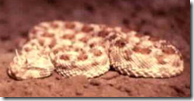
Horned desert viper – how to identify, avoid their habitat, and treatment for their bite.
Horned desert viperCerastes cerastes Description: Pale buff color with obscure markings and a sharp spine (scale) over each eye. Characteristics: As with all true vipers that live in the desert, it finds refuge by burrowing in the heat of the day, coming out at night to feed. It is difficult to detect when buried; therefore,…