
Gen Z’s workplace “language” may look abrupt, emoji-heavy and strangely casual to older coworkers, but emerging research suggests it’s not chaos—it’s a different set of rules that colleagues can learn to read rather than resist.
The latest reporting on Gen Z communication at work, highlighted by outlets such as Phys.org, argues that the biggest generational gaps show up in everyday moments: a one-word reply, a thumbs-up reaction, the choice to send a Slack DM instead of an email. Linguists and workplace researchers note that younger workers are digital natives whose sense of “professional tone” was shaped on platforms like text, WhatsApp and Discord, not in long-form email threads. As one language scholar told Fortune, many Gen Z workers simply haven’t internalized email as a distinct genre of writing the way their millennial and Gen X colleagues have, which helps explain why their messages tend to be shorter, more direct and less formally structured.
Studies of Gen Z employees consistently show a strong preference for fast, informal channels—instant messaging, collaborative platforms and short, reactive exchanges—over traditional, carefully composed email. Corporate language experts at the British Council describe teams noticing that younger hires gravitate to chat tools, sending ultra-concise messages that often rely on sentence fragments, abbreviations like “kk” and “g2g,” and even standalone emoji responses as a complete answer. Customer experience researchers add that Gen Z’s comfort with emojis, punctuation styling and typing speed reflects a deeper shift in how they signal tone and emotion: they are building a workplace language optimized for speed and multitasking, not for old-school memo aesthetics. At the same time, this is not a generation that only wants to hide behind screens. Multiple surveys find Gen Z values real-time, conversational contact, just often mediated through Zoom, Teams or other video tools that they still count as “face-to-face.”
Contrary to the stereotype of Gen Z as allergic to human interaction, several studies show they actually prioritize direct exchanges with managers—just more frequently and in shorter bursts. A live poll cited by PCMA found that roughly 72% of Gen Z workers prefer face-to-face communication on the job, compared with small minorities choosing text or email as their top option. Generational researchers at the Center for Generational Kinetics report that a majority of Gen Z respondents want multiple check-ins with their boss each week, with a significant portion preferring daily touchpoints. Academic and HR-focused studies echo that Gen Z employees tend to favor collaborative learning and interactive feedback over top-down, one-way directives, which lines up neatly with their comfort inside always-on group chats, co-op games and shared online spaces.
Where the friction really kicks in is when those habits collide with older norms. HR organizations and management magazines regularly flag communication styles as the number-one challenge in multigenerational teams: older workers often lean on meetings and phone calls, and expect emails to follow formal conventions, while younger colleagues favor instant messages that read like text threads. A recent round of health-system leaders interviewed by Becker’s Hospital Review pointed out three recurring patterns with Gen Z hires: extremely terse acknowledgments like “Noted” or “Done,” emoji reactions such as a thumbs-up in place of a written reply, and a tendency to avoid phone calls or speaking up in live meetings when conflict is involved. To someone who grew up on carefully drafted emails, those behaviors can scan as dismissive or disengaged; to a Gen Z employee, they are often intended as efficient, neutral confirmation that the message was received.
The good news in the research is that this is a translation problem, not an unsolvable clash. Language specialists and workplace coaches stress that Gen Z’s style is patterned: emojis and punctuation carry consistent meanings, brevity is usually about cutting filler rather than cutting respect, and choosing Slack over email can be a signal about urgency or informality, not about dodging responsibility. Organizations that invest in intergenerational communication training—setting shared norms for when to use chat versus email, explaining why a single-word reply may feel harsh to some colleagues, and encouraging managers to be explicit about tone—report fewer misunderstandings and smoother collaboration. For older geeks used to decoding in-jokes on Usenet, IRC, forums and social media across the last three decades, Gen Z’s workplace dialect is just the latest fandom language to learn: once you know that a thumbs-up means “got it,” a lack of sign-off doesn’t mean lack of respect, and a quick DM can be more thoughtful than a bloated email, the “mystery” mostly disappears.
In other words, Gen Z isn’t breaking communication at work—they’re remixing it using the tools and rhythms they grew up with, from co-op game chat to Discord servers. For teams willing to treat those habits as a new code rather than a flaw, the payoff can be big: faster feedback loops, more inclusive conversations, and a culture where messaging feels less like bureaucracy and more like the collaborative storytelling that powers modern geek culture itself.
Image Credits
In-Article Image Credits
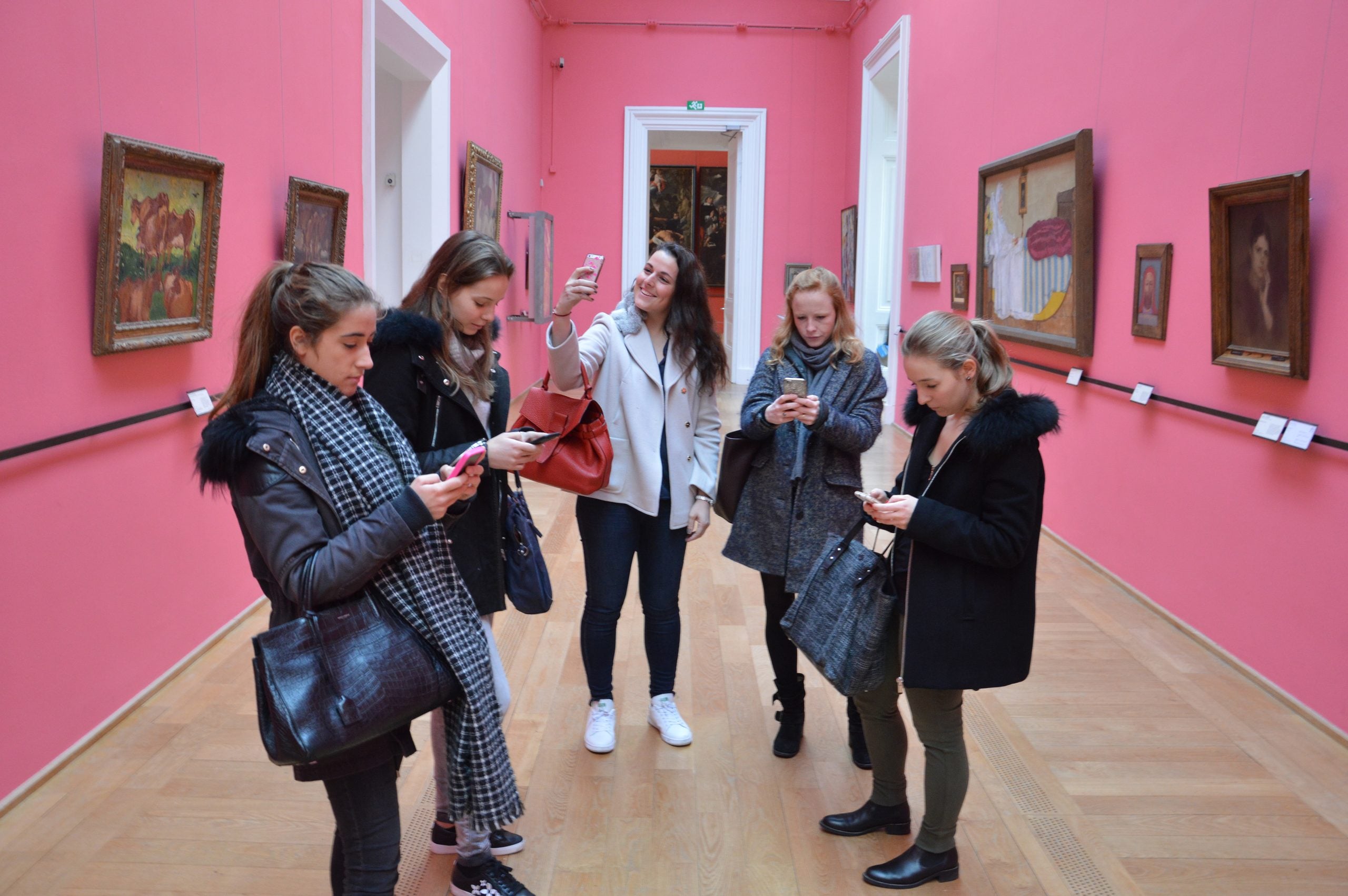
Generation-Z girls taking and sending photos while at the Lille Palace of Fine Arts museum via Wikimedia Commons by Nben54 with usage type - Creative Commons LicenseFeatured Image Credit
Generation-Z girls taking and sending photos while at the Lille Palace of Fine Arts museum via Wikimedia Commons by Nben54 with usage type - Creative Commons License


