
A newly named dinosaur from Zimbabwe is shaking up the story of how early dinos spread across southern Africa, hinting that the country’s Triassic fauna wasn’t just a copy-paste of South Africa’s better-known fossil record.
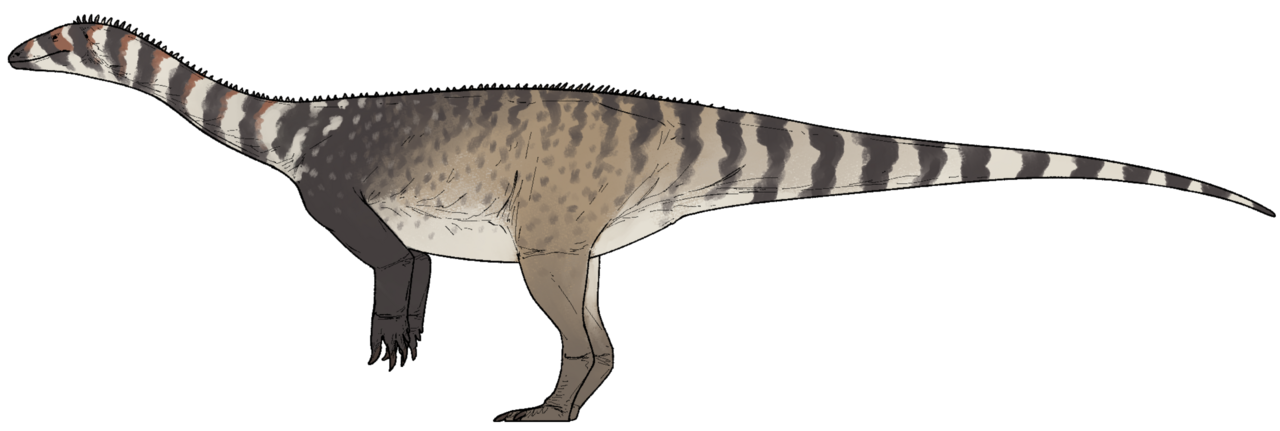
The star of the new study is Musango matusadonaensis, an early sauropodomorph dinosaur that lived about 210 million years ago on the shores of what is now Lake Kariba in northern Zimbabwe. Excavated from the Pebbly Arkose Formation near Musango/Spurwing Island during a 2018 field season, the find preserves parts of the spine, ribs, limbs and feet, making it one of the most complete dinosaurs of its age ever found in the country. Researchers estimate Musango was roughly 4.5 meters long, stood around human height at the hip, and weighed a few hundred kilograms—basically an agile, two-legged, long-necked proto-cousin of the massive sauropods that would later give us icons like Diplodocus. The animal was formally described in the Journal of Systematic Palaeontology, adding another crucial datapoint to the early evolution of sauropodomorphs.
For dinosaur geeks used to hearing about South Africa’s rich Triassic–Jurassic record, Zimbabwe has historically been a blank spot on the paleo map. Before Musango, only four dinosaur species had ever been named from the country, despite it sitting in the same general part of ancient supercontinent Pangea as the fossil-heavy Karoo Basin. One of those recent additions is Musankwa sanyatiensis, another Late Triassic sauropodomorph described from a single hind leg found along Lake Kariba and announced in 2024, marking the first dinosaur named from the Mid-Zambezi Basin in more than 50 years. With Musango now taking the tally to five, paleontologists are finally starting to see Zimbabwe’s own distinct cast of Triassic dinosaurs instead of assuming it was populated by the same species known from South Africa.
The new fossil doesn’t just pad the species list; it helps show how early dinosaurs were partitioned across different environments in southern Africa. Analyses of Musango’s bones suggest it occupied its own ecological niche within a lakeshore ecosystem, rather than matching the body plans of sauropodomorphs known from South African highland and floodplain deposits. Researchers argue that the combination of Musango and Musankwa—both Late Triassic sauropodomorphs from Zimbabwe’s lake margins—supports the idea that dinosaur communities varied significantly between nearby regions, with distinct assemblages rather than one uniform “Pan-African” fauna. That fits into a bigger picture where Africa today hosts roughly a quarter of the planet’s animal and plant species, a biodiversity rooted in long, region-specific evolutionary histories that are only now being fleshed out for dinosaurs.
Part of what makes Musango so compelling is the story of how it was found: an international team of British, Zimbabwean and South African scientists worked from boats and along the shorelines of Lake Kariba, navigating waters inhabited by hippos and crocodiles to reach fossil-rich outcrops. The Natural History Museum in London has highlighted the project’s goal of “filling in the palaeontological map” of southern Africa, emphasizing that Musango is just the fifth dinosaur named from Zimbabwe and that more species are likely waiting in remote sediments. Similar expeditions in the region previously uncovered Musankwa sanyatiensis, showing that carefully targeted fieldwork can still pull significant new dinosaurs out of rocks that have been overlooked for decades.
For fans raised on Jurassic Park and pop-culture reconstructions of sauropods as towering, building-sized behemoths, Musango offers a glimpse of their scrappy, mid-sized ancestors roaming a very different world. As an early sauropodomorph, it sits near the base of the lineage that would eventually evolve into some of the largest land animals ever, so every new skeleton helps researchers track how body size, posture and feeding strategies changed as the group diversified. The Zimbabwe discoveries also push the spotlight away from the usual North American and European sites and onto African basins, where the fossil record is less explored but clearly packed with surprises. Paleontologists working on Musango argue that southern Africa’s Late Triassic “zoo” was richer and more regionalized than previously recognized, and if that’s true, future expeditions could reveal a whole roster of previously unknown dinosaurs lurking in Zimbabwe’s rocks.
Image Credits
In-Article Image Credits
Life reconstruction of Musango matusadonaensis via Wikimedia Commons by Connor Ashbridge with usage type - Creative Commons LicenseFeatured Image Credit
Life reconstruction of Musango matusadonaensis via Wikimedia Commons by Connor Ashbridge with usage type - Creative Commons License


