
Rockstar Games has offered an unusually candid look at Grand Theft Auto VI’s troubled, sprawling road to release, giving fans their clearest explanation yet for why the sequel took more than eight years to build. The studio’s senior leaders spoke with Bloomberg reporter Jason Schreier for an extensive making-of feature, which Polygon described as a rare behind-the-scenes account of the project’s setbacks and evolution. Bloomberg’s report says development included two delays, pandemic disruption, a major leak, workforce expansion, and a period Rockstar development lead Rob Nelson characterized as a “dark period.”
The game began taking shape in 2015, when Rockstar staff traveled to Miami to research the setting. Early plans were far more ambitious than the version now known as GTA VI: the project was codenamed Project Americas and reportedly envisioned a map spanning large portions of North and South America. As production progressed, Rockstar narrowed the focus to Miami and its surrounding areas, transforming the fictional Vice City into a denser, more manageable stage for the series’ next crime saga.
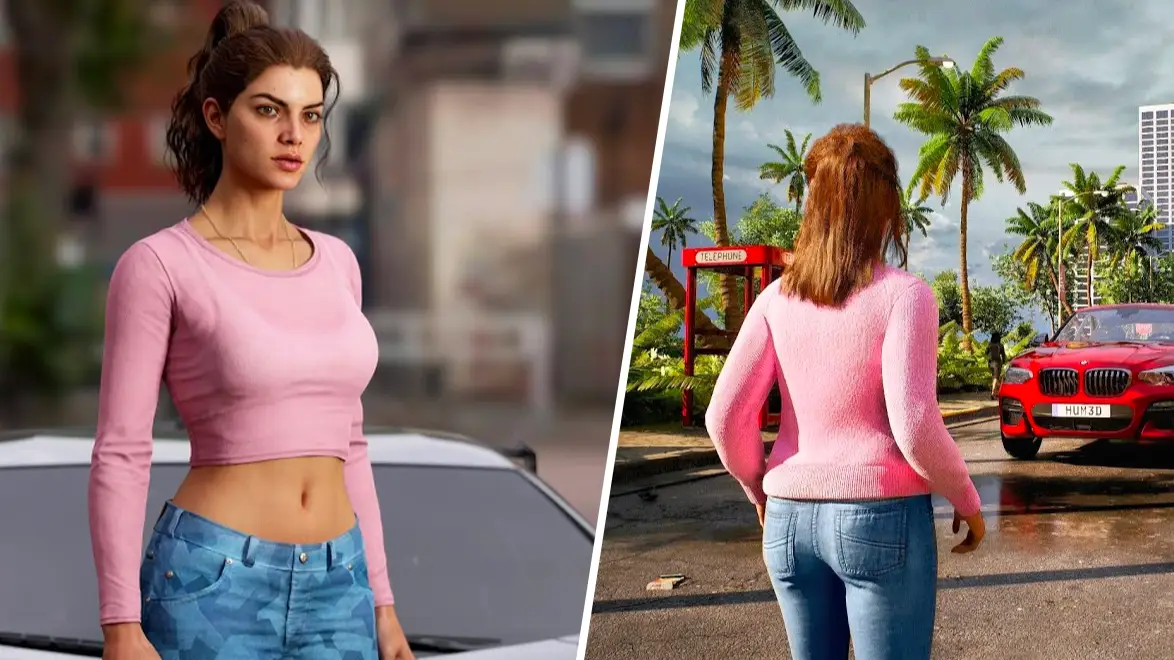
The timeline was also affected by Rockstar’s decision to concentrate much of its organization on Red Dead Redemption II as that game grew in scope. Once the team returned its attention to GTA VI, it still had to resolve fundamental questions about the game’s identity and structure. By the end of 2019, the central story had solidified around Jason Duval and Lucia Caminos, a criminal couple whose relationship is designed to function as part of the open-world gameplay rather than merely its cutscenes. Rockstar wanted the pair to shop, exercise, travel, commit robberies, and react to police encounters together, requiring complex artificial-intelligence and animation systems.
That ambition collided with the realities of production. Rockstar said it did not initially have enough writers, producers, and directors to create the huge volume of nonplayable-character content the game demanded, leading to the construction of a Los Angeles studio dedicated in part to NPC development. The company also expanded significantly: Bloomberg reports that Rockstar grew from 2,441 employees when Red Dead Redemption II launched in 2018 to 4,711 workers across 12 offices by August 2026. Remote work during the pandemic, the shutdown of performance-capture facilities, senior departures, and the 2022 theft of unfinished footage through a phishing attack added further pressure.
The public schedule reflected those internal difficulties. Rockstar’s first trailer arrived on December 4, 2023, promising a 2025 launch and introducing Jason, Lucia, and Vice City to the wider world. The trailer drew 93 million views in its first 24 hours, but the game was later pushed to May 2026 and then November 2026. The current target is November 19, 2026, with the title expected on PlayStation and Xbox platforms; Rockstar has not announced a PC release date in the reporting cited here.
For fans, the most consequential takeaway may be what Rockstar says happens after launch. Development chief Phil Hooker said the engine, tools, and team assembled for GTA VI should let the company move faster on whatever comes next, while Aaron Garbut said Rockstar had rebuilt foundational technology without intending to tear it apart again. That does not guarantee a quick follow-up—or reveal whether the next project will be Grand Theft Auto, Red Dead, or something else—but it suggests Rockstar hopes this unusually long production cycle leaves behind a reusable framework instead of another full reset.


