
A mushroom mystery stretching from Papua New Guinea to East Asia has finally acquired a much stronger scientific lead: Lanmaoa asiatica appears to be the fungus behind vivid visions of tiny, brightly dressed people. University of Utah researchers used DNA sequencing to connect mushrooms eaten in southwest China and the northern Philippines to the same species, giving new weight to a phenomenon once dismissed as folklore or cultural expectation. The newly identified mushroom connection is especially striking because the visions are unusually consistent across distant communities.
The study, published in Mycologia by University of Utah doctoral researcher Colin Domnauer and mycologist Bryn Dentinger, examined 53 specimens from field collections and fungarium archives. Their broader genetic survey identified 17 species in the genus Lanmaoa, including four previously unknown to science. The Chinese mushroom known as Jian shou qing and the Philippine mushroom called Sedesdem looked different in the field, but their DNA placed both under L. asiatica. Phys.org’s study coverage identifies the paper as a June 5, 2026 publication and names the researchers involved.
The visions themselves fit the clinical description of Lilliputian hallucinations: people perceive miniature humans, animals, or fantasy figures in the surrounding world. Accounts collected by the researchers describe dozens or even hundreds of figures, often only a few centimeters tall, walking around furniture, climbing walls, or reacting to ordinary objects. In many cases, the hallucinations follow the apparent rules of the physical environment rather than behaving like vague flashes or shapeless imagery.
The modern investigation has deep roots. Western researchers first heard in 1934 of “mushroom madness” in Papua New Guinea, where people reportedly saw miniature humans after eating wild fungi. Later investigators, including the chemist Albert Hofmann, searched for an active ingredient but failed to identify one. The Papua New Guinea mushroom still has not been genetically matched, in part because researchers could not obtain suitable specimens, but similar reports from Yunnan in the 1990s and the northern Philippines in 2024 supplied a new trail.
What makes L. asiatica particularly puzzling is what it apparently does not contain. Genetic and chemical testing found no evidence of psilocybin or other familiar mushroom psychedelics, leaving the responsible compound unidentified. The effects are associated with eating the mushroom raw or undercooked, even though related fungi have a place in local food traditions; that is a warning against treating the discovery as an invitation to experiment. ScienceAlert’s coverage likewise emphasizes that the fungus lacks genes for known psychedelic compounds.
For now, the breakthrough is an identification, not an explanation. Researchers still need to isolate the molecule, determine how it acts on the brain, and establish why it produces such specific imagery. Solving that puzzle could matter beyond mycology: Lilliputian hallucinations are also associated with conditions including dementia, vision loss, and alcohol withdrawal, so a naturally occurring and comparatively consistent trigger may offer scientists a new way to study how the brain constructs convincing visual worlds.
Image Credits
In-Article Image Credits
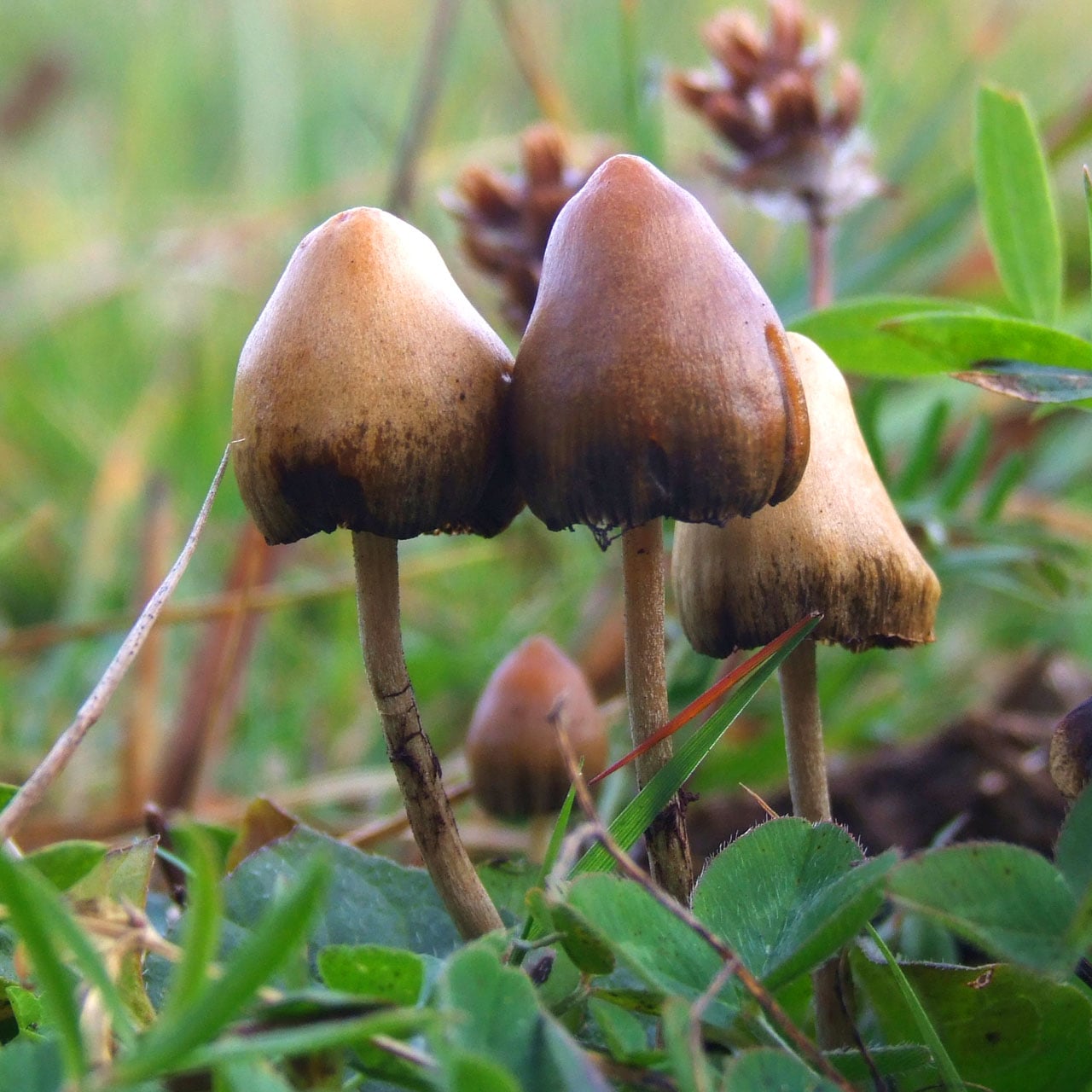
Fruit bodies of the hallucinogenic mushroom Psilocybe semilanceata (Fr.) Kumm. Specimens photographed in Sweden. via Wikimedia Commons with usage type - Creative Commons License. By Arp - This image is Image Number 6514 at Mushroom Observer, a source for mycological images., CC BY-SA 3.0, https://commons.wikimedia.org/w/index.php?curid=12066335Featured Image Credit
Fruit bodies of the hallucinogenic mushroom Psilocybe semilanceata (Fr.) Kumm. Specimens photographed in Sweden. via Wikimedia Commons with usage type - Creative Commons License. By Arp - This image is Image Number 6514 at Mushroom Observer, a source for mycological images., CC BY-SA 3.0, https://commons.wikimedia.org/w/index.php?curid=12066335


