
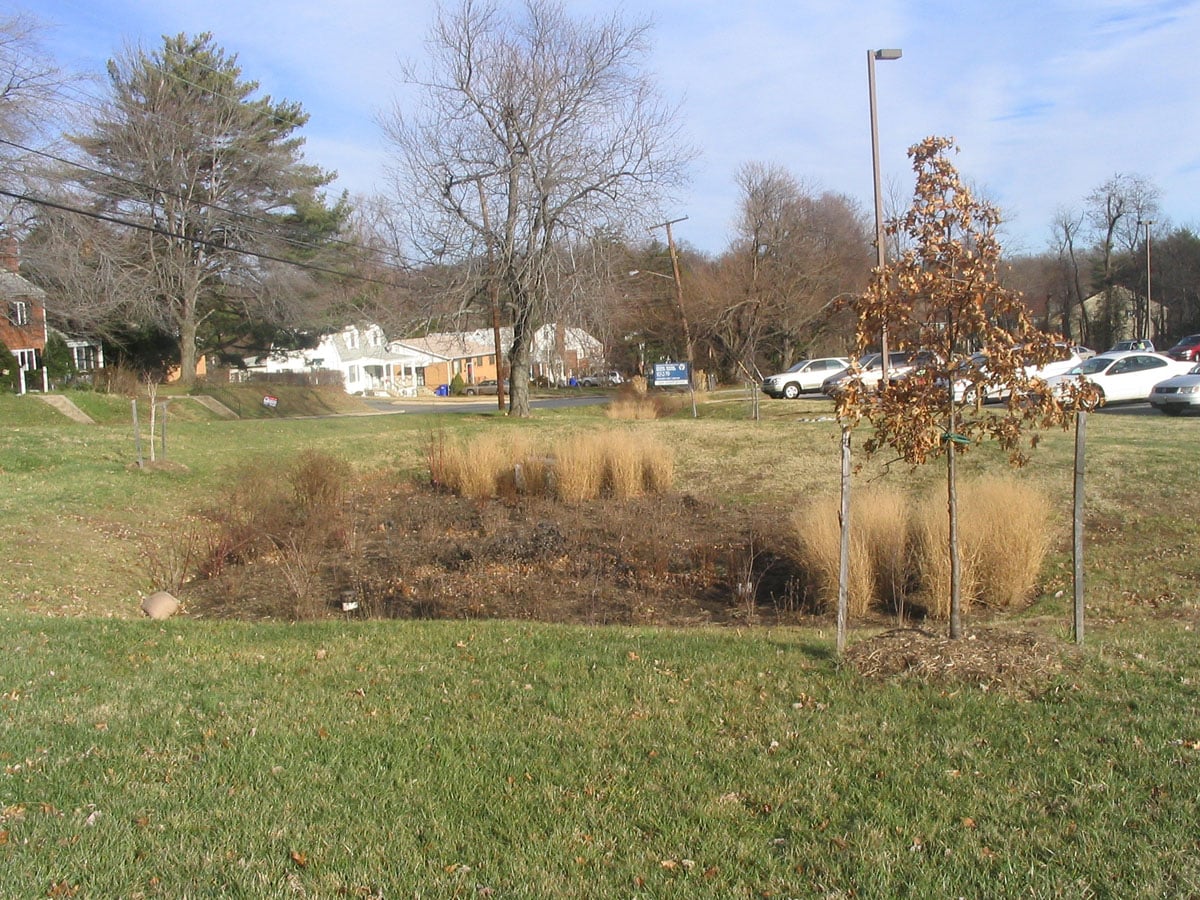
Rain gardens may be the most balanced neighborhood-scale defense against urban flooding near Tokyo, according to a new study from researchers at Japan’s Shibaura Institute of Technology. The team compared vegetated rain gardens, rooftop rain barrels, and a combination of both in three flood-prone residential catchments in Saitama City. The findings point to rain gardens as the strongest all-around option, even though combined systems often delivered the greatest reductions in runoff.
Doctoral researcher Jiajing Lin led the work with Hiroyuki Taguchi and Hitoshi Nakamura. Their framework combined hydrological modeling with life-cycle cost assessment, ecosystem-service valuation, and multi-criteria analysis rather than judging each intervention solely by how much water it captured. The research appears in City and Environment Interactions under the title Comprehensive evaluation of the role of rain barrels and rain gardens in densely built-up residential areas near Tokyo.
The distinction between the technologies is important. Rain barrels store roof runoff for later nonpotable use, potentially reducing demand for treated water, while rain gardens temporarily hold stormwater in planted depressions and allow it to infiltrate through engineered soil. That makes rain gardens less dependent on household behavior and gives them additional value as small green spaces, although their performance depends on available land, soil conditions, maintenance, and local drainage patterns.
Results varied by neighborhood. In Miyahara, rain gardens cut peak runoff by 35.78% and delayed the peak by 20 minutes; the combined approach produced the largest total runoff reduction there, at 30%. In Higashimiyashita, the hybrid setup reduced peak runoff by 3.46%, total runoff by 10.89%, and delayed the peak by 20 minutes. In Motobuto, it lowered peak runoff by 7.95%, reduced total volume by 8.95%, and added a 10-minute delay.
When flood protection was weighed alongside economic and social considerations, rain gardens ranked first in all three catchments, receiving comprehensive scores of 0.416 in Miyahara, 0.400 in Higashimiyashita, and 0.395 in Motobuto. Rain barrels alone ranked last overall, suggesting that water storage benefits do not necessarily outweigh their weaker flood-control and broader community advantages in these settings.
The research arrives as Tokyo and surrounding municipalities promote green infrastructure that keeps rainfall closer to where it lands. Tokyo’s resilience program describes rainwater-focused green infrastructure as a way to reduce runoff while also easing heat, improving streetscapes, and supporting biodiversity. The study’s practical takeaway is therefore less a universal prescription than a planning tool: dense districts may favor rain gardens, while hybrid installations could make sense where flood reduction is the overriding priority and households or public facilities can support storage.
Image Credits
In-Article Image Credits
View of a bioretention cell, also called a rain garden via Wikimedia Commons by Moreau1 with usage type - Public Domain. By Moreau1 - Own work, Public Domain, https://commons.wikimedia.org/w/index.php?curid=3274022Featured Image Credit
View of a bioretention cell, also called a rain garden via Wikimedia Commons by Moreau1 with usage type - Public Domain. By Moreau1 - Own work, Public Domain, https://commons.wikimedia.org/w/index.php?curid=3274022


