
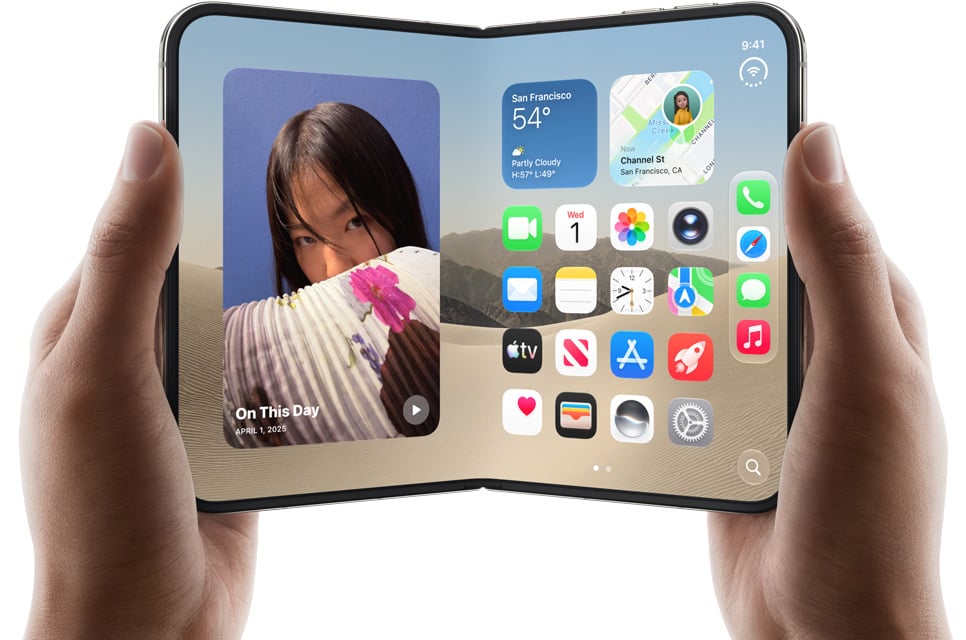
Apple’s first foldable iPhone is facing an awkward early test: owners are reporting cracked inner displays and bright pixel lines around the hinge, while a teardown points to a possible mechanical weak spot. The iPhone Duo’s repairability findings suggest the problem may involve how the display is supported as the phone folds, rather than a simple failure of the screen cable.
iFixit gave the Duo a provisional 5 out of 10 repairability score, its best result for a foldable smartphone so far. That rating reflects several unusually serviceable choices: the outer display can be removed intact, the two batteries use electrically releasable adhesive, and smaller components are comparatively accessible. Apple has also published a repair manual, although iFixit is still waiting for replacement parts to become available through the company’s self-service repair program. iFixit’s teardown calls the score promising without pretending that the phone is easy to fix.
The inner display and hinge are where that optimism runs out. iFixit says a complete inner-screen replacement will cost $999 without coverage, while replacing the flexible panel remains a lengthy, delicate job involving adhesives and specialized fixtures. The more modest cover-layer replacement is a different story: Apple’s procedure allows the flexible protective surface to be changed without sacrificing the OLED beneath it, with service priced at $49 without AppleCare and $19 with it.
To investigate the reported failures, iFixit combined teardown footage, patents, CT scans and a 3D model of the hinge. The damaged displays appear to fail just below the passage used by the display cable, near the transition into the center support. In one simulation, that support bar does not drop far enough as the phone closes, allowing the curved screen to press against it and creating a concentrated stress point. That is a possible explanation, not a confirmed diagnosis, but it lines up with photographs showing similar lines and cracks in the same area.
Dust may add another complication. Despite the Duo’s IP68 rating, iFixit found that fine particles could reach moving sections of the hinge during testing. The hinge began crunching after exposure to fluorescent powder, and cleaning or replacing those parts requires removing the flexible display and its supports. That matters because foldable-phone water and dust ratings do not necessarily mean the hinge’s moving mechanism is sealed against every particle that can enter the enclosure.
For now, affected owners have reportedly received replacement devices from Apple, but the long-term response remains unclear. A warranty replacement can contain the immediate damage; it does not establish whether the failures are widespread, whether a revised component is coming, or how Apple will handle units outside coverage. The Duo’s teardown is therefore a mixed result: Apple has made meaningful progress on batteries, outer-screen access and general disassembly, but the part most likely to fail is also the most expensive and difficult to replace. For a first-generation foldable, that distinction could matter more to buyers than a repair score that leads a category still struggling with durable hinges.


