
A new cancer strategy turns a tumor’s unusual chemistry against it: researchers have designed a system that uses carbon monoxide already present inside malignant cells to assemble a toxic anticancer compound on-site. The early work, which makes cancer cells produce the drugs that kill them, could eventually point toward chemotherapy that is more selective and less damaging to healthy tissue.
The proof-of-concept study comes from Katsunori Tanaka’s Biofunctional Synthetic Chemistry Laboratory at RIKEN’s Pioneering Research Institute in Japan. Rather than carrying a fully formed poison through the bloodstream, the team’s approach delivers a specially engineered metal-containing catalyst into cells, where it can use the tumor’s internal carbon monoxide as a chemical building block. The research published in Nature Communications describes the technique as a way to exploit carbon monoxide as an intracellular feedstock.
The chemistry centers on palladacycles, organometallic compounds capable of reacting with carbon monoxide to create phenanthridinone. That molecule belongs to a broader family of structures associated with potent drugs, including compounds that interfere with DNA-repair and DNA-replication machinery. In the RIKEN experiments, the catalyst was paired with albumin, a protein-based carrier intended to help transport the system into cells while taking advantage of the elevated carbon-monoxide environment found in many tumors.
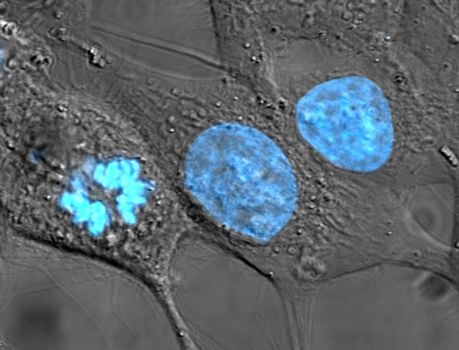
That difference between cancerous and healthy tissue is the treatment’s central advantage. The researchers designed the system so the drug-forming reaction is favored where carbon monoxide levels are high. In tests using a liver-cancer cell line, the compound was produced inside the malignant cells, which then suffered the toxic effects of the newly assembled drug. Healthy cells, lacking the same chemical conditions, should be less likely to activate the payload, although that selectivity still needs to be demonstrated across much broader biological testing.
This is not yet a ready-made replacement for chemotherapy. The reported experiments were conducted in cultured cells, meaning the team has not established whether the catalyst can reach tumors reliably, remain stable in the body, avoid unwanted reactions, or produce a safe therapeutic window in animals and people. Those questions will be especially important because carbon monoxide is toxic at excessive concentrations, even though cells also produce and use small amounts of it as a signaling molecule.
The concept nonetheless fits a growing effort to make cancer treatment responsive to the tumor microenvironment rather than treating the entire body as the target. Other researchers have explored carbon-monoxide-releasing compounds that trigger oxidative stress and mitochondrial damage in tumors, but the RIKEN method takes a more chemically ambitious route: it uses the gas not only as a signal, but as raw material for manufacturing a separate cytotoxic agent.
The next milestone is testing the albumin-palladacycle system in animal models. If the tumor-selective reaction survives that transition, researchers will still need to establish dosing, delivery, toxicity, and whether the approach works across different cancer types. For now, the significance is less about an imminent cancer cure than a striking change in strategy: instead of sending a finished weapon through the body, medicine may someday deliver the ingredients and let the tumor assemble its own undoing.


