
A single genetic treatment could eventually replace decades of cholesterol medication, but researchers are warning that medicine’s “one-and-done” future comes with an unusually high burden of proof. In a new perspective on durable genomic treatments, University of Michigan cardiologists Eric D. Smith and Venkatesh L. Murthy argue that permanent interventions for common diseases must be judged more cautiously than therapies for rare, life-threatening disorders.
Their paper, Clinical Framework for Durable Genomic Interventions, published in JAMA Internal Medicine, asks clinicians to weigh five issues before treating large populations: the seriousness of the disease, whether reversible medicines already work, whether the target tissue is appropriate for a lasting intervention, whether delivery risks are proportionate, and whether patients can be monitored for years. That last question could prove decisive. A side effect that affects only a tiny fraction of patients may still harm thousands or millions if a therapy is used widely.
The promise is no longer purely theoretical. Cleveland Clinic researchers reported one-year results from a first-in-human CRISPR-Cas9 trial involving CTX310, an experimental treatment designed to disable the liver gene ANGPTL3. At the highest dose, LDL cholesterol fell 52.5% from baseline after 12 months, while triglycerides dropped 47.8%. The treatment is delivered through a single infusion, using lipid nanoparticles to carry the editing machinery into cells.
Other approaches are pursuing the same broad goal through different genetic targets. An ongoing trial at Oregon Health & Science University is testing a one-time infusion intended to switch off ANGPTL3 in people whose cholesterol remains difficult to control with existing drugs. Meanwhile, VERVE-102 is designed to use DNA base editing to disrupt PCSK9, a gene involved in regulating LDL cholesterol. These studies could show whether durable cholesterol reduction is achievable, but early results cannot establish how the edits will behave over several decades.
That permanence is both the appeal and the problem. Statins and other conventional treatments can be adjusted, paused, or discontinued when a patient’s health changes or side effects appear. A genetic alteration may not be so easy to reverse, and the immune response to a delivery system could make repeat treatment difficult. The risk-benefit calculation is therefore different for high cholesterol than for a devastating disorder with few alternatives: patients may gain freedom from daily medication, but they may also surrender the flexibility to change course.
Cost and access add another complication. Some approved gene therapies for rare diseases carry prices above $1 million per patient, a model that becomes difficult to sustain when treatment expands to conditions affecting millions. The next stage of genomic medicine will require not just stronger clinical evidence, but independent patient registries, standardized long-term follow-up, and pricing systems that do not turn a potentially transformative therapy into a privilege for the few. The central question is shifting from whether scientists can edit disease-related genes to whether society can safely live with the consequences of doing so.
Image Credits
In-Article Image Credits
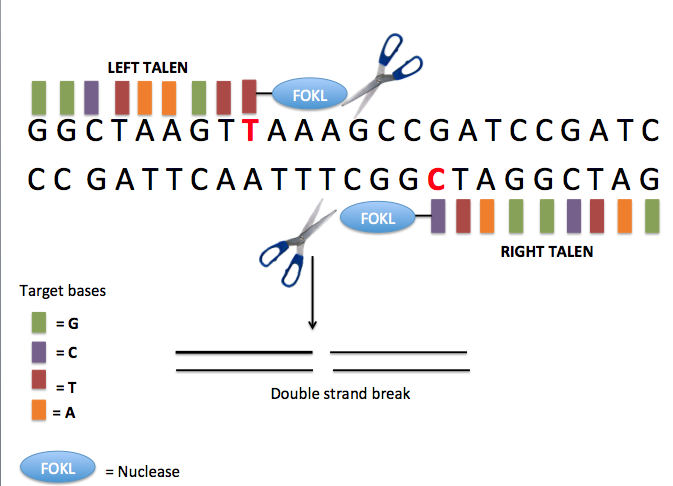
General overview of the TALEN gene genome editing process via Wikimedia Commons by Ogletreerd with usage type - Creative Commons License. By Ogletreerd - Own work, CC BY-SA 4.0, https://commons.wikimedia.org/w/index.php?curid=45612749Featured Image Credit
General overview of the TALEN gene genome editing process via Wikimedia Commons by Ogletreerd with usage type - Creative Commons License. By Ogletreerd - Own work, CC BY-SA 4.0, https://commons.wikimedia.org/w/index.php?curid=45612749


