
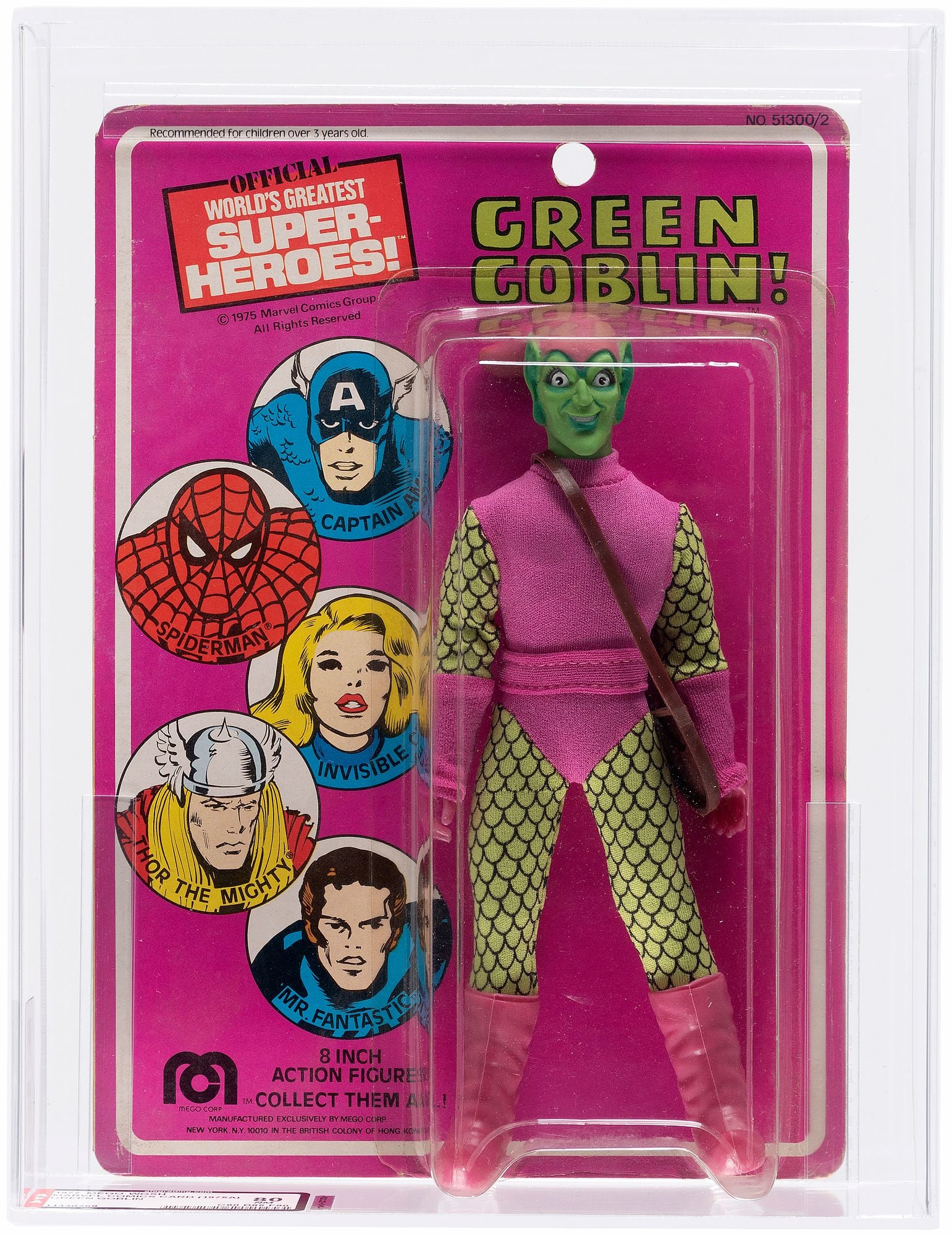
A rare Mego Green Goblin action figure is closing in on a price almost unimaginable when the toy first hit store shelves. The AFA 80+ Near Mint specimen has already reached $90,000 in Hake’s November 2026 Pop Culture Premier Auction, putting it well above the auction house’s original $30,000–$50,000 estimate. The escalating Green Goblin auction is scheduled to run through November 18, leaving time for the bidding to climb even higher.
At its current price, the figure has already surpassed the previous Mego action-figure record: another graded example of the same scarce Green Goblin release sold through Hake’s for $76,700 in 2022. Hake’s identifies the current toy as one of only two graded examples known for the rare 1975A card, making this less a routine vintage-figure sale than a competition over an exceptionally narrow slice of Mego history.
The packaging is the crucial detail. Green Goblin appeared on a bubble-and-card presentation in 1975, but the character is more commonly encountered in Mego’s later window-box packaging. That makes a well-preserved carded example difficult to find even before professional grading enters the equation. With an AFA 80+ designation and only one other graded counterpart documented by the auction house, the figure occupies the sort of near-unique position that can send specialist collectors far beyond conventional price guides.
Green Goblin’s importance also comes from his place in Mego’s groundbreaking World’s Greatest Super-Heroes line. Mego launched the range in 1972 with DC characters, then brought Marvel heroes into the assortment in 1973, including Spider-Man and Captain America. The company’s eight-inch bodies, interchangeable construction, and cloth costumes allowed it to build a broad roster of heroes and villains at a time when comic-book action figures were still a relatively new idea. Marvel’s own history of the line lists Green Goblin among the characters who helped make those early figures enduring collector pieces.
The line’s standardized format was commercially influential, but it also created a collecting landscape where packaging variations could matter as much as the figure itself. A loose Green Goblin may be an appealing vintage toy; an intact, sharply preserved example on an exceptionally scarce card is a different category of artifact. That distinction helps explain why graded Mego figures can command spectacular sums despite grading remaining less central to Mego collecting than it is in some other vintage-toy communities.
If the Green Goblin receives another $10,000-plus in bids before the auction closes, it would become the first Mego action figure known to sell for more than $100,000. Even without reaching that threshold, the sale has already demonstrated how strongly condition, packaging, scarcity, and character popularity can reshape the market for 1970s superhero toys.


