
U.S. approval for Chinese companies to handle Nvidia’s powerful H200 artificial-intelligence processors is facing an uncomfortable test: two of the newly licensed firms appear to have little visible business presence at all. An investigation into the H200 licensees found that New Matrix and Maginfra were associated with vacant or barely occupied offices, while their executives and corporate networks pointed toward companies already facing U.S. restrictions.
The concern is not simply that the businesses are obscure. New Matrix and Maginfra were approved to receive H200 chips for assembly into AI servers destined for other customers, rather than being identified as the ultimate end users. That arrangement makes the companies’ own operations and downstream buyers especially important to the licensing process. Yet visitors found little evidence of normal activity at either listed location, and nearby workers reportedly did not recognize the companies or recall seeing staff there.
New Matrix’s ownership adds another layer of scrutiny. Public records connect founder Li Bin and other principal owners to Wise Road, a Chinese private-equity group listed by the U.S. Department of Commerce over its alleged role in helping Beijing obtain sensitive semiconductor technology. Li also chairs Tsinghua Unigroup and owns New H3C Semiconductor Technologies, which has separately appeared on the Commerce Department’s Entity List. The official Entity List also includes Wise Road and Inspur, the Chinese technology company analysts believe is connected to Maginfra through personnel, patents, and overlapping state-linked ownership structures.
Maginfra is not the only licensee raising questions. Zhejiang Yindun Cloud Technology reportedly has executive links to Range Intelligent Computing Technology Group, a data-center operator that has provided computing capacity to Chinese military contractors. The company is also said to operate partly from a Range facility. Those connections do not, by themselves, establish that any H200 shipment has been diverted or misused, but they underscore why end-use verification is central to the program.
The approvals stem from a major shift in U.S. policy. After restrictions were tightened in 2025, the Trump administration later permitted Nvidia’s H200 and comparable processors to be exported to approved Chinese customers under controlled conditions, with the United States taking a 25 percent share of sales. Commerce’s Bureau of Industry and Security subsequently said applications would receive case-by-case review, provided applicants could demonstrate customer-screening procedures, adequate export compliance, sufficient supply for U.S. buyers, and independent testing of the hardware.
That framework is now being judged on whether paperwork can distinguish a legitimate server assembler from a pass-through company with hidden customers. Roughly two dozen Chinese companies have reportedly received approval, including major technology and industrial names such as Baidu, Alibaba, Tencent, ByteDance, BYD, ZTE, and Tesla’s Shanghai operation. The presence of recognizable corporations may make the program appear tightly controlled, but obscure intermediaries can create the route through which restricted hardware reaches an undisclosed user.
For Nvidia, the controversy threatens to turn a lucrative but politically sensitive market into a compliance headache. For Washington, it raises a more basic question about whether license review is uncovering meaningful ownership and end-use risks or merely recording assurances supplied by applicants. Commerce says it reviews applications for national-security concerns, but the New Matrix and Maginfra cases put pressure on the agency to explain what happens after approval—and whether licenses can be paused or revoked when physical inspections and corporate research reveal warning signs.
Image Credits
In-Article Image Credits
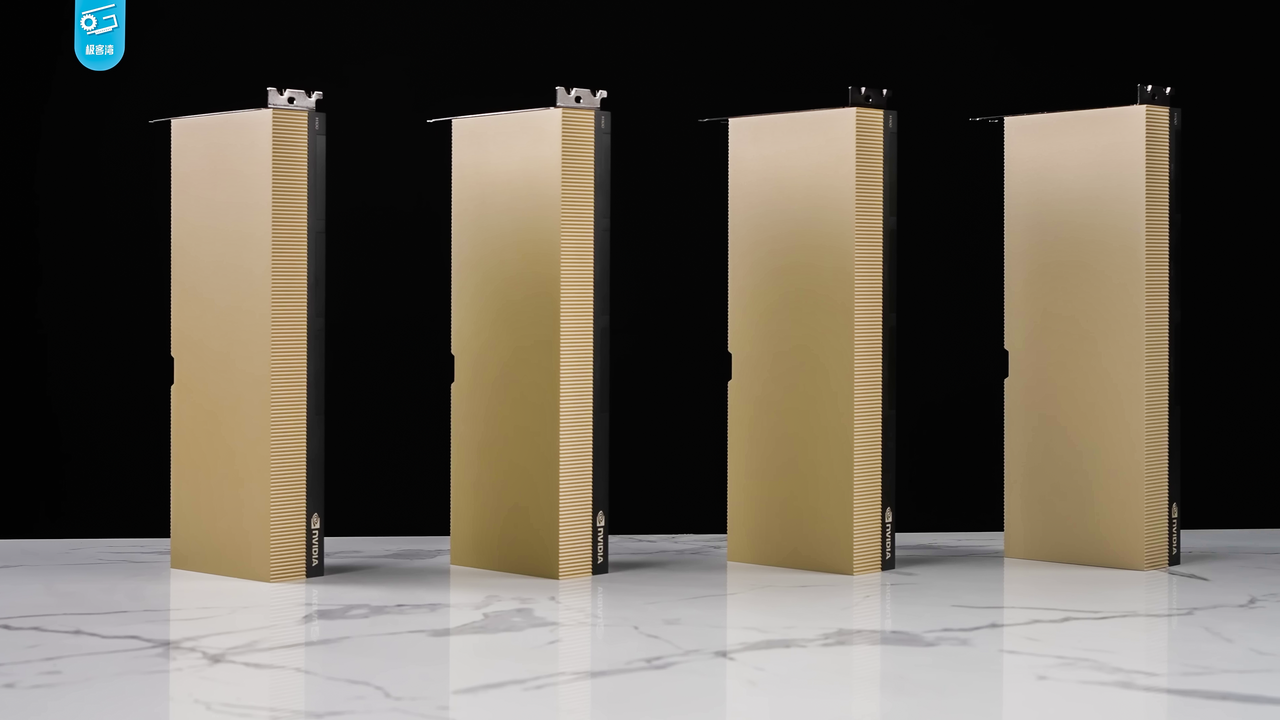
High-performance graphics card NVIDIA H100, which is based on the Hopper architecture. The NVIDIA H100 PCIe has the following features: RAM memory type: HBM2, RAM: 80 GiB, memory speed: 2 TiB/s, 14592 Cuda cores via Wikimedia Commons by 极客湾Geekerwan with usage type - Creative Commons License. By 极客湾Geekerwan, CC BY 3.0, https://commons.wikimedia.org/w/index.php?curid=147108831Featured Image Credit
High-performance graphics card NVIDIA H100, which is based on the Hopper architecture. The NVIDIA H100 PCIe has the following features: RAM memory type: HBM2, RAM: 80 GiB, memory speed: 2 TiB/s, 14592 Cuda cores via Wikimedia Commons by 极客湾Geekerwan with usage type - Creative Commons License. By 极客湾Geekerwan, CC BY 3.0, https://commons.wikimedia.org/w/index.php?curid=147108831


