
Google DeepMind has put a mathematical checkpoint beneath some of Signal’s most important security promises. In a four-week proof-of-concept, researchers used the new AlphaProof Code framework to formally verify key protections in the compiled cryptographic code behind Signal, rather than examining only an abstract design. The work is detailed in the latest verification milestone for Signal’s encryption.
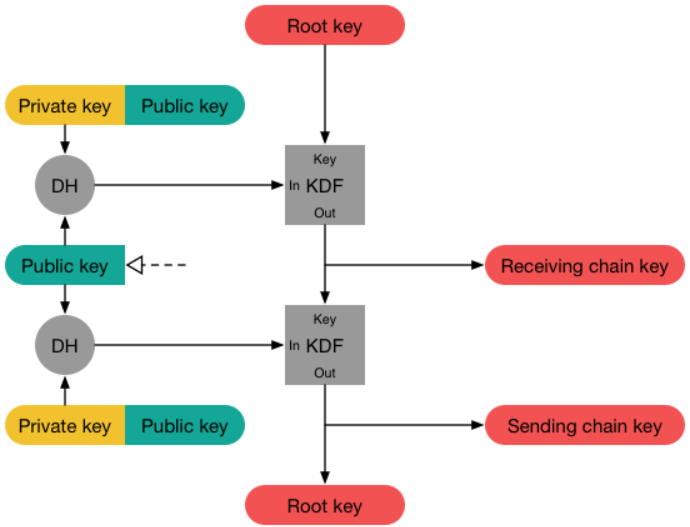
The project focused on the reference implementation used by the Signal protocol, including the post-quantum PQXDH handshake and Triple Ratchet mechanisms. Those systems are designed to preserve properties such as forward secrecy, authentication, handshake secrecy, and post-compromise security—the ability for a conversation to recover protection after a device has temporarily been breached. The underlying technology also supports private communications in Signal and Google Messages, while related implementations are used across the broader messaging ecosystem. Google DeepMind’s announcement describes the result as the first formal verification of a widely deployed cryptographic protocol’s implementation at this depth.
AlphaProof Code divides the work between human specialists and multiple AI agents. Researchers first worked with models to convert Signal’s security goals into precise mathematical specifications, then had human experts review those specifications. Agents powered by Gemini Carbon generated more than six million lines of Lean proof code, while the Lean proof checker mechanically validated the results. The agents also flagged roughly one percent of the work for additional human attention, leaving the remainder to automated checking.
That distinction between design and implementation is crucial. A protocol can be theoretically sound while its real-world code introduces a mistake during translation, compilation, or integration. DeepMind’s approach attempted to follow the guarantees down to the machine-code level, narrowing the gap between what Signal is supposed to do and what devices actually execute. Independent coverage from The Register likewise identifies the work as a machine-checked examination of Signal’s post-quantum handshake and ratchet protections.
The researchers also tested whether the system could reject known-bad software, not merely approve the current version. They inserted two previously fixed vulnerabilities into an isolated copy of Signal’s code, and AlphaProof Code produced machine-checked proofs that the altered versions were insecure. That is encouraging for security auditing, although it does not mean every part of the Signal application, every dependency, or every possible security assumption has now been proved flawless. The formal specifications still define what is being verified, and expanding that scope remains a substantial research challenge.
For Signal users, the immediate takeaway is added confidence in the core cryptography—not a new app feature or a change to how messages appear. For the software industry, the more consequential result is the compressed timeline: work that traditionally could require expert teams years was attempted in weeks with AI agents handling much of the proof construction. DeepMind says the same human-guided approach could eventually be applied to other high-risk systems, including medical devices and power-grid software, but turning this demonstration into routine, large-scale verification will require further testing and independent scrutiny.


