
A bioengineered chewing gum has shown an unexpectedly powerful ability to corral microbes associated with head and neck cancer, trapping up to 93% of HPV in patient saliva and sharply reducing two harmful bacterial species in laboratory tests. The results are promising—but because the work was performed on collected samples rather than people receiving treatment, the gum is not yet a cancer cure or approved preventive.
The research, led by Henry Daniell of the University of Pennsylvania’s School of Dental Medicine, builds on gum made from lablab beans. The formulation contains FRIL, a naturally antiviral bean protein that binds virus particles together into larger clusters that can be separated from the surrounding sample. In the study, the bean-gum extract reduced HPV by about 93% in saliva and 80% in oral-rinse samples. The experimental gum’s headline HPV findings came from ex vivo testing involving samples from patients with head and neck squamous cell carcinoma.
The team also added protegrin-1, an antimicrobial peptide, to create a second line of defense against Porphyromonas gingivalis and Fusobacterium nucleatum. After a single laboratory treatment, the combination reduced both bacteria by more than 99% in saliva and oral-rinse samples. The paper reports four- to six-log reductions in the cancer-patient samples, while capsule-forming Streptococci—many of which are normal members of the mouth’s microbial community—were largely spared.
That selectivity matters because aggressive cancer therapies can disrupt the oral ecosystem along with the organisms they target. The Penn researchers contrast their approach with radiation therapy, which can reduce beneficial bacteria and encourage the growth of disease-associated yeast such as Candida albicans. The proposed gum is instead designed to deliver antiviral and antibacterial activity directly in the mouth, potentially making it useful alongside existing treatment rather than replacing surgery, radiation, chemotherapy, or immunotherapy.
The study’s numbers are encouraging, but its boundaries are equally important. HPV was measured with an ELISA test that detects viral surface proteins and aggregation, while the bacteria were assessed through culture; neither approach demonstrates that the gum eliminated cancer, prevented infection, or changed a patient’s prognosis. The authors explicitly describe the work as an ex vivo study and say future research must examine long-term microbiome effects, tumor cells, dosing, and safety in living participants.
Daniell’s group now envisions clinical trials testing the bean-gum and protegrin-1 combination as an adjuvant for people undergoing head and neck cancer care, or potentially as a prophylactic strategy against harmful oral microbes. Until those trials begin and produce clinical outcomes, the most accurate description is a targeted experimental delivery system: a familiar chewing-gum format carrying proteins that can trap HPV and suppress selected bacteria without broadly sterilizing the mouth.
Image Credits
In-Article Image Credits
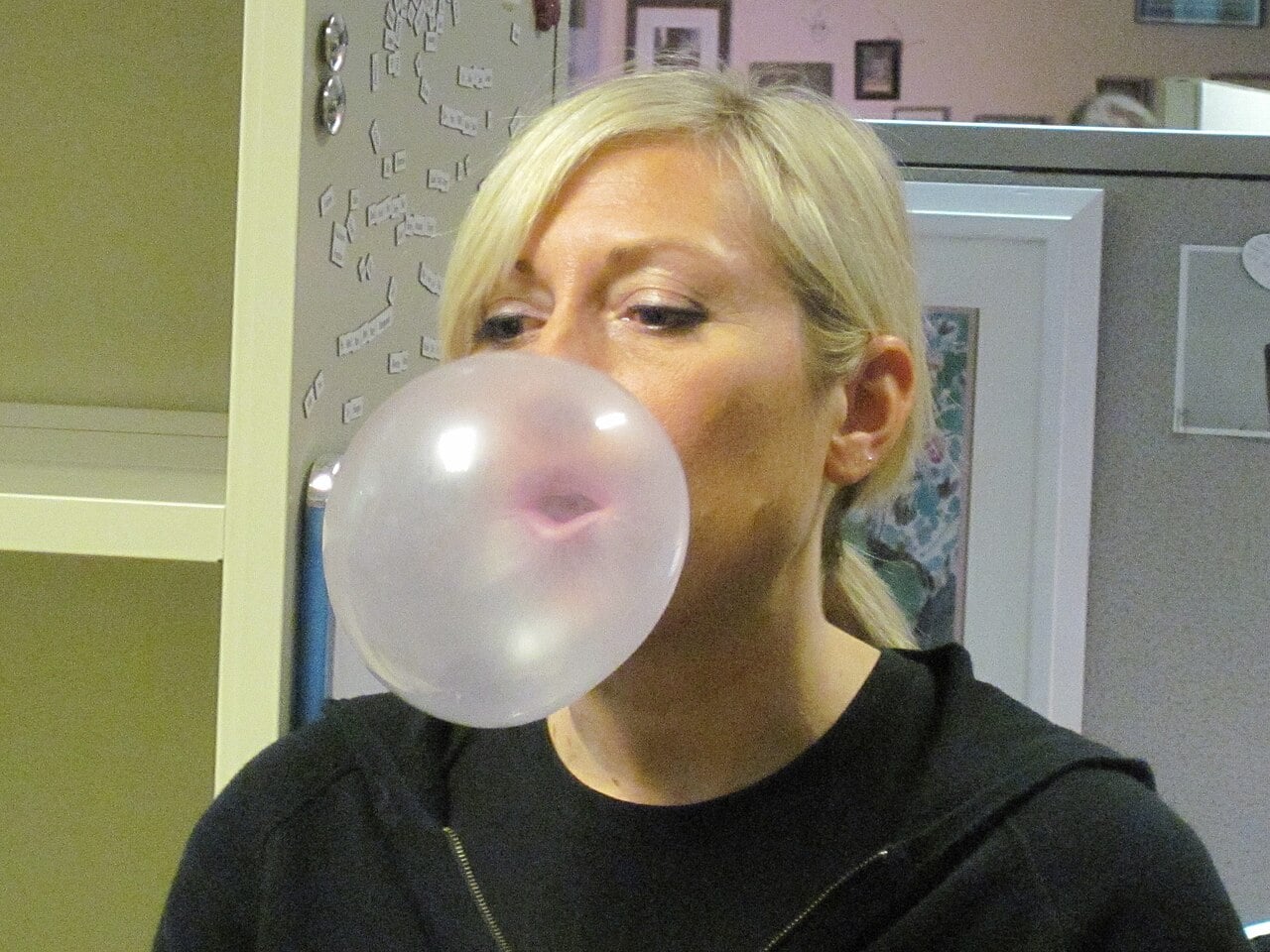
A woman blowing a bubble with pink bubble gum via Wikimedia Commons by Jim McCluskey with usage type - Creative Commons License. By Jim McCluskey from Everett, Washington, United States - team building exercise, CC BY 2.0, https://commons.wikimedia.org/w/index.php?curid=49848012Featured Image Credit
A woman blowing a bubble with pink bubble gum via Wikimedia Commons by Jim McCluskey with usage type - Creative Commons License. By Jim McCluskey from Everett, Washington, United States - team building exercise, CC BY 2.0, https://commons.wikimedia.org/w/index.php?curid=49848012


