
Oregon has recorded its first confirmed case of H5N1 in dairy cattle, expanding the virus’s reach into another Northwest state just as concerns grow over whether Washington’s human infections are being fully counted. The detection was confirmed November 10 by the U.S. Department of Agriculture’s Animal and Plant Health Inspection Service after federal laboratory testing identified highly pathogenic avian influenza in an Oregon dairy herd. Oregon’s first reported H5N1 case in cows was found through routine monitoring rather than an announced illness cluster.
USDA’s National Veterinary Services Laboratories detected H5 clade 2.3.4.4b using PCR testing. The herd had repeatedly tested negative before the latest surveillance result, a detail that makes the discovery both concerning and a sign that ongoing milk testing can identify infections before they become more visible on farms. Oregon’s agriculture authorities describe the finding as evidence that the state’s monitoring program is functioning, while federal officials say genetic sequencing is still pending.
The immediate public-health message remains unchanged: regulators say the detection does not compromise the commercial milk supply. The USDA announcement says pasteurization effectively inactivates H5N1, and milk from affected animals is not supposed to enter the food chain. Oregon’s own agriculture department likewise places the case within a broader national outbreak that has affected dairy cattle in multiple states.
The Oregon news arrives against a more troubling backdrop in neighboring Washington. Health officials have confirmed three human infections in Yakima County connected to exposure to infected dairy cattle, including one worker who died. Two other people were not hospitalized, according to Washington health officials cited by KING 5.
The United Farm Workers union says those numbers may not reflect the outbreak’s true human toll. The union has warned that fear of immigration enforcement could discourage dairy workers from seeking testing or reporting symptoms, potentially leaving infections undetected. A British Medical Journal report likewise described the concern as a possible barrier to testing, rather than evidence that a larger tally has already been confirmed.
That distinction matters as investigators track whether the virus is spreading through cattle movements, farm conditions or repeated exposure among workers. Washington’s outbreak has involved more than 30 dairy herds, while Oregon’s newly identified herd had been negative during earlier checks. The next important milestones will be APHIS’s sequencing results, additional testing around the Oregon farm and transparent access to testing and protective equipment for dairy employees.
For consumers, officials continue to distinguish between food safety and occupational exposure. Pasteurized dairy products remain the lower-risk side of the equation, but people who work closely with infected animals face a different set of precautions. Oregon’s case therefore adds less mystery than urgency: surveillance found the virus, but protecting the workers closest to it will determine how much of the outbreak is visible in the weeks ahead.
Image Credits
In-Article Image Credits
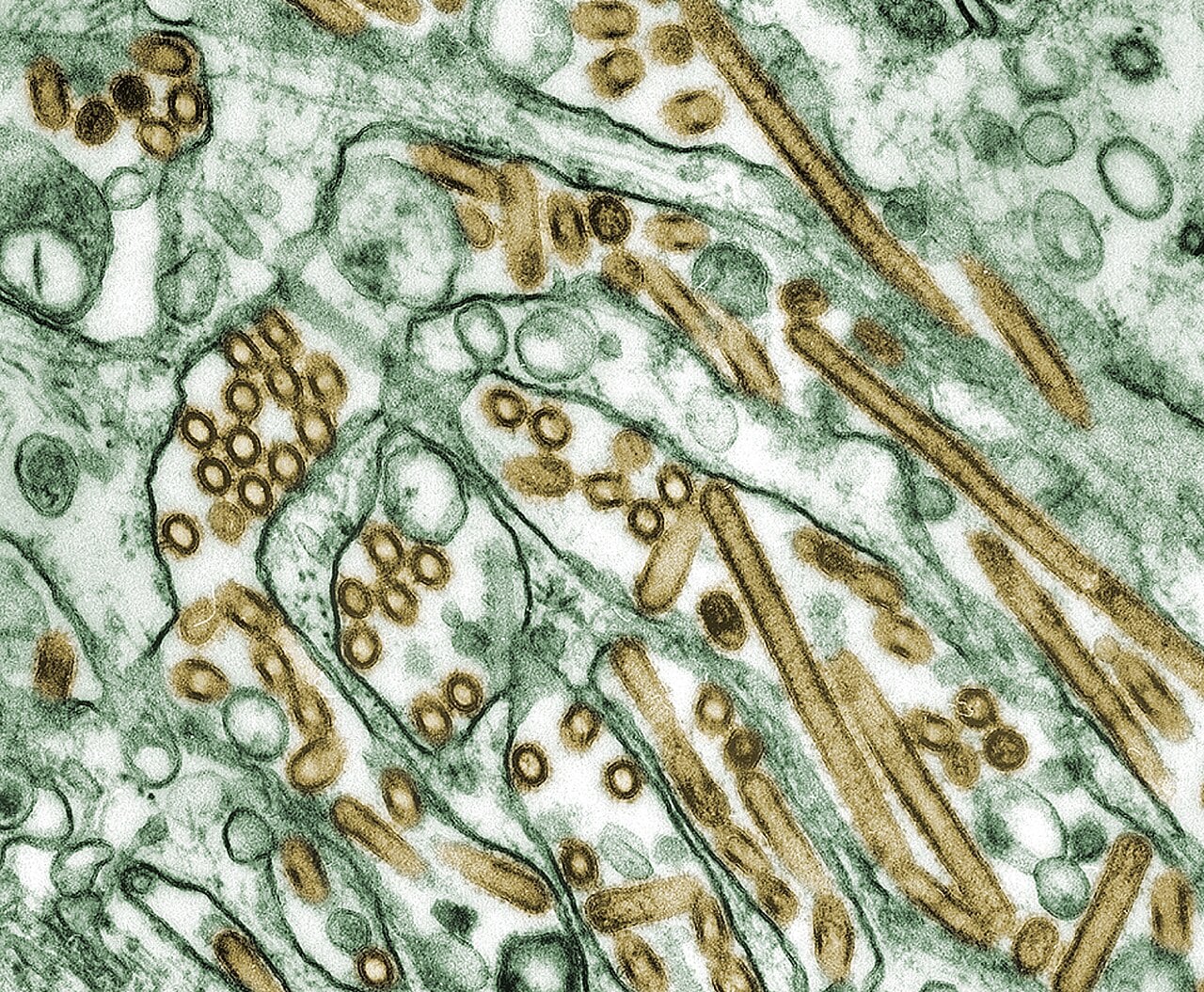
Colorized transmission electron micrograph of avian influenza A H5N1 viruses (seen in gold) grown in MDCK cells (seen in green). Avian influenza A viruses do not usually infect humans; however, several instances of human infections and outbreaks have been reported since 1997. via Wikimedia Commons by CDC with usage type - Public Domain. By Photo Credit: Cynthia GoldsmithContent Providers: CDC/ Courtesy of Cynthia Goldsmith; Jacqueline Katz; Sherif R. Zaki - This media comes from the Centers for Disease Control and Prevention's Public Health Image Library (PHIL), with identification number #1841.Note: Not all PHIL images are public domain; be sure to check copyright status and credit authors and content providers.العربية | Deutsch | English | македонски | slovenščina | +/−, Public Domain, https://commons.wikimedia.org/w/index.php?curid=372010Featured Image Credit
Colorized transmission electron micrograph of avian influenza A H5N1 viruses (seen in gold) grown in MDCK cells (seen in green). Avian influenza A viruses do not usually infect humans; however, several instances of human infections and outbreaks have been reported since 1997. via Wikimedia Commons by CDC with usage type - Public Domain. By Photo Credit: Cynthia GoldsmithContent Providers: CDC/ Courtesy of Cynthia Goldsmith; Jacqueline Katz; Sherif R. Zaki - This media comes from the Centers for Disease Control and Prevention's Public Health Image Library (PHIL), with identification number #1841.Note: Not all PHIL images are public domain; be sure to check copyright status and credit authors and content providers.العربية | Deutsch | English | македонски | slovenščina | +/−, Public Domain, https://commons.wikimedia.org/w/index.php?curid=372010


