
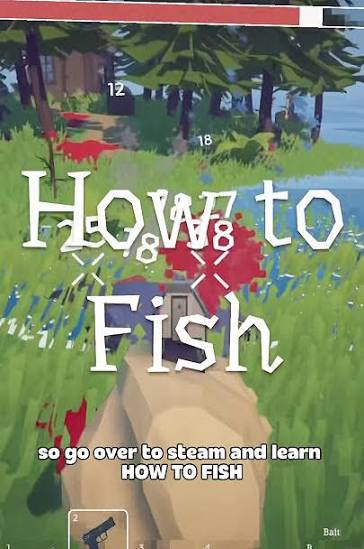
Dazed Games’ surprise hit How to Fish has exploded into one of Steam’s biggest stories of the summer, selling 1 million copies within just two days of its August 20 launch and crashing straight onto the platform’s Top Sellers and Most Played charts. Priced at $7.99 with an aggressive 38% launch discount that temporarily drops it to about $4.95, the bizarre $5-ish “friendslop” fishing game has turned impulse buys into a runaway phenomenon.
How to Fish is pitched as a physics-based fishing simulator for one to four players, but the genre label barely captures the chaos on screen. Players are stranded on a small island after a boat mishap and must fish their way toward escape using everything from traditional rods to far less conventional tools, including guns and other improvised weaponry. The loop is simple and punchy: catch and kill fish in ridiculous ways, sell your haul for cash, upgrade gear and weapons, take on quests, battle “boss fish,” collect rare variants, and unlock new islands for even more escalating nonsense. Online co-op supports up to four players, making it ideal for drop-in sessions where the goal is less “relaxing by the lake” and more “turning the ocean into an arena of slapstick carnage.”
The sales surge is backed by equally wild activity charts. Within days of launch, How to Fish climbed into the upper tier of Steam’s most-played games, peaking early around 268,000 concurrent players and later surpassing 336,000 all-time concurrent users according to SteamDB’s stats. That put the tiny indie ahead of heavy hitters like Palworld, Apex Legends, and Rust for a time, an absurd ranking for a game about brutally dispatching fish. User sentiment has kept pace: the game has racked up roughly 12,000–13,000 reviews with a “Very Positive” label on Steam and an estimated 94% positive rating, remarkable for a title that skipped Early Access and went straight to full release.
A big part of the appeal is its classification as a “friendslop” game—a term Polygon uses for cheap, quick-to-learn, chaotically funny co-op titles that don’t take themselves too seriously and thrive on shared disaster. How to Fish fits that mold perfectly: low price, short time-to-fun, and a premise so stupid it’s brilliant, where every session devolves into yelling, laughing, and physics glitches rather than meticulous min-maxing. That formula has already powered other recent indie breakouts, and outlets have begun grouping How to Fish with games like Meccha Chameleon as part of a new wave of comedy-first co-op hits that regularly punch above their weight on Steam’s charts.
For Dazed Games, the success caps a long runway that started earlier in the year when the studio secured project investment through Sweden Game Arena to finish and launch How to Fish in 2026. The team set out to build a multiplayer adventure where players travel together by boat, crash onto an island, and quite literally weaponize fishing on their quest to eventually get home, leaning on physics-driven slapstick rather than sim-style realism. That small, focused concept has now turned into a global spotlight moment for the studio, proving that a tightly scoped idea with a strong hook—quite literally—can hang with blockbuster shooters and survival sandboxes on the world’s largest PC storefront.
The game’s meteoric rise is already fueling a growing community, complete with wikis and stat trackers documenting every fish variant, weapon, and island route. With its launch discount set to expire in late August and the game still entrenched near the top of Steam’s charts, How to Fish looks poised to be more than a weekend novelty; it’s a case study in how a $5 friendslop with a demented sense of humor can dominate the discourse in a release window packed with big-budget competitors. For players, that means one thing: if you’ve ever wanted a co-op game where “learning how to fish” mostly translates to “inventing new ways to terrorize marine life with your friends,” this is the moment to jump in before the tide, and the price, rises.


