
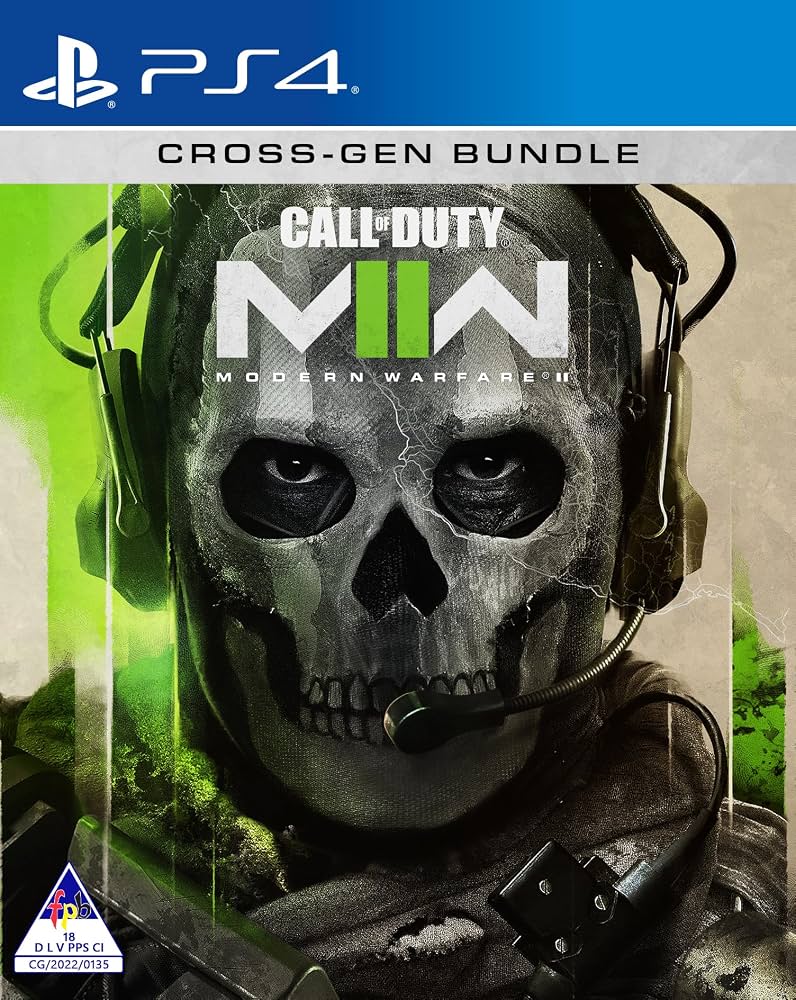
Call of Duty: Modern Warfare 2’s 2009 PC release has been effectively rebuilt from its compiled binary by a small army of AI coding agents, in a three‑month reverse‑engineering experiment that pushed both current AI models and copyright law to uncomfortable limits. Security researcher and reverse engineer Maurice Heumann, better known online as momo5502, reports that the project reconstructed 99% of the game’s functions in C++, with roughly 83% of those matching the original executable byte for byte, resulting in a fully playable build that remains private.
Heumann’s goal was not a quick‑and‑dirty decompiler dump, but a high‑fidelity recreation of Modern Warfare 2’s internal logic that could serve as a stable, feature‑complete base for future work. Coverage of the project notes that he targeted the 2009 PC version and aimed to preserve the original architecture while making the code modern and portable, including support for 32‑ and 64‑bit builds and non‑Windows platforms, along with security and stability fixes. Collaborators such as RektInator, Future, and st0rm were involved on the human side, but the bulk of the coding was performed by AI agents operating under his orchestration.
The workflow reads like a sci‑fi control room: Heumann initially spun up four Claude‑powered coding agents, three acting as workers on separate game subsystems and one serving as a reviewer, all wired into professional disassembler IDA through Hex‑Rays’ ida‑mcp integration. Each worker agent would inspect segments of the game’s compiled code, propose C++ that it believed reproduced the original behavior, and then submit its work to an automated harness that compiled the result with the same toolchain used for the shipped game before comparing the output binary byte by byte against the original. As the project scaled, the number of agents reportedly grew to 17 working in parallel, coordinated through shared GitHub issues—one per translation unit—and a common Discord channel fed by continuous‑integration webhooks, with periodic cron jobs forcing agents to reread their instructions to counter “drift.”
Despite the impressive throughput, the first month of AI‑generated code turned out to be “wrong in all the right ways”: highly readable but subtly broken. Analyses of Heumann’s write‑ups describe early output riddled with incorrect function signatures, mismatched types and struct layouts, and logic that was silently invented or removed, along with unnecessary architectural changes that turned simple configuration lookups into operations orders of magnitude more expensive. The reviewer agent failed to stop this because there were no hard acceptance criteria beyond plausibility, and verbose worker comments explaining their changes effectively acted as unintentional prompt injection, steering the system away from fidelity. The turning point came when Heumann introduced strict machine‑checkable tests and stripped comments from the code, forcing agents to optimize solely for passing a byte‑exact comparison against the original binary rather than arguing their way into approval.
The scale of the experiment is staggering even by current AI‑ops standards. Early reports from August put the first month’s burn at roughly 199.8 billion tokens, producing about 7,000 commits and decompiling 5,588 of roughly 16,324 functions—around a third of the game—while still managing to launch to a working main menu. By October, Heumann estimated that the project had consumed between 600 and 700 billion tokens in total, as the swarm of agents iterated their way toward near‑complete coverage and increasing byte‑exact matches. Commentators have calculated that using flat‑rate subscriptions kept the direct out‑of‑pocket costs near low four‑figures, but note that the same workload billed purely via per‑token APIs would have landed somewhere in the low‑ to mid‑six‑figure range, underscoring how subscription plans quietly subsidize large‑scale AI experiments.
If the technical feat sounds like catnip for modders and preservationists, the legal reality has been far chillier. Multiple gaming outlets report that Activision’s lawyers moved quickly once the project started gaining attention, filing copyright notices that led platforms to remove video footage of the reconstructed Modern Warfare 2 gameplay and to block access to the site hosting the code. Coverage of the takedown notes that Heumann had publicly celebrated earning his first tactical nuke killstreak in the rebuilt game shortly before the footage vanished and that he later disclosed one AI agent had wiped his system—fortunately inside a virtual machine—while iterating on the build. The Modern Warfare 2 reconstruction was grouped by some outlets with other “vibecoded” and AI‑assisted fan projects, including a high‑profile Fallout spinoff, in a broader crackdown on viral generative‑AI recreations of commercial games.
Legal analysts point out that compiled code has long acted as a barrier between proprietary engines and the wider public, and that AI‑driven decompilation at this scale effectively teaches commercial software to “talk” in human‑readable form, challenging old assumptions about how hard it is to peel back the executable. Commentaries on Heumann’s experiment emphasize that keeping the reconstructed source private and refraining from distributing assets or binaries may limit immediate liability, but it does little to settle the underlying copyright questions raised by machine‑assisted re‑creation of a commercial game’s internal structure. For the geek‑culture crowd, the project lands somewhere between awe‑inspiring tech demo and cautionary tale: proof that modern AI coding agents can chew through a triple‑A shooter’s codebase given enough tokens and tight verification, and a reminder that the more these tools erode the practical secrecy of shipped games, the more aggressively big publishers are likely to respond.


