
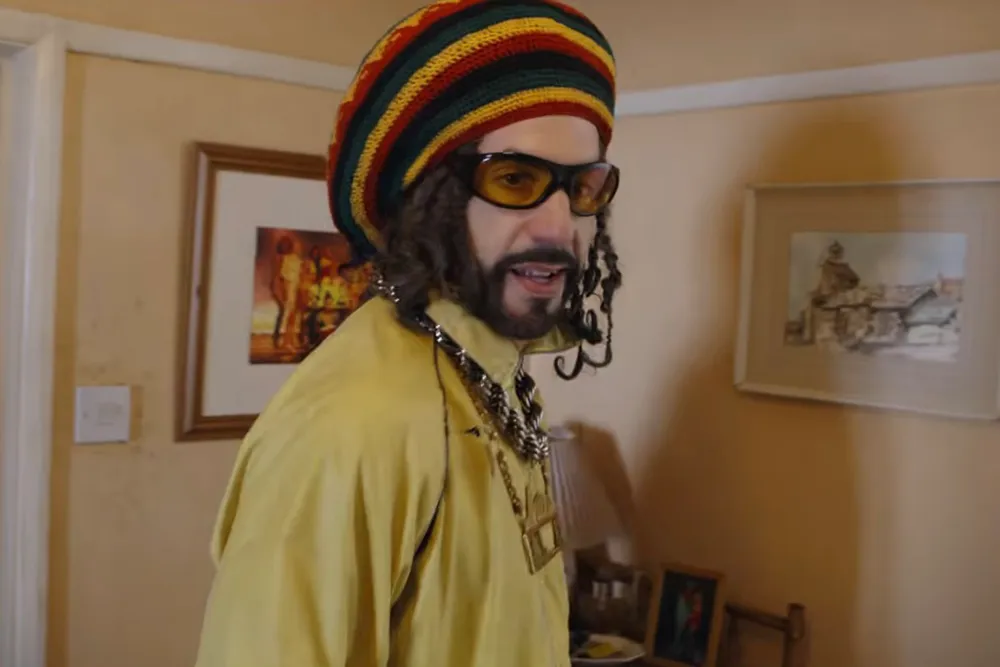
Amazon MGM Studios’ decision to resurrect Sacha Baron Cohen’s Ali G in the new mockumentary Ali G: Who Iz I? has turned a nostalgia play into a full-blown culture war, with critics calling the character a racist caricature and organized campaigns urging cinemas to refuse the film entirely. The first trailer for the project, which dropped this week, reintroduces Baron Cohen in tracksuit and faux-rudeboy swagger and has immediately sparked calls for boycotts from media watchdogs and commentators on both sides of the Atlantic.
Ali G: Who Iz I? marks the first major return of the character to the big screen in more than two decades, following 2002’s Ali G Indahouse, and is being released globally in theaters by Amazon MGM on October 23, 2026. The film is framed as a new mockumentary built around Ali G’s exaggerated persona as a white, middle‑class Brit adopting Jamaican patois, hip‑hop fashion, and mannerisms associated with Black British street culture, the same premise that made the franchise a breakout in the late 1990s and early 2000s. That 26‑year history is precisely why the revival is hitting nerves: the character debuted in the late 1990s on UK television and quickly became a lightning rod for debates about who gets to parody marginalized cultures and how.
The sharpest backlash is being coordinated by NewsCord, a UK‑based media‑accountability group that has launched a global campaign urging cinemas to boycott Ali G: Who Iz I? and framing the film as “satire using a cover for enforcing racist stereotypes.” NewsCord’s action page notes that supporters have already sent tens of thousands of emails to theater chains worldwide, arguing that the character is a white comedian’s caricature of Black British street culture and that communities he imitates have long objected to the act. The campaign explicitly calls out Amazon for reviving a character Baron Cohen had largely retired and tells exhibitors, “Cinemas can refuse it,” positioning theater chains as the last line of defense against what they describe as mainstreamed racism masquerading as comedy. A recent report on the campaign cites cinema operators being targeted by activists, with one British chain, Picturehouse, stating it has “no plans” to screen the film amid the mounting pressure.
Critics behind the current boycott draw a straight line back to early objections from Black British comedians who, as far back as 2000, described Ali G as an “alibi for racism” that let liberal audiences laugh at Black street culture while maintaining a veneer of political correctness. NewsCord’s materials resurrect those arguments, pointing to a Guardian feature in which performers like Felix Dexter challenged the idea that Ali G was harmless satire and questioned why broadcasters would tolerate material from a white comic that they likely would not air from Black performers. Contemporary commentators are echoing that discomfort in a 2026 context, with writer Afua Hirsch arguing in a recent essay that Ali G’s mannerisms and speech feel frozen in an outdated stereotype and that the comedy leans on sexualizing Black women and mocking working‑class women in ways that no longer pass as acceptable. For these critics, the Amazon‑backed revival is less a nostalgic comeback than a reminder of unresolved questions about race, class, and who pays the price for “edgy” humor.
Defenders of Baron Cohen’s work point to his long‑standing claim that characters like Ali G and Borat are designed to expose prejudice rather than endorse it, using provocation to reveal how real people react when confronted with outrageous behavior. Historical coverage of Da Ali G Show and Baron Cohen’s later films has noted how segments with Borat, for example, were framed as demonstrations of how racism feeds on conformity, even as some viewers and advocacy groups argued the jokes landed hardest on the marginalized communities being impersonated. NewsCord’s campaign counters that those communities themselves — including Kazakh and Arab organizations that previously criticized Borat and The Dictator — have documented harms from the catalogue of characters, and it quotes past letters sent to Amazon and awards bodies to argue that the industry has been warned about these portrayals for years. The new Ali G film, in their view, shows that the lessons from those earlier controversies have not been learned.
The immediate industry fallout suggests the boycott drive is having at least some impact on exhibition decisions, even as the film’s marketing rollout continues. Picturehouse’s early statement distancing itself from Ali G: Who Iz I? positions the chain as responsive to community concerns, and activists are clearly hoping other theater operators will follow suit under pressure from organized email‑writing campaigns. At the same time, coverage from entertainment outlets and fashion‑culture sites has emphasized the franchise’s cult status, highlighting fan excitement around Baron Cohen reviving one of his most recognizable personas and treating the October release as a major comedy event for Amazon MGM. Social media reaction has reflected that divide, with some users defending the character as satire of white wannabes and others insisting the joke still depends on caricaturing Black British culture and working‑class communities.
For Amazon MGM, Ali G: Who Iz I? now sits at the crossroads of two powerful trends: the lucrative return of legacy IP and a heightened sensitivity to how race and representation play out in mainstream entertainment. The studio has not indicated any change to the planned October 23 theatrical release, and coverage to date suggests the marketing strategy leans into Ali G’s notoriety rather than backing away from controversy. With boycott campaigns intensifying and at least some exhibitors signaling reluctance, the film’s box office performance could become a referendum on how much appetite remains for turn‑of‑the‑millennium shock comedy in the late 2020s. Whether Ali G: Who Iz I? ultimately lands as a sharp satire of wannabe culture or as a relic of a less examined era of racial humor, its Amazon‑backed revival has already ensured that the debate around Ali G’s legacy will be louder than ever when he steps back onto the big screen.


