
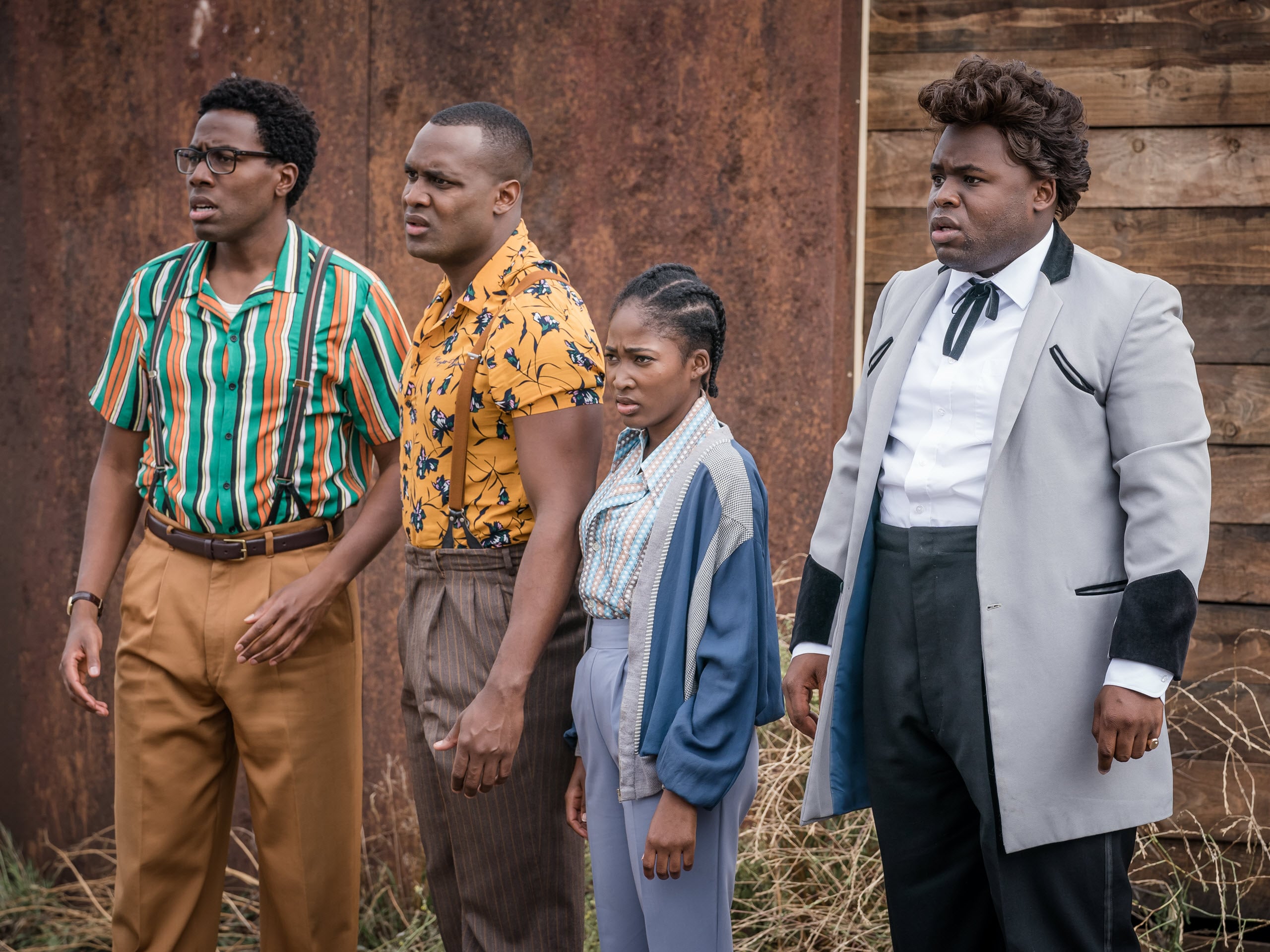
In the crowded canon of time-travel TV, few shows fuse genre-bending sci-fi, working-class cringe comedy, and sharp racial satire as deftly as Timewasters—a 12-episode British series that feels like Back to the Future colliding with the social discomfort of a show like Schitt’s Creek, then ending far sooner than it should have.
Created by writer–actor Daniel Lawrence Taylor, Timewasters premiered on ITV2 in October 2017 and ran for just two six-episode series, wrapping in 2019. Taylor co-wrote the show with Barunka O’Shaughnessy, and the episodes were directed by George Kane, a regular in UK genre comedy. Across its brief run, the series followed a struggling four-piece Black South London jazz band who discover that a decrepit, urine-soaked lift in their tower block is actually a time machine, catapulting them first into the roaring 1920s and later into the cool-jazz 1950s. That wild premise, combined with its compact 30-minute runtime and just a dozen episodes, makes the show feel more like the first act of a cult classic that never got the full trilogy treatment.
The band—Nick, Jason, Lauren, and Horace—are played by Taylor, Kadiff Kirwan, Adelayo Adedayo, and Samson Kayo, respectively, and much of the show’s charm comes from their chemistry as a modern crew desperately trying to hustle gigs and survive in eras that are excited by jazz but hostile to their presence. In the 1920s storyline, high-society characters fetishize the band’s music while ignoring or steamrolling their humanity, a dynamic that lets the show lampoon both period-drama clichés and contemporary microaggressions. Taylor has said he was inspired by how overwhelmingly white most British costume dramas are, and wanted to throw Black characters into those spaces not just for visibility but to play with how absurd that contrast can be. The result is a tonal blend where wacky temporal hijinks sit alongside uncomfortable culture clashes, creating a vibe that feels both like a fish-out-of-water sitcom and a pointed riff on who gets to appear in history.
Despite airing on a niche digital channel, Timewasters slowly built a cult following and critical respect, even earning a BAFTA nomination that underscored how much potential it had beyond those two short runs. British Comedy Guide and other observers highlighted the show’s confident mix of sci-fi conceit with grounded character work, noting how it used time travel to interrogate class, race, and the myth of a “simpler” past while still landing big jokes. Parents’ guide site Common Sense Media flagged the show’s mature themes and language but praised its energetic cast and offbeat premise, framing it as a teen-friendly gateway into more complex genre comedy. All of that recognition made its early end in 2019 feel less like a natural wrap-up and more like a promising series cut off just as it was hitting its stride.
Internationally, the show found new life when Amazon’s free streaming service picked up both seasons for U.S. viewers in 2021, introducing American audiences to the band’s misadventures via what was then IMDb TV, now Freevee. The series has also circulated on platforms such as Prime Video and other digital services, keeping its two time-jumping arcs accessible despite its cancelled status. That streaming afterlife has helped fuel renewed appreciation, with outlets spotlighting the show as a hidden gem for fans who like their genre TV weird, short, and politically sharp—exactly the kind of series that tends to thrive once it escapes traditional UK scheduling.
The concept has proven durable enough that a U.S. remake is reportedly in development at ABC through CBS Studios, reimagining the band as four Black twentysomething New Yorkers who accidentally zip back to 1926 and are comically ill-equipped for the historical reality they land in. That project, still in the works according to industry reports, suggests that while ITV2 may have closed the book on the original, the idea of using time travel to drop modern Black characters into “prestige drama” eras is far from exhausted. If the remake moves forward, it could do for American network TV what Timewasters briefly did for British comedy—turn period-piece tropes inside out and ask who history has been written for in the first place.
For genre fans, Timewasters sits at a fascinating crossroads: playful enough for viewers who just want a scrappy sci-fi romp, but layered enough to satisfy those who like their time travel with thematic teeth. Its short length makes it an easy binge, yet that brevity is also why conversations keep returning to how much more it could have done with another season or two—to explore different decades, deepen its relationships, or simply let its cast riff longer with these characters. As streaming continues to resurrect under-watched series, Timewasters is exactly the kind of cult show that deserves to be rediscovered, rewatched, and, in the hands of future creators, maybe even revisited across new timelines.


