
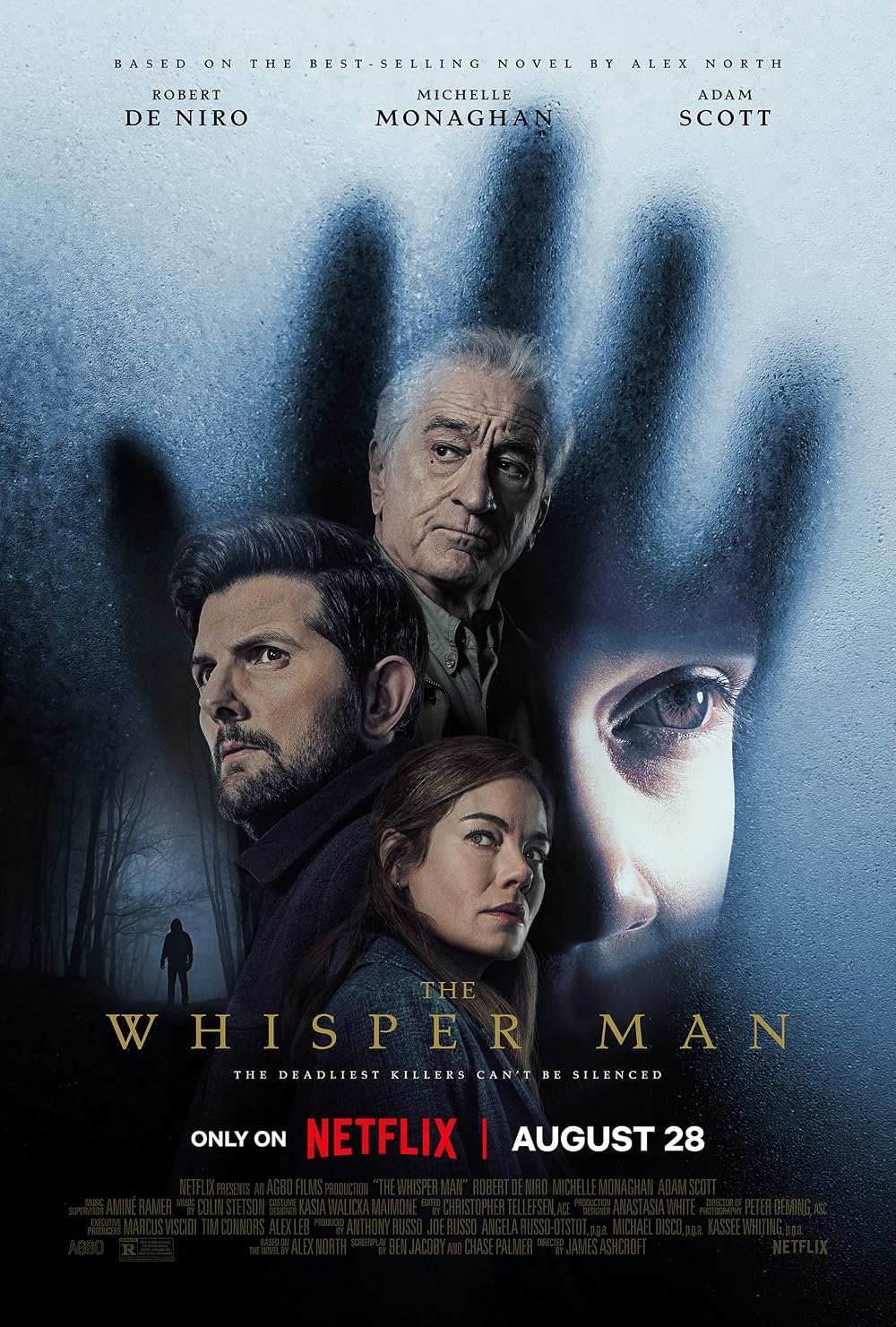
Netflix’s crime thriller The Whisper Man arrives with one of the year’s most polarizing endings, pairing a cathartic family reunion with a deeply disturbing prison murder that has viewers split over whether the film ultimately feels hopeful or nihilistic. As highlighted in ScreenRant’s spoiler-heavy breakdown, director James Ashcroft and novelist Alex North have been walking fans through that finale, explaining both the intent behind the shocking last act and how closely the adaptation tracks North’s 2019 best seller.
The film follows widowed crime writer Tom Kennedy, who turns to his estranged father Pete, a retired detective, after his young son Jake is abducted in what appears to echo the crimes of a jailed serial killer known as “The Whisper Man.” As multiple explainers detail, the story builds to two parallel climaxes: Tom and Jake survive, relocate into Pete’s home, and begin an emotional reset in the wake of Pete’s death, while the original killer Frank Carter is granted a final meeting with his son Francis Jr. in prison. In that final, harrowing sequence, Frank strips and forces a “skin to skin” encounter before strangling Francis Jr. with a shirt over his face—the same ritualized method he used on his child victims—effectively making his own son the last victim of the Whisper Man.
That brutal patricide is the core of the controversy: some viewers read the ending as unrelentingly bleak, while others see it as a dark form of moral reckoning that closes the case for good. Ashcroft has pushed back on the idea that the finale is a “downer,” arguing in interviews that “good does triumph” and framing Frank’s act not as a twisted inheritance but as the final, horrific rupture of a generational cycle of abuse. As critics and book analysts note, Francis Jr. spends much of the story convinced that his father’s crimes were a warped expression of love and that his own violence will earn approval, only to discover that Frank’s loathing is absolute and that he was always meant to be punished rather than crowned as a successor.
For readers of North’s novel, the broad strokes of that prison confrontation are familiar, but the film makes some notable interpretive choices, especially around Jake’s “imaginary friend.” Book guides describe how Jake fixates on a photograph of a girl in a blue sweater and begins talking to her, with the text leaving some ambiguity over whether she is a ghost or a psychological construct linked to memories of his dead mother Rebecca. Ashcroft, along with other coverage of the movie, leans decisively into the supernatural reading, describing the final revelation as confirmation that Rebecca’s presence has quietly guided events toward healing for Tom, Jake, and even Pete. This clearer ghostly twist diverges from the novel’s more uncertain tone but still serves North’s core preoccupation with grief, parents, and the ways children try to make sense of their trauma.
Outside the fictional frame, another question that has dogged the film is whether the Whisper Man is based on a real serial killer, given how grounded the procedural details feel. Multiple outlets stress that both book and movie are works of fiction, not dramatizations of a specific case, even though North drew on unsettling everyday experiences and broader true-crime anxieties when imagining a predator who whispers through windows to lure children. Ashcroft’s adaptation preserves that eerie realism while explicitly rejecting any real-world analog, reinforcing that the story’s ethical weight is meant to sit with its characters and themes rather than invite true-crime speculation.
For Ashcroft and North, the real heart of the finale is not the prison killing but the quiet aftermath for the Kennedy family: Tom’s renewed commitment to Jake, their move into Pete’s home as an act of remembrance, and the suggestion that Rebecca’s unseen influence helped steer them away from tragedy. That emphasis on recovery sits in uneasy tension with the visceral image of a father murdering his son, which has sparked ongoing debate in book clubs and online forums over whether the ending ultimately comforts or condemns. ScreenRant’s conversation with the director and author joins a growing body of analysis from outlets like Entertainment Weekly, Time, and Netflix’s Tudum, all converging on the idea that The Whisper Man is less about a monstrous killer than about breaking the patterns that let monsters flourish—and about how even a “triumphant” ending can remain haunting long after the credits roll.


