
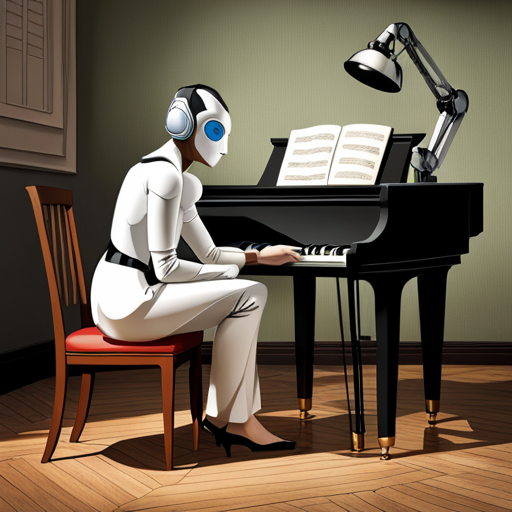
AI-generated music is no longer confined to novelty demos. Fully synthetic songs are appearing across major streaming platforms, sometimes blending into genre playlists so smoothly that listeners may not realize what they are hearing. The technology can create vocals, lyrics, instrumentation, or just one component of a traditionally produced track, making a simple “human or machine?” test increasingly unreliable. There are still several listening clues that can reveal an AI-made song, however.
Vocals remain one of the most useful places to start. Listen for pronunciation that seems smeared around consonants, a voice that warbles when it reaches a difficult syllable, or lyrics that appear to be squeezed unnaturally into the melody. Synthetic singers can also sound strangely uniform from verse to chorus, lacking the small changes in breath, emphasis, and intensity that give human performances their personality. Those imperfections are not flaws to be corrected; they are often evidence that a real performer is responding to the song.
The arrangement can offer another warning. A track that maintains the same energy for too long, never develops its central idea, or moves through an oddly predictable sequence may have been generated from a prompt rather than shaped through repeated human revisions. Instrumental passages can produce their own artifacts, including smeared high frequencies, watery cymbals, unstable textures, and transitions that feel technically clean but musically empty. None of these signs proves a song is synthetic on its own, particularly in electronic music, but several appearing together should raise suspicion.
Lyrics are another vulnerable spot. Machine-written words often rely on broad emotional imagery, recycled genre clichés, and repeated ideas without building toward a clear observation or narrative. Awkward grammar, an oddly literal metaphor, or a verse that sounds polished while saying almost nothing can be a stronger clue than a strange rhyme. Listeners have also noticed recurring vocabulary in songs generated by popular services such as Suno, although those patterns are likely to change as the models are updated. The Associated Press found that automated detection services can disagree, with some tools flagging human tracks and missing AI-created ones, so lyrical intuition is best treated as evidence rather than a verdict. The difficulty of identifying synthetic music by ear is increasing as these systems improve.
Metadata can help listeners investigate further. Generic artist names, bare credits, improbable release schedules, and albums that arrive with little sign of a human creator are all useful context. A profile releasing large volumes of music across unrelated genres deserves closer inspection, especially when the same vocal character appears to be performing with different fictional acts. Missing composer, producer, or musician credits do not automatically indicate AI, but they make a track harder to authenticate.
Streaming services are responding with software rather than expecting audiences to become forensic audio engineers. Deezer says its detector searches for signatures left in the audio by generative systems, many of which are inaudible to humans, and can identify some of the models used to create a track. The company labels detected AI music and has also made a playlist-scanning tool available for music hosted on competing services. Its public detector estimates a 99.8 percent detection rate, though no automated system can identify every hybrid production or future model. Deezer says the tool may miss a small fraction of AI-generated tracks.
That limitation matters because “AI music” covers a wide range of practices. A songwriter may use software to generate a demo, replace a backing vocal, brainstorm lyrics, or produce an entire finished track with no conventional performers involved. Human listeners can catch obvious artifacts, but platform labels, transparent credits, and clear disclosure will ultimately be more dependable than a checklist of suspicious sounds. For now, the most practical approach is to listen for unnatural vocals and stagnant arrangements, then check the song’s credits and artist history before assuming the performance came from a person.


