
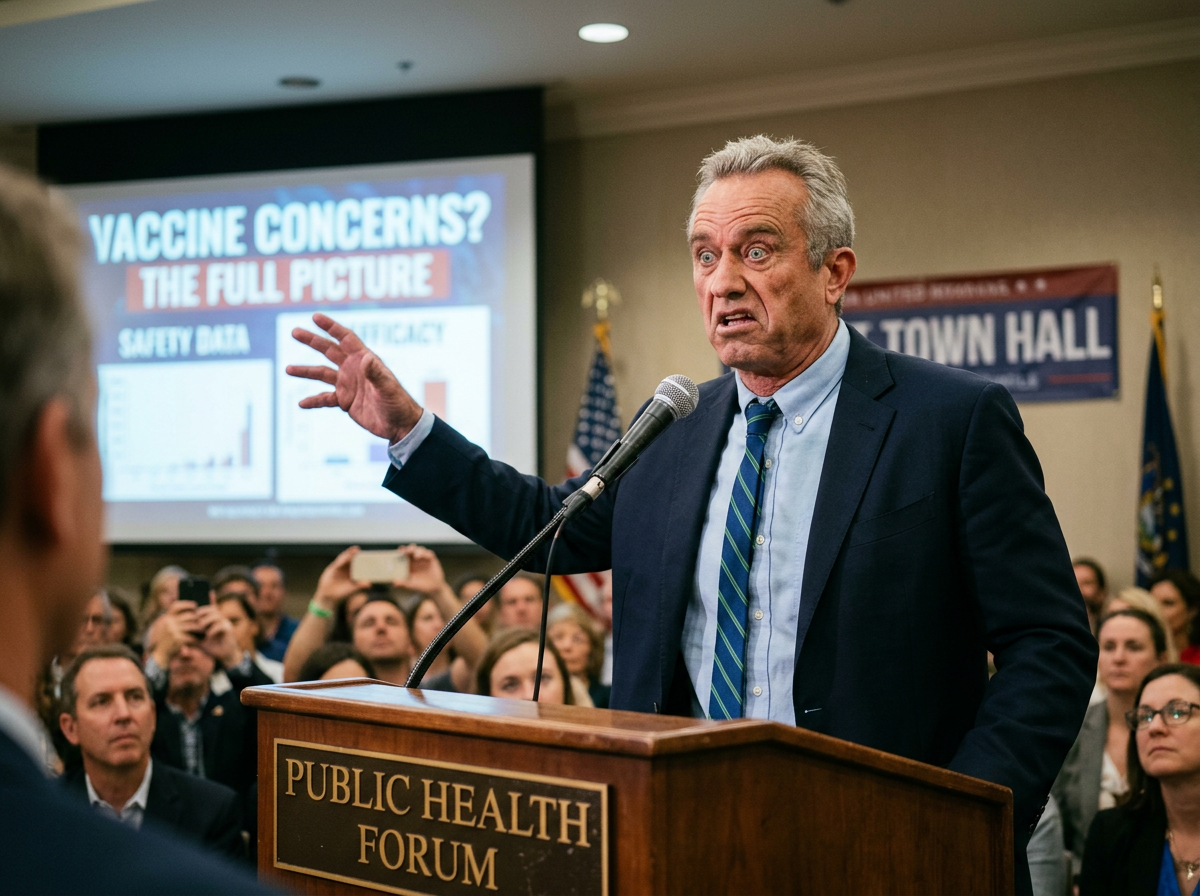
Robert F. Kennedy Jr., the anti-vaccine activist turned Health and Human Services secretary, has kicked off one of the most ambitious federal efforts yet to hunt for evidence of vaccine injuries, reshaping how the US government collects and responds to safety signals in the process. The initiative centers on a new National Institutes of Health clinic for people who believe they were harmed by vaccines, combined with financial incentives for doctors to feed more reports into the Vaccine Adverse Event Reporting System (VAERS) and new requirements for electronic health records to flag possible adverse events.
The NIH clinic is already open, even though the public announcement landed days later. According to reporting, the facility at the NIH Clinical Center quietly began seeing patients on October 5, with Kennedy slipping in for a ribbon-cutting ceremony alongside senior Trump administration officials that was not disclosed at the time. Bloomberg Law first noted the opening, but it only emerged this week as part of a broader HHS rollout framing the clinic as a dedicated hub for studying and caring for people who say they developed health problems after vaccination. The clinic is expected to evaluate patients while giving NIH researchers access to a concentrated stream of cases to study, with the possibility of expanding the program to other research centers if the pilot grows.
On the data side, Kennedy’s plan leans heavily on VAERS, the national early-warning system that collects reports of health issues following vaccination. VAERS has always functioned as a wide-open intake valve: anyone from clinicians to patients to family members can file a report, and the data are unvetted signals rather than confirmed causal links. Anti-vaccine advocates have repeatedly cherry-picked and misinterpreted raw VAERS entries as proof that vaccines are broadly dangerous, despite public health agencies stressing that the database is meant to over-collect potential concerns so statisticians and epidemiologists can sift for real patterns. Kennedy’s initiative would add a new billing code so the Centers for Medicare and Medicaid Services can reimburse doctors for the time spent submitting suspected vaccine injury reports, a move HHS says is intended to encourage more clinician participation. In parallel, HHS’s Office of the National Coordinator for Health Information Technology plans to require electronic health records to better capture vaccine-related adverse events so those flags can follow patients across different providers and systems.
This week’s announcement is not happening in a vacuum; it builds on Kennedy’s longer campaign to overhaul how the federal government handles alleged vaccine harms. In 2025, he pledged to revamp the National Vaccine Injury Compensation Program, a Reagan-era system designed to provide swift compensation for a narrow set of recognized vaccine injuries while shielding manufacturers from most civil liability. Kennedy has attacked that program as “broken” and “heartless,” arguing that it undercompensates victims and excludes claims related to COVID-19 vaccines. Coverage of his proposals noted that the program’s cap of $250,000 for injury or death has not changed since 1986, and that he wants to extend the statute of limitations and broaden eligibility. Together, the VICP overhaul and the new NIH clinic and VAERS reimbursement scheme form a policy through line: repositioning the federal machinery around vaccine safety toward aggressive documentation and response to claimed injuries, a central grievance of the anti-vaccine movement.
Public health experts and advocates are split on what this initiative could mean. Some see potential upsides in modernizing adverse event reporting, improving data quality, and giving patients who feel dismissed by the system a more structured route into research protocols. Others worry that putting an avowed vaccine skeptic in charge of a program built around people who already believe they were harmed by vaccines risks skewing the science, elevating anecdote over evidence, and amplifying narratives that erode public confidence in immunization. Reports have noted concerns that expanding VAERS reporting without clear guardrails could further flood the system with noise, making it harder—not easier—to detect genuine safety issues. Kennedy’s allies frame the push as long-overdue accountability; his critics see a federal imprimatur on talking points that once lived mostly on fringe websites and social media feeds.
For anyone who lives in data-saturated spaces—whether that’s health tech, policy circles, or online communities that obsess over statistics as much as sci-fi lore—the stakes here are bigger than one clinic or one billing code. The initiative effectively turns the levers of federal health IT into a new battlefield over how to interpret imperfect, probabilistic safety data, and who gets to define what counts as “injury.” As reports pile into VAERS and the NIH clinic begins publishing findings, the resulting charts, case series, and early signals are likely to be debated, weaponized, and memed far beyond traditional medical journals. Kennedy’s experiment with reorienting the system around vaccine injury claims will test not just the robustness of US public health infrastructure, but the ability of institutions—and the online culture that surrounds them—to separate rigorous evidence from noise in a world where every data point can be spun into a narrative.
Image Credits
In-Article Image Credits
Robert F. Kennedy Jr RFK making a speech with a funny face via OpenAIFeatured Image Credit
Robert F. Kennedy Jr RFK making a speech with a funny face via OpenAI


