
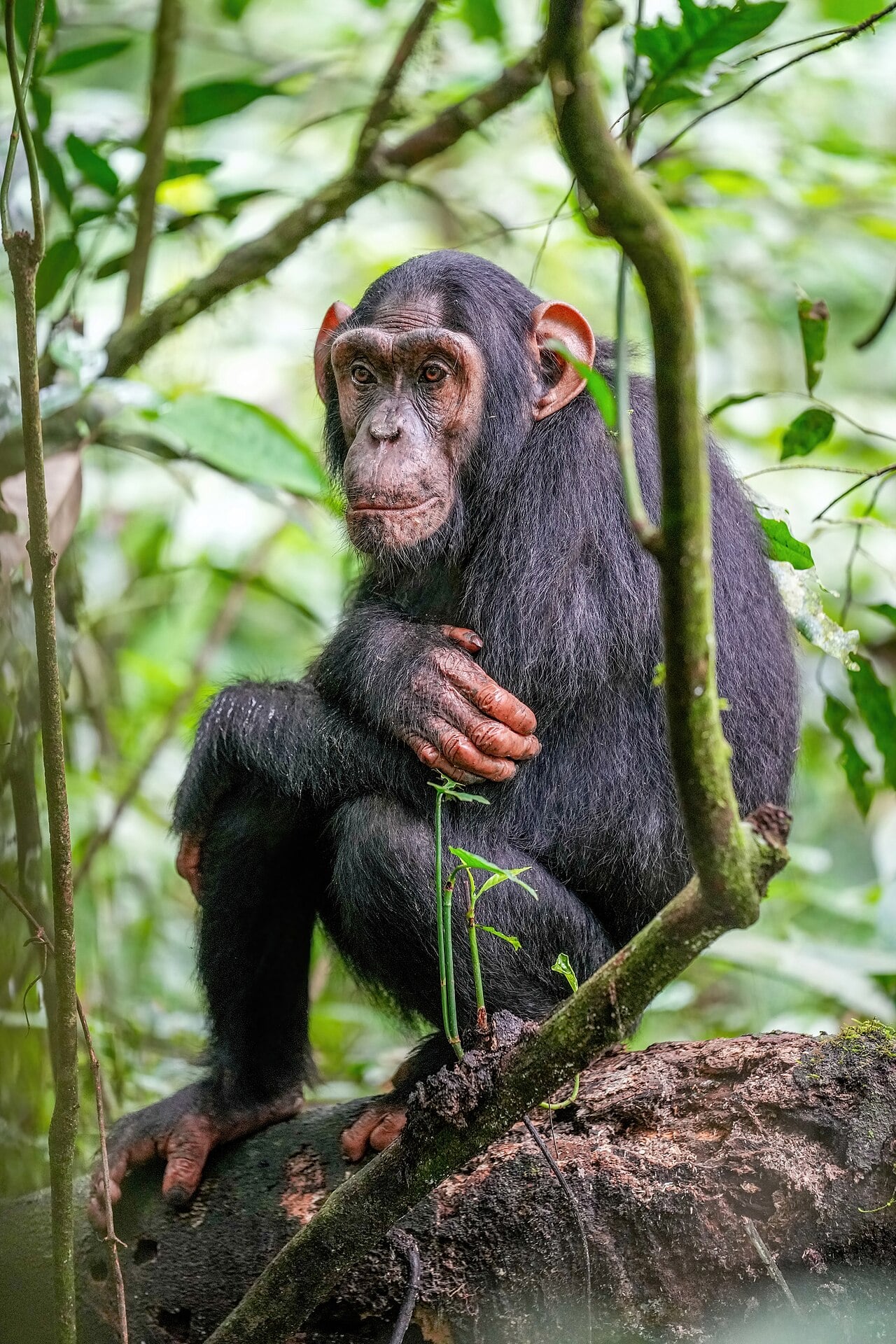
In a cleverly staged pineapple heist, chimpanzees at Uganda’s Ngamba Island Chimpanzee Sanctuary were significantly less likely to steal food from close companions than from more distant groupmates, highlighting how friendship dampens antisocial behavior in our primate cousins. The research, led by a team at UC Berkeley, adds a new twist to the growing picture of chimps as selective sharers and groomers by showing that social bonds also shape when they choose to plunder—and how everyone feels about it afterward.
To map out which chimps were true “besties” versus casual acquaintances, researchers first spent more than 800 hours observing 26 individuals’ everyday interactions, tracking grooming, proximity, and alliance patterns to identify strongly bonded pairs. Those friendships fed into a lab-style setup with two rooms: in one, a “victim” chimp sat with three trays loaded with pineapple; in the other, a “thief” chimp controlled a rope attached to the trays and could yank them away or leave them alone. Every chimp experienced both friend and non-friend pairings under tightly controlled conditions, with partners matched for sex and dominance rank so personality or power differences didn’t skew the results.
The outcome reads like a primate morality tale: thieves pulled the rope and stole pineapple in about 70% of trials when paired with non-friends but only 61% of the time when facing a close companion, a nine-point drop that is statistically meaningful given the within-subject design. That restraint wasn’t just about the loot; it reflected how chimps navigated the emotional fallout of their own mischief. Victims initially reacted more angrily when a friend stole from them, but they calmed down faster over repeated trials, suggesting a willingness to forgive that wasn’t extended to less familiar partners. Meanwhile, thieves showed prolonged negative emotional displays when stealing from non-friends, hinting that they perceived those interactions as more hostile than food grabs within tight-knit relationships.
Digging deeper, the study argues that friendship regulates not just how often chimps engage in antisocial acts like theft, but also how they expect others to behave toward them in turn. Because each individual played both victim and thief with different partners, the patterns show that chimps anticipate greater tolerance and reciprocity from friends, and modulate their own behavior to keep those alliances intact—something fans of long-running genre series will recognize as the invisible glue that holds a heroic party together despite occasional betrayals. The authors frame pineapple theft as a test case for how emotional responses—anger, fear, and reconciliation—are tuned by social bonds, offering a window into the evolutionary roots of the “code of conduct” that underpins complex group living.
This pineapple caper doesn’t appear in isolation. Over the past decade, field and experimental work has shown that chimpanzees can behave prosocially, favoring choices that benefit groupmates even when there is no direct payoff, especially in naturalistic, group-specific contexts. Other studies have found that tolerant, less competitive leaders can help chimp groups solve shared-resource dilemmas more sustainably, reinforcing the idea that cooperation and social tolerance are key ingredients in primate societies. At the same time, reports of chimpanzee communities splitting into rival factions—where new group identities override years of cooperation—underscore how fragile those alliances can be when social fault lines deepen. Taken together, the new friendship-and-theft results fit into a richer narrative: chimps possess a nuanced social toolkit that can tilt toward generosity or conflict depending on relationship history, group norms, and resource pressure.
For anyone who loves intricate character dynamics in sci-fi, fantasy, or tabletop campaigns, this study reads like an origin story for the “party loyalty” mechanics that show up in everything from CRPGs to social deduction games. The finding that chimps steal less from friends—and manage their emotional blowback differently—suggests that the seeds of moral decision-making, trust, and betrayal arcs were planted long before humans started telling stories about starship crews and adventuring guilds. As researchers continue probing how primates negotiate fairness, forgiveness, and resource sharing, expect more data that can inform not only evolutionary psychology and animal welfare, but also how designers build believable AI companions and NPC factions that feel as socially complicated as a real troop of chimps.
Image Credits
In-Article Image Credits
Chimpanzee at Kibale forest National Park via Wikimedia Commons by Giles Laurent with usage type - Creative Commons License. © Giles Laurent, gileslaurent.com, License CC BY-SAFeatured Image Credit
Chimpanzee at Kibale forest National Park via Wikimedia Commons by Giles Laurent with usage type - Creative Commons License. © Giles Laurent, gileslaurent.com, License CC BY-SA


