
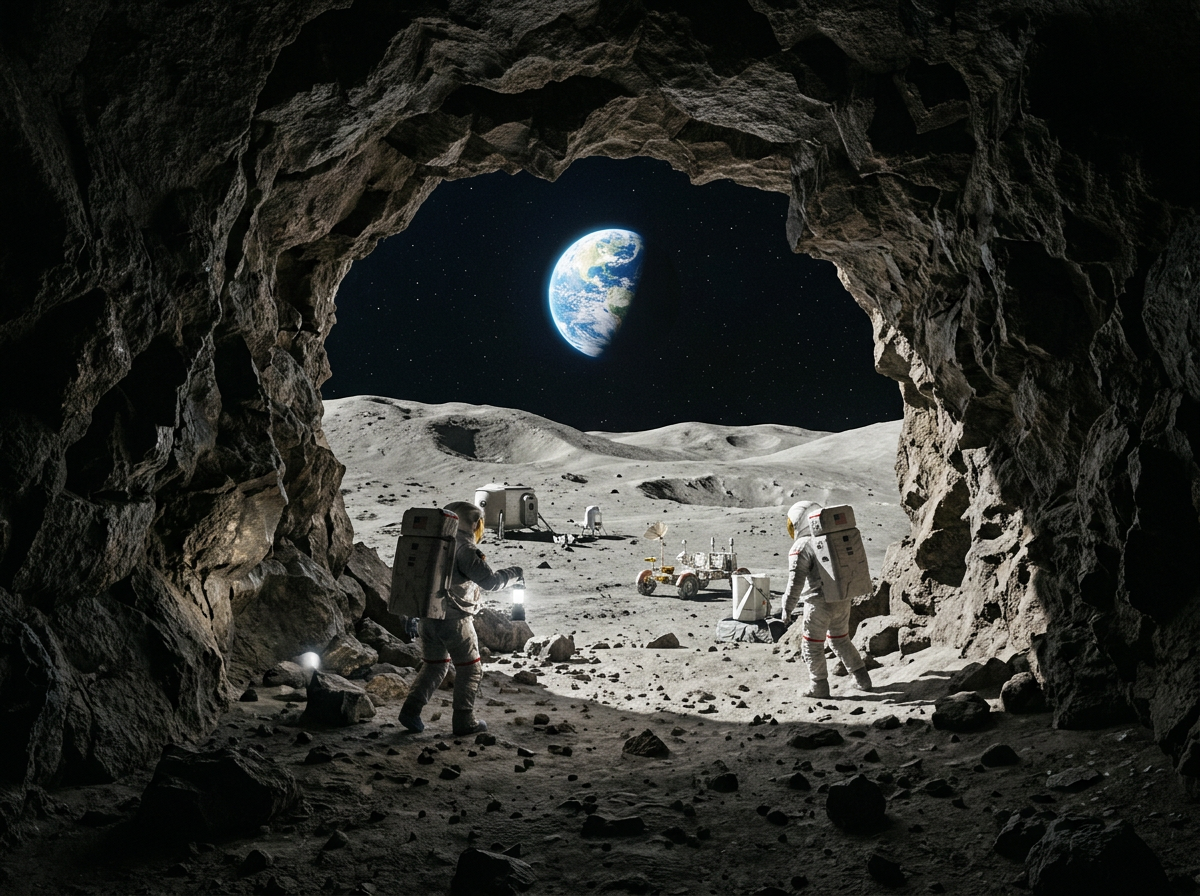
NASA is moving beyond glossy Artemis concept art and into the gritty reconnaissance phase for a real lunar base, greenlighting three new investigations designed to find underground shelters, map hidden ice and track environmental hazards on the Moon’s surface.
As first detailed in recent science coverage, the agency has selected a package of payloads that will ride future lunar landers to scout the places humans might actually live. One investigation will continuously monitor conditions like radiation, charged particles and dust so planners know how dangerous the surface really is over time. Another will hunt for buried water ice in shadowed regions, a critical resource for drinking water, breathable oxygen and rocket fuel. The star of the trio for would‑be lunar cave dwellers is the Geophysical Instruments for Marius Lunar pit Investigation, or GIMLI, a geophysics experiment aimed squarely at one of the Moon’s strangest features: the Marius Hills Pit.
GIMLI’s target, the Marius Hills Pit, is a vertical opening in the lunar crust that many scientists suspect is the doorway into a vast lava tube carved by ancient volcanic flows. The mission will combine ground‑penetrating radar, seismic sensors, gravity measurements and imaging cameras to probe beneath the surface and search for any large hidden void connecting to the pit. If GIMLI detects an extensive tunnel system, researchers can estimate its size and shape and assess whether it could serve as a ready‑made habitat, providing thick rock overhead to block cosmic radiation, micrometeorites and wild temperature swings that make the open lunar surface so hostile. That kind of natural shelter would slash the engineering needed to build the first Moon base, turning an intimidating construction problem into something closer to moving into an existing subterranean “apartment.”
The push to interrogate pits and possible caves is backed by years of orbital and Earth‑based work suggesting that the Moon hides an intricate subsurface network. Radar data from NASA’s Lunar Reconnaissance Orbiter Mini‑RF instrument revealed evidence of a cave extending more than 60 meters from a skylight in Mare Tranquillitatis, hinting at long, hollow tunnels beneath the basalt plains. European researchers have highlighted a deep lunar pit in the same region—roughly 400 kilometers from the Apollo 11 site—with overhanging walls and a conduit stretching more than 100 meters below the surface, branding it a promising spot for a future base. At least 200 similar pits have been cataloged across the Moon, and multiple studies argue that some connect to lava tubes formed billions of years ago when molten rock flowed under a cooling crust. On Earth, NASA teams have been practicing in Hawaiian lava caves, testing how explorers could use underground voids as analogs for Moon and Mars shelters.
NASA has also backed more speculative concepts aimed at turning these lava tubes into full‑blown research stations, including the Lunar Underground eXplorer (LUX) study under its advanced concepts program. LUX envisions a robot descending into the Marius Hills Pit, powered and controlled via optical fiber from the surface, then trundling through kilometers of tunnel to map the interior. By measuring rock thickness, tunnel geometry and radiation levels, such a mission could rate lava tubes as potential base sites and open up new science on how volcanic processes shaped the Moon. Combined with GIMLI’s geophysical scan from the surface, these ideas sketch a near‑future where robots survey and model cave systems before humans ever set foot inside, much like drones and rovers scout Martian terrain today.
All of this cave‑hunting and resource mapping feeds directly into the Artemis roadmap for a sustained human presence on the Moon—and eventually Mars. The hazard‑tracking payload helps engineers design habitats, suits and vehicles that can withstand long stays instead of short Apollo‑style visits. The ice‑search mission addresses the logistics problem of not hauling every drop of water and kilogram of propellant from Earth. And GIMLI’s quest for a natural underground shelter attacks one of the biggest pain points in building any off‑world base: how to protect people without burying them in meters of imported shielding material. For space‑obsessed geeks and science fiction fans, NASA’s new investigations are a clear signal that the classic trope of humans living in Moon caves is no longer just pulp—it’s rapidly becoming an engineering trade study.
Image Credits
In-Article Image Credits
Astronauts looking out of a cave on the moon toward earth via OpenAIFeatured Image Credit
Astronauts looking out of a cave on the moon toward earth via OpenAI


