
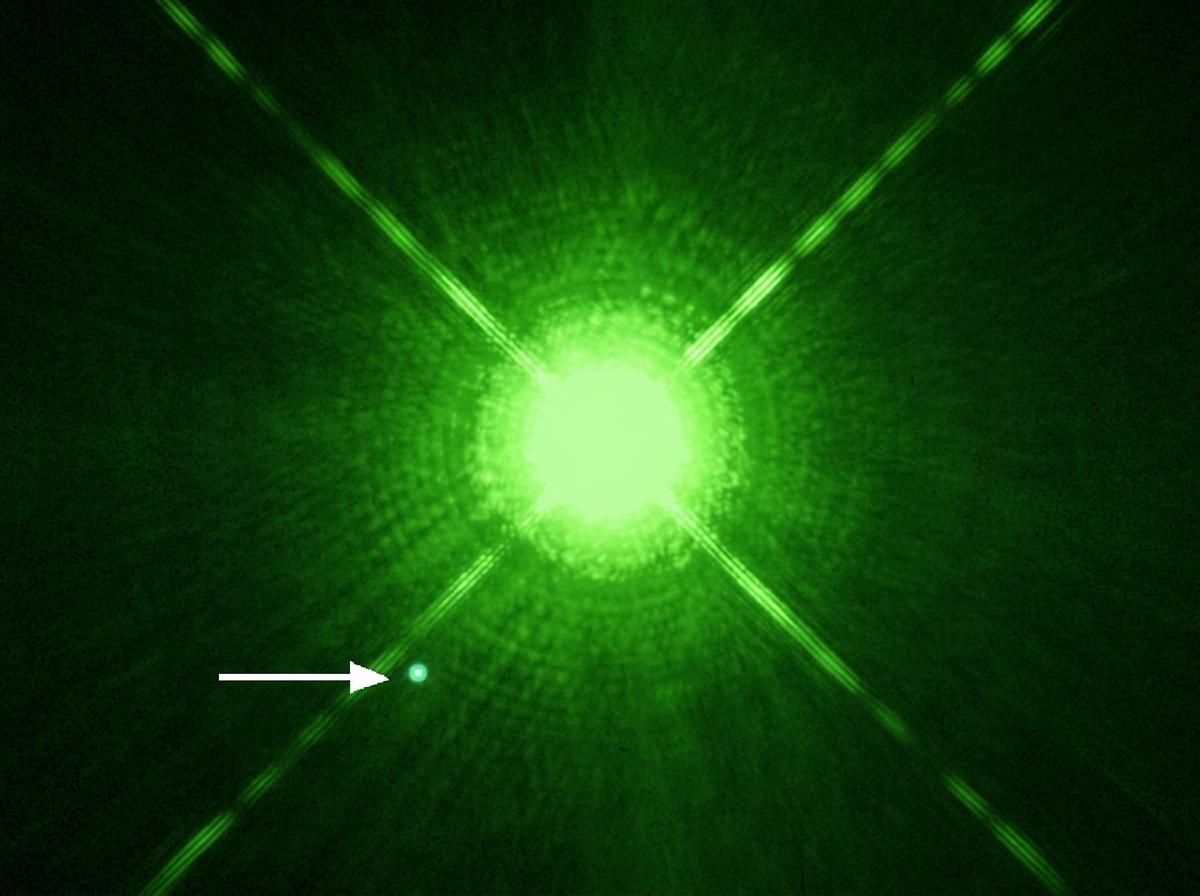
White dwarfs have a branding problem. Despite their name, the stellar remnants can apparently glow in a startling range of colors—including chartreuse green and deep salmon pink. A new study led by University of Warwick astronomer Mark Hollands identifies WD J1330+6435 as the first star credibly reported to appear green, while another white dwarf may be the reddest star ever recorded. The University of Warwick’s announcement describes the findings, published October 15, 2026, in RAS Techniques and Instruments.
White dwarfs are the compact cores left behind when Sun-like stars exhaust their fuel and shed their outer layers. Their extreme density means that the usual rules for predicting a star’s color do not tell the whole story. Rather than treating these objects as simple glowing spheres, Hollands and his collaborators analyzed stellar spectra—the chemical fingerprints encoded in starlight—and passed them through a model of human color vision.
That approach revealed a palette well beyond the familiar white and pale blue associated with the first known white dwarfs. Carbon-rich atmospheres can push a white dwarf toward pink or purple, while material from shattered asteroids and comets can produce yellow tones. Dense mixtures of hydrogen and helium may create cyan or pale blue appearances as molecules alter how light escapes. In the researchers’ models, trace elements including carbon, calcium and sodium interact with dense helium plasma and absorb broader ranges of light than they would under ordinary stellar conditions.
WD J1330+6435 is the study’s most eye-catching case. The roughly 4,000-degree-Celsius white dwarf has accreted rocky debris from its former planetary system, enriching its atmosphere with calcium, lithium and sodium. Sodium absorbs much of the orange portion of the spectrum, leaving a chartreuse or ghostly green result in the team’s calculations. The star is about 280 light-years away, and its color is an inference from spectroscopy rather than a claim that observers could simply point a telescope at it and see a bright green disk. Popular Science likewise reports the object as the first known genuinely green star identified through this analysis.
The study’s other extreme is WD J1011+2845, a white dwarf only about 48 light-years from Earth. Carbon dredged up from its interior has altered the star’s light so dramatically that most of its visible output is shifted beyond 600 nanometers, giving it a deep salmon-pink appearance. That makes it a candidate for the reddest star ever recorded—an unusual distinction for an object whose “white dwarf” category once sounded like a guarantee of visual neutrality.
The result also gives astronomers another way to read the history of dead planetary systems. A strange color may point to carbon moving through a white dwarf’s atmosphere, or to the remains of rocky worlds being consumed by the stellar remnant. In a representative sample of 151 white dwarfs within about 65 light-years, the researchers found five unusually colored objects—two yellow and three pink—suggesting that roughly one in 30 white dwarfs may display an atypical hue. Most remain white overall, but the new work shows that “white” describes a stellar class, not a strict color limit.


