
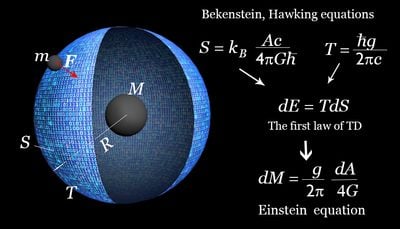
From Kubrick’s spinning wheel to NASA test rigs, scientists say practical artificial gravity may arrive via short-radius centrifuges before giant ring stations.
From Kubrick’s spinning wheel to NASA test rigs, scientists say practical artificial gravity may arrive via short-radius centrifuges before giant ring stations.

SpaceX’s Crew-13 mission has launched four astronauts from NASA, Canada and Russia to the ISS for a six-month science push in orbit with live coverage.
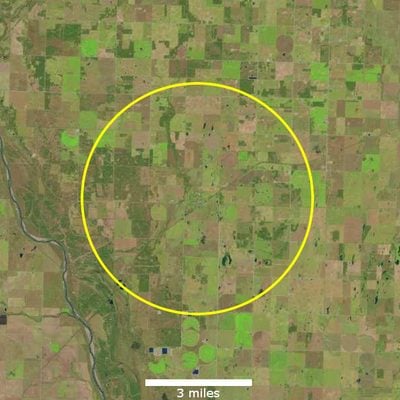
New dating of Oklahoma’s buried Ames impact crater shifts the meteor strike 100M years younger, tying the impact to a major Late Devonian extinction.
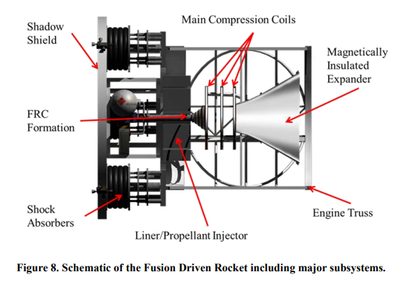
Fusion startups Pulsar Fusion and Helicity Space join Princeton researchers and NASA studies in pushing real fusion rockets that could shrink travel across the solar system.
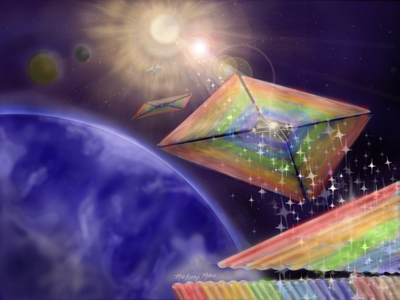
A Beihang University study and NASA-backed sail research show how diffractive solar sails might hurl a 100 km/s impactor into a killer asteroid.
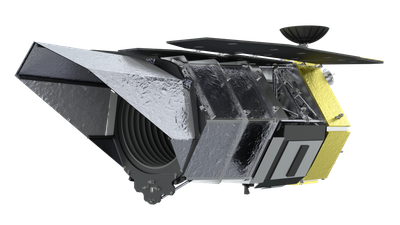
NASA’s $4.3B Nancy Grace Roman Space Telescope has launched on a Falcon Heavy to L2, promising a wide-field assault on dark energy, dark matter, and exoplanets.
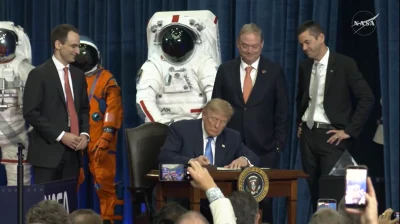
President Trump signs an executive order for a NASA-led U.S. Space Academy, aiming to train future leaders for Space Force, NASA and commercial space.
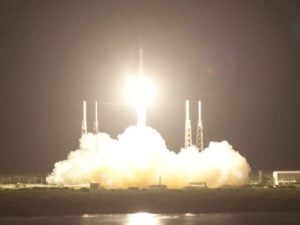
SpaceX is building Starbase Louisiana, a $100B Starship mega-spaceport on 125,000 acres of Gulf Coast marsh, aiming for thousands of launches a year.
NASA’s PUNCH mission just nailed solar storm arrival timing to within 30 minutes, promising earlier warnings for satellites, astronauts and power grids.

Astronomers—both professional and amateur—are now focused on an asteroid that has a slight chance of impacting Earth in 2032, according to current observations. The discovery represents only the second time that an asteroid’s impact risk has exceeded 1% chance.
SparTech Software Cybersecurity
Check out the latest cybersecurity and dark web news. From rapid, high-level cybersecurity analysis reports to in-depth penetration testing (pentesting) of your network and systems, SparTech Software offers a comprehensive suite of cybersecurity services designed to protect your organization from evolving digital threats.

Geeky mathematical minds make money with horse race handicapping! Visit pickpony.com for horse racing past performance sheets, race charts and heatmaps, data summaries, AI analysis, and more. Pick Pony - your best bet in horse racing!
Books from Geek Slop Publishing
Living Truth Bible Study Guides
Despite its beautiful prose, you can’t just read Revelation; it requires diligent study. However, ineffective study techniques can lead to misunderstandings. Rather than imposing strict interpretations on the described events, use the concepts we present as a framework for understanding its intricate code. The Book of Revelation indeed provides more than just a foretelling of the tumultuous end of days. It reassures Christians that divine justice will ultimately triumph over evil and promises Jesus' eventual return as the rightful king of the world.
Chronicles of Enigma
While science and reason often seek to illuminate the unknown, there remains a certain allure in the unexplained—a realm where imagination and reality blur, creating a tapestry rich with wonder and possibility. Stories from the Chronicles of Enigma series endure not just as relics of the past, but as gateways to exploring the depths of our curiosity and the infinite potential of our world. Let us be the light that guides you through the darkness.
This Month’s Charity
Geek Slop believes everyone should be a good corporate citizen. Thus, each month, Geek Slop gives a portion of our online store profits to deserving charity. This month’s charity is:
Child Fund of America
Charity Watch Grade: A+
Program percentage: 92%
©Geek Slop – Many images, trademarks, logos, video, brands and images used on this website are registered trademarks of their respective companies and owners. They want us to remind you that “All Rights are Reserved”. Geek Slop never shares its data with third parties. However, 3rd party apps used on this site (we’re talking about you, Google!) may share your data in a non-identifying manner for reasons we do not know (probably to take over the world). Some content is sourced by fans, online websites, and or other fan community sources. Geek Slop is not responsible for reporting errors, inaccuracies, omissions, and or other liabilities related to news shared here. Entertainment is afast-movingg industry but we do our best to keep tabs on infringements. If some of your content was shared by accident, contact us about any infringements right away.


