
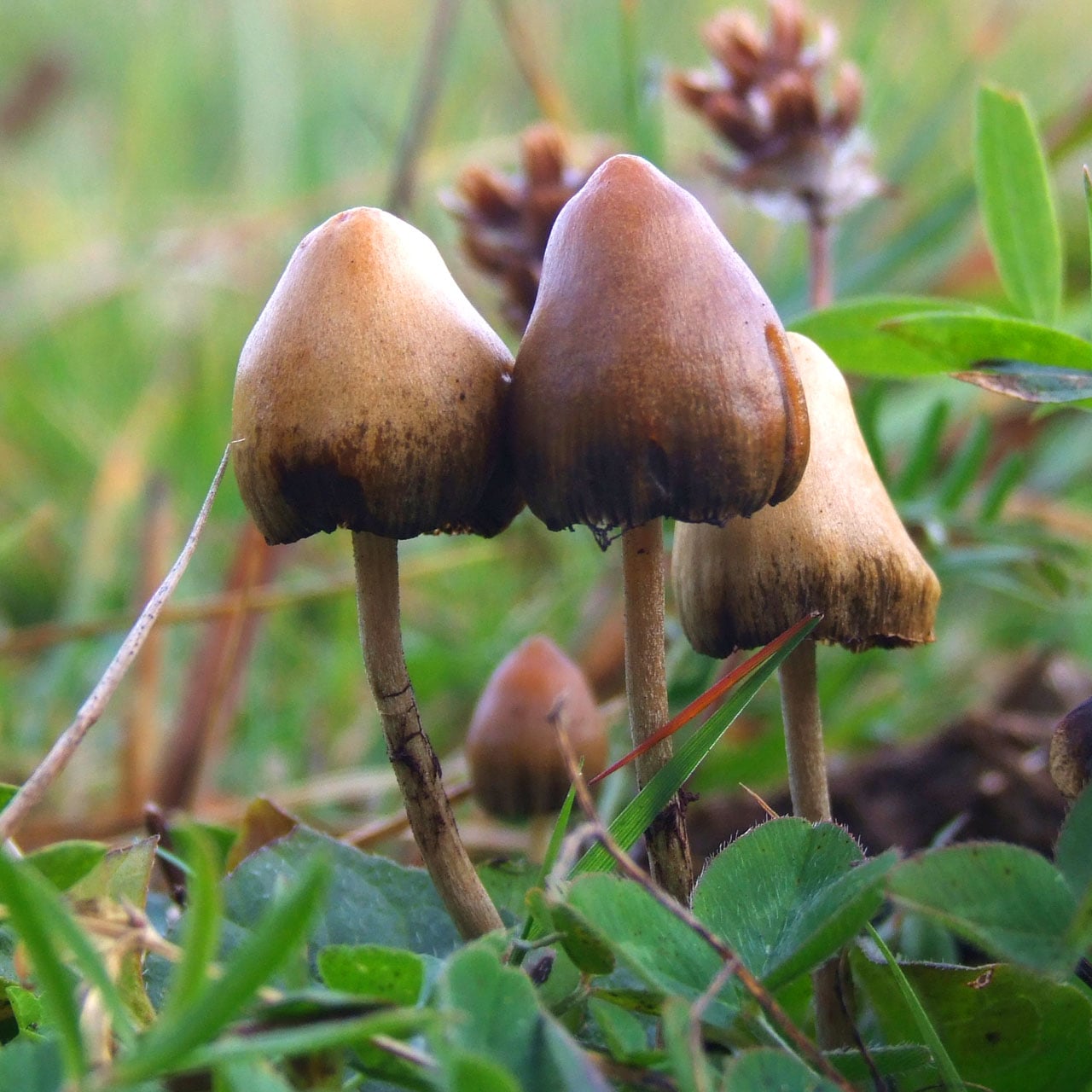
Psilocybin may be able to rebuild damaged brain circuitry without necessarily bringing along the psychedelic experience. In a new mouse study, the mushroom compound rapidly created and strengthened neural connections, with its effects becoming especially pronounced in animals subjected to chronic stress. The findings reveal a surprising split between psilocybin’s brain-rewiring effects and its hallucinogenic-like behavior.
Published October 15 in Nature Neuroscience, the research tracked dendritic spines—the tiny protrusions where neurons form synapses—over time. The team found that psilocybin not only encouraged new spines to appear, but also helped more of them mature into stable connections. Using two-photon microscopy, researchers could follow individual connections in living mice rather than relying on a single post-treatment snapshot.
The drug did not affect every brain in the same way. In healthy mice, new spine formation rose quickly, then gradually moved back toward its original level over roughly three weeks. That normalization included the removal of some older connections, suggesting that psilocybin temporarily opened a period of circuit remodeling rather than simply adding synapses indiscriminately.
Stress changed the equation. Mice exposed to a chronic unpredictable mild-stress model showed a much larger increase in new spine formation after receiving psilocybin, while the compound also blocked the unusually rapid loss of existing connections associated with prolonged stress. The result points toward a possible mechanism for restoring flexibility to circuits affected by depression-like conditions, although the experiment was conducted in mice and does not establish a human treatment.
The most consequential part of the work involved serotonin 2A receptors, commonly known as 5-HT2A receptors. Researchers at the University of California, Santa Cruz found that signaling through these receptors in Layer 5 pyramidal neurons was both necessary and sufficient for psilocybin’s structural effects. When the receptors were restored only in those cells, synaptic remodeling returned—but the mice did not show the head-twitch response used as a laboratory proxy for psychedelic activity.
The reverse experiment produced an equally important result: removing the receptors from Layer 5 pyramidal neurons eliminated psilocybin-driven spine growth while leaving the head-twitch behavior intact. The primary study therefore describes two separable biological pathways, raising the possibility that future medicines could target neural plasticity without reproducing the full psychedelic state. Any such application remains years away, but isolating the circuit-level mechanism gives researchers a clearer starting point for investigating stress-related brain disorders.


