
A cavity treatment that takes seconds to paint onto a tooth could spare many young children the drill, needles, and sedation. The liquid, known as 38% silver diamine fluoride, halted decay in more than half of affected baby teeth in a large Phase III clinical trial involving 830 children under age six. The study’s findings could reshape cavity care for children who struggle with conventional dental procedures.
Silver diamine fluoride, or SDF, is applied directly to a cavity with a small sponge-tipped applicator. The procedure does not remove the decayed material; instead, the solution arrests the lesion and helps prevent it from progressing. In the trial, children received treatment at six-month intervals, and the SDF group showed significantly better results than children who received a placebo. The results were published in JAMA Pediatrics as evidence intended to inform possible U.S. regulatory approval.
The research was led by Dr. Margherita Fontana of the University of Michigan School of Dentistry, with clinical sites at the University of Michigan, NYU College of Dentistry, and the University of Iowa. Children were recruited through dental offices, pediatric medical practices, and Head Start and Early Head Start programs in Michigan, New York, and Iowa. NYU’s account of the multicenter study describes the treatment as a practical option for children with severe early childhood caries.
The appeal is not simply convenience. Severe tooth decay is common among young children, while traditional restorations can require local anesthetic, specialized behavior management, sedation, or general anesthesia. A treatment that can be delivered quickly in a dental office—or potentially in medical and school settings—could make care more accessible for families who face cost, transportation, or appointment barriers.
There is an important visual trade-off: SDF typically turns the decayed portion of a treated tooth dark. That discoloration may be difficult for families to accept, particularly when front teeth are affected, even though the treatment can stop the biological process. SDF also does not rebuild the missing tooth structure, so a dentist may still recommend a filling or crown later when appearance, chewing, or long-term restoration matters.
The trial’s findings strengthen the case for broader use, but they do not mean every cavity can be handled with a brush-on application. Dentists still need to check whether decay has reached the tooth’s pulp or caused infection, and children will require follow-up examinations. The next major step is regulatory review: if the evidence supports approval and adoption, SDF could become a low-cost tool for buying time—or avoiding invasive treatment altogether—during the years when dental care is often hardest for children to tolerate.
Image Credits
In-Article Image Credits
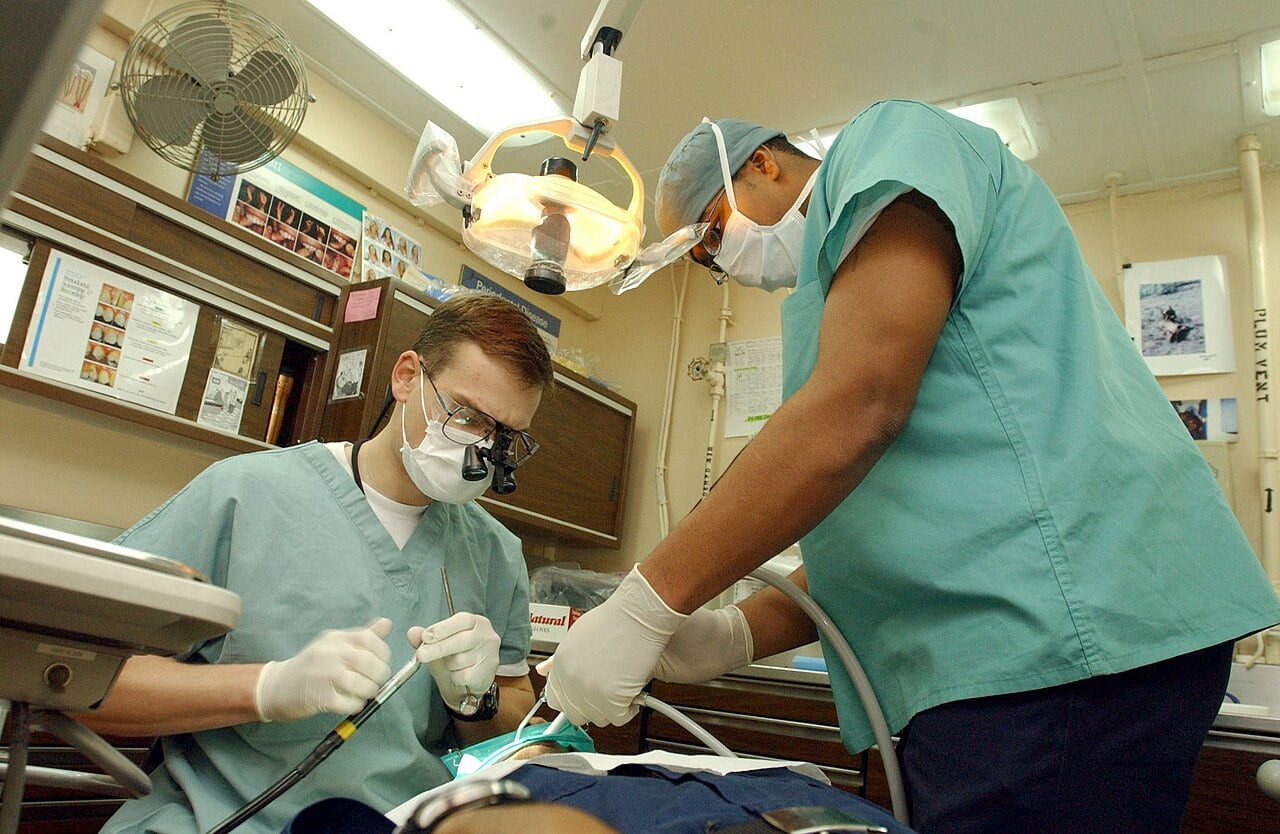
At sea aboard USS Theodore Roosevelt (CVN 71) Jan. 24, 2003 -- Navy Dentist Lt. Benjamin Anderson (seated left) from Farmville, Va., and Dental Technician Lennard Henry from Ashland, Ky., perform a routine procedure on one of the ship’s crew. via Wikimedia Commons by U.S. Navy photo by Chief Photographer’s Mate Eric A. Clement with usage type - Public Domain. By U.S. Navy photo by Chief Photographer’s Mate Eric A. Clement. - This image was released by the United States Navy with the ID 030124-N-1328C-510 (next).This tag does not indicate the copyright status of the attached work. A normal copyright tag is still required. See Commons:Licensing.العربية ∙ বাংলা ∙Bahasa Indonesia ∙Bahaso Jambi ∙Deutsch ∙ Deutsch (Sie-Form) ∙ English ∙ español ∙ euskara ∙ فارسی ∙ français ∙ italiano ∙ 日本語 ∙ 한국어 ∙ македонски ∙ മലയാളം ∙ Plattdüütsch ∙ Nederlands ∙ polski ∙ پښتو ∙ português ∙ русский ∙ slovenščina ∙ svenska ∙ Türkçe ∙ українська ∙ 简体中文 ∙ 繁體中文 ∙ +/−, Public Domain, https://commons.wikimedia.org/w/index.php?curid=8171013Featured Image Credit
At sea aboard USS Theodore Roosevelt (CVN 71) Jan. 24, 2003 -- Navy Dentist Lt. Benjamin Anderson (seated left) from Farmville, Va., and Dental Technician Lennard Henry from Ashland, Ky., perform a routine procedure on one of the ship’s crew. via Wikimedia Commons by U.S. Navy photo by Chief Photographer’s Mate Eric A. Clement with usage type - Public Domain. By U.S. Navy photo by Chief Photographer’s Mate Eric A. Clement. - This image was released by the United States Navy with the ID 030124-N-1328C-510 (next).This tag does not indicate the copyright status of the attached work. A normal copyright tag is still required. See Commons:Licensing.العربية ∙ বাংলা ∙Bahasa Indonesia ∙Bahaso Jambi ∙Deutsch ∙ Deutsch (Sie-Form) ∙ English ∙ español ∙ euskara ∙ فارسی ∙ français ∙ italiano ∙ 日本語 ∙ 한국어 ∙ македонски ∙ മലയാളം ∙ Plattdüütsch ∙ Nederlands ∙ polski ∙ پښتو ∙ português ∙ русский ∙ slovenščina ∙ svenska ∙ Türkçe ∙ українська ∙ 简体中文 ∙ 繁體中文 ∙ +/−, Public Domain, https://commons.wikimedia.org/w/index.php?curid=8171013


